Delhi’s Air Quality Slips into ‘Severe’ Zone as Dense Fog Chokes Capital

New Delhi, Dec 2025 : Delhi’s air quality deteriorated sharply on Wednesday, plunging into the ‘severe’ category as the Air Quality Index (AQI) touched a worrying 408. Dense fog combined with heavy pollution significantly reduced visibility across the national capital, raising serious concerns for public health and transport operations.
Data from multiple air quality monitoring stations showed that pollution levels remained alarmingly high across central and south Delhi. Areas such as Mandi House and India Gate recorded an AQI of 370, while Mathura Road and Sarojini Nagar stood at 340. Rashtrapati Bhawan and ITO both reported AQI readings of 357, placing them firmly in the ‘very poor’ category.
Conditions were even more alarming in several other parts of Delhi and the surrounding National Capital Region (NCR), where air quality slipped into the ‘severe’ range. Karol Bagh recorded an AQI of 408, Rajouri Garden 406, Patel Nagar 410, Chanakyapuri 405, Vasant Kunj 402, and Saket 430. Mundka and Vikaspuri reported extremely high pollution levels at 472 each.
Neighbouring Noida also witnessed severe pollution, with an AQI of 418. Lajpat Nagar touched the upper limit of the index with a reading of 500, while the Indira Gandhi International (IGI) Airport recorded an alarming AQI of 512, highlighting the intensity of pollution affecting even critical infrastructure zones.
The worsening air quality coincided with dense fog conditions, further compounding the crisis. Air quality forecasters warned that pollution levels across the National Capital Region are likely to worsen further as the year comes to a close, due to unfavourable meteorological conditions.
As per the Air Quality Index classification, air quality is graded as good (0–50), satisfactory (51–100), moderate (101–200), poor (201–300), very poor (301–400) and severe (401–500). Several locations in and around Delhi currently remain at the highest and most hazardous levels.
The India Meteorological Department (IMD) has forecast the persistence of dense fog through Wednesday and advised commuters to exercise extreme caution while travelling, particularly during early morning and late-night hours.
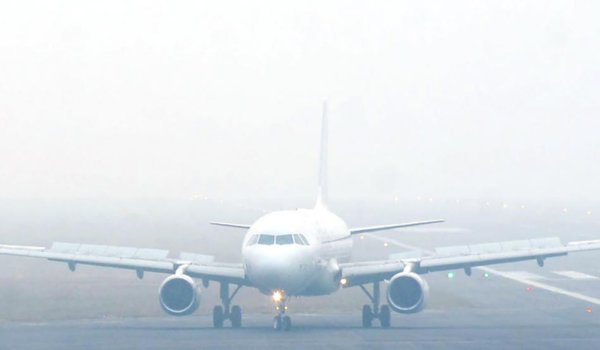
Low visibility caused by fog also disrupted air travel. Airlines and airport authorities issued advisories warning passengers of possible delays and cancellations. IndiGo stated that operations at Delhi and other northern airports were being closely monitored, with necessary adjustments being made to minimise inconvenience. Air India announced advance cancellations of select morning flights likely to be affected by poor visibility.
Weather conditions across north India continue to be influenced by an active Western Disturbance. The IMD has issued a yellow alert for dense fog and light rainfall in parts of Punjab and Chandigarh, with rain expected to continue until January 1. Several areas reported near-zero visibility, intensifying travel disruptions and public health concerns across the region.
Team Maverick.







Punjab CM Bhagwant Mann rejects viral video, calls allegations a conspiracy after Akal Takht edict
Chandigarh, June 2026 : Punjab Chief Minister Bhagwant Mann on Tuesday strongly denied all…

Punjab CM Bhagwant Mann rejects viral video, calls allegations a conspiracy after Akal Takht edict
Chandigarh, June 2026 : Punjab Chief Minister Bhagwant Mann on Tuesday strongly denied allegations …