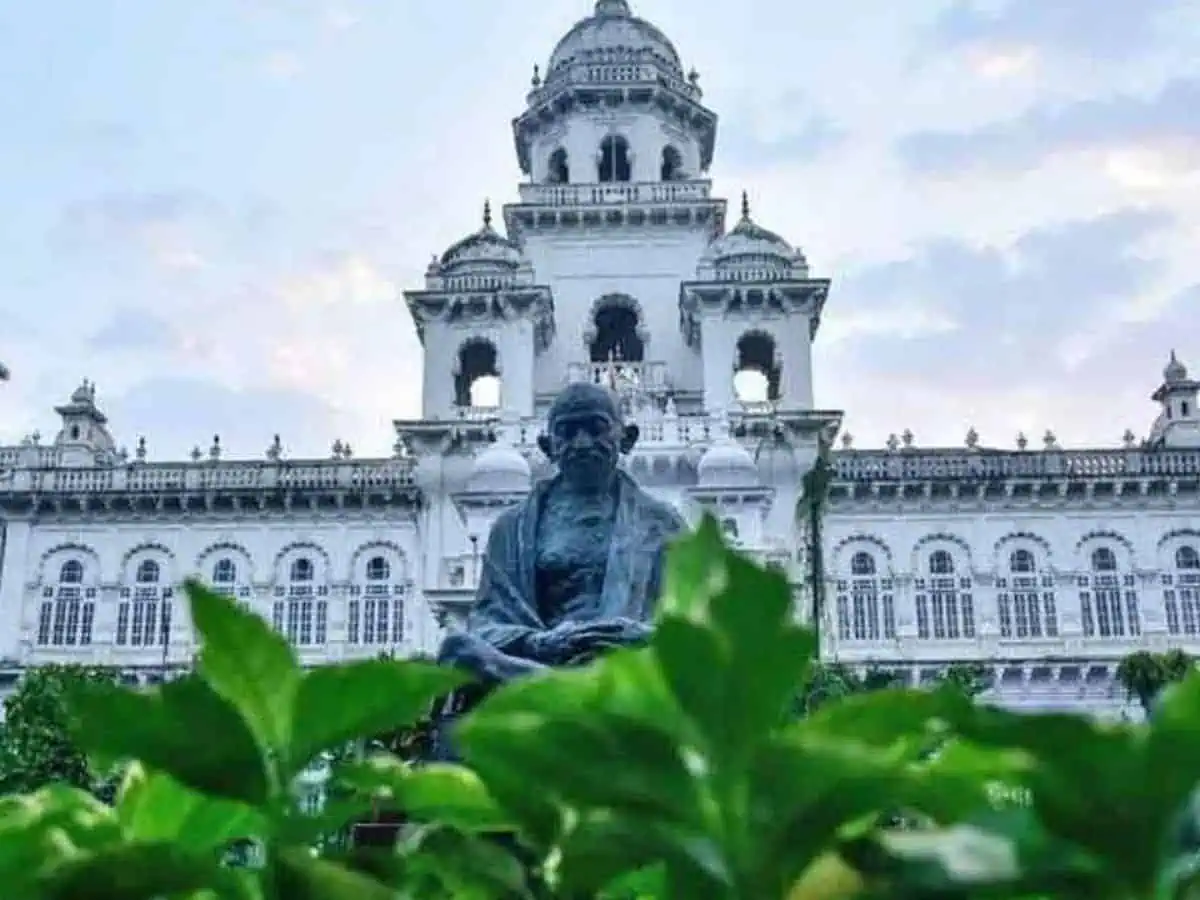
Telangana Assembly Demands Continuation of MGNREGS, Flags Concerns over New Employment Law

Hyderabad, Jan 2026 : The Telangana Legislative Assembly on Friday passed a resolution urging the continuation of the Mahatma Gandhi National Rural Employment Guarantee Scheme (MGNREGS) in its existing form, expressing strong reservations about the recently enacted Viksit Bharat Guarantee for Rozgar and Aajeevika Mission (Gramin) Act (VB G RAM G), which it described as detrimental to the rights of the rural poor.
The resolution was tabled by Chief Minister A. Revanth Reddy and was adopted unanimously through a voice vote, signaling cross-party support for protecting rural employment rights.
According to the resolution, the new law undermines the rights of the poor, disproportionately affects women labourers, and violates the principles of cooperative federalism. The Assembly stressed that the provisions of VB G RAM G erode the guarantees that MGNREGS had historically offered, particularly to vulnerable sections of society.
MGNREGS: Two Decades of Rural Empowerment
The resolution recalled that MGNREGS was launched in 2005 under the United Progressive Alliance government led by Dr. Manmohan Singh, with the aim of providing employment opportunities to the rural poor while ensuring financial security for impoverished households. Implemented from February 2, 2006, the scheme was designed to reduce poverty, unemployment, migration, and wage disparities, especially between men and women, while supporting the development of marginalized communities.
The primary objective of MGNREGS has been to guarantee at least 100 days of employment per year to every rural household, along with a minimum wage. Over the past two decades, nearly 90 percent of beneficiaries in Telangana have belonged to Scheduled Castes (SCs), Scheduled Tribes (STs), and Other Backward Classes (OBCs), of which 62 percent were women. The scheme has been particularly beneficial to Dalits, tribals, persons with disabilities, and members of the most backward tribal communities, including Adivasis and Chenchus.
Concerns over the New Law
Chief Minister Reddy warned that the new VB G RAM G Act jeopardizes employment guarantees for women and other vulnerable groups who rely heavily on MGNREGS for livelihood. The resolution highlighted that the law undermines the original purpose of the Employment Guarantee Act by ending the system of preparing work plans based on demand.
Significant concerns raised include:
- Impact on Women Labourers: In the current scheme, women constitute around 62 percent of beneficiaries. The limited allocation mechanism under the new law could reduce the number of workdays available to women, directly affecting their income and economic independence.
- Federalism and Funding Issues: MGNREGS is fully funded by the Central government. The new law’s 60:40 central-state funding ratio would place an additional financial burden on states, undermining the spirit of cooperative federalism. The resolution demanded the restoration of the earlier funding pattern.
- Dilution of Gandhi’s Legacy: Removing Mahatma Gandhi’s name from the scheme is seen as diminishing its philosophical and ethical significance.
- Restrictions During Agricultural Seasons: The new law’s mandatory 60-day break during peak agricultural periods unfairly disadvantages landless and poor labourers. The Assembly demanded that employment guarantees continue throughout the year.
- Elimination of Labour-Intensive Works: The resolution noted that the removal of labour-intensive works such as land development could harm small and marginal farmers, as well as Dalits and tribals, depriving them of essential livelihood opportunities.
The resolution called for immediate corrective measures to ensure that rural employment remains demand-driven, inclusive, and gender-sensitive, maintaining the original spirit of MGNREGS.
In conclusion, the Telangana Assembly unanimously urged the Central government to reconsider VB G RAM G, retain the employment guarantees for the poor, and restore provisions that empower women, protect marginalized communities, and preserve the principles of cooperative federalism.
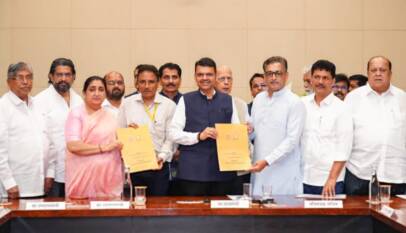
Parliament Paralysed for Second Day as Opposition Protests Over NEET Leak, Student Crackdown
New Delhi, July 2026 : Parliament remained deadlocked for the second consecutive day of th…
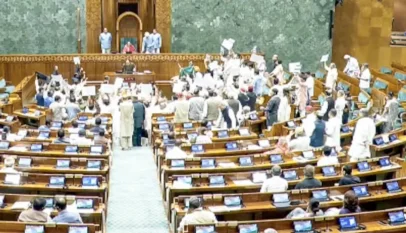
Parliament Paralysed for Second Day as Opposition Protests Over NEET Leak, Student Crackdown
New Delhi, July 2026 : Parliament remained deadlocked for the second consecutive day of …