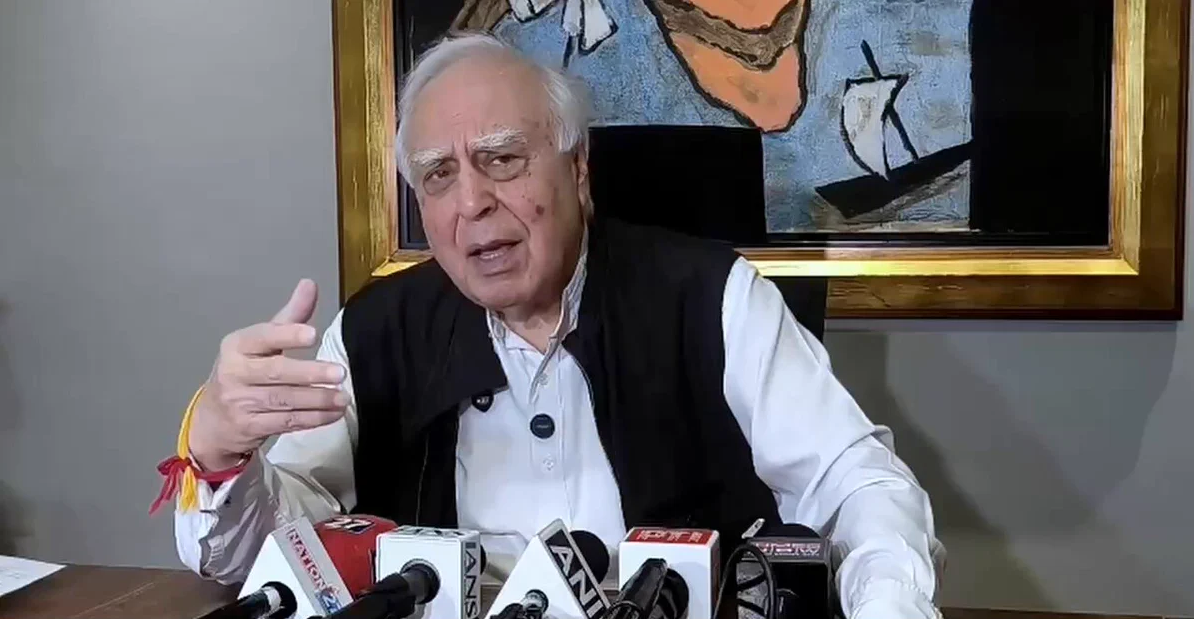
Mumbai, Sept 2026 : Senior advocate and Rajya Sabha MP Kapil Sibal has called for a comprehensive overhaul of India’s anti-defection framework, proposing that the Tenth Schedule of the Constitution be scrapped and replaced with a provision that would bar legislators who switch political parties during their term from holding public office or constitutional positions for 10 years.
Sibal made the proposal while speaking at a discussion titled ‘Horse Trade and Democracy’, organised by the All India Lawyers Union in Kochi. He argued that the existing anti-defection law has failed to effectively prevent political defections and that the merger exception under the Tenth Schedule is increasingly being used to facilitate party-switching.
“I think we need a complete overhaul. We should scrap the 10th Schedule, and we should amend the Constitution with only one provision,” Sibal said.
Under his proposed framework, any legislator who changes political allegiance during the term for which he or she was elected should be prevented from holding public office, any other position or a constitutional authority for the next 10 years.
Sibal has also approached the Supreme Court challenging the interpretation of Paragraph 4 of the Tenth Schedule, which provides an exception from disqualification in cases involving a merger. The petition questions whether legislators should be allowed to avoid disqualification through a merger route when the original political organisation itself has not merged.
The Supreme Court issued notice to the Centre in July on Sibal’s petition. The case assumes significance against the backdrop of several political realignments involving legislators from parties such as the Shiv Sena, Trinamool Congress and Aam Aadmi Party.
Sibal has argued that the existing merger provision can facilitate what effectively amounts to organised defection. Under the current framework, members of a legislature party can avoid disqualification if the original political party merges with another party and at least two-thirds of its legislators agree to the merger.
According to Sibal, the provision can undermine the electoral mandate by enabling legislators to change the political composition of an elected House without returning to voters for a fresh mandate. He has questioned whether a merger at the legislative-party level should receive protection from disqualification when the original political organisation has not itself merged.
The issue has been particularly prominent in Maharashtra, where the split in the Shiv Sena triggered a prolonged political, constitutional and legal dispute over the status of rebel legislators, disqualification proceedings and control of the party organisation.
Sibal represented the Uddhav Thackeray faction in the Supreme Court in the Maharashtra political controversy and has repeatedly criticised defections, warning that they undermine the principles of parliamentary democracy.
In June, Sibal described defections by elected legislators as “immoral, illegal, unconstitutional”. He argued that lawmakers elected on the strength of a particular political party and its election symbol should not be able to simply cross over to another party with a different symbol without facing consequences.
He has also suggested that the proposed restrictions should cover cases in which legislators resign from their elected positions and subsequently contest elections from another party. Such a provision, he argues, would prevent lawmakers from using resignation and re-election as a way to circumvent the consequences of defection.
Sibal has pointed to the earlier “split” provision as an example of how exceptions under the anti-defection law can be misused. The split exception, which had allowed legislators to avoid disqualification when a specified proportion broke away from a political party, was removed through the 91st Constitutional Amendment in 2003.
He contends that the merger exception could now be exploited in a similar manner, allowing groups of legislators to change political allegiance while avoiding disqualification.
The debate over the effectiveness of the anti-defection law comes amid renewed concerns over political defections and realignments across states. Maharashtra Assembly Speaker Rahul Narwekar recently said research was being undertaken to make the anti-defection law more effective, with a committee of Assembly Speakers examining possible improvements to the existing framework.
Sibal’s proposal would require a constitutional amendment if it were to be implemented and could substantially alter the consequences faced by elected representatives who change political allegiance.
His Supreme Court petition, along with the broader political debate, has once again placed the constitutional framework governing defections, mergers and the stability of elected governments under scrutiny.
(Disclaimer :The content of this article is sourced from a news agency and has not been edited by the Mavericknews30 team.)