Union Budget 2026–27 Brings Relief on Foreign Remittances, Cuts Duties on Key Imports

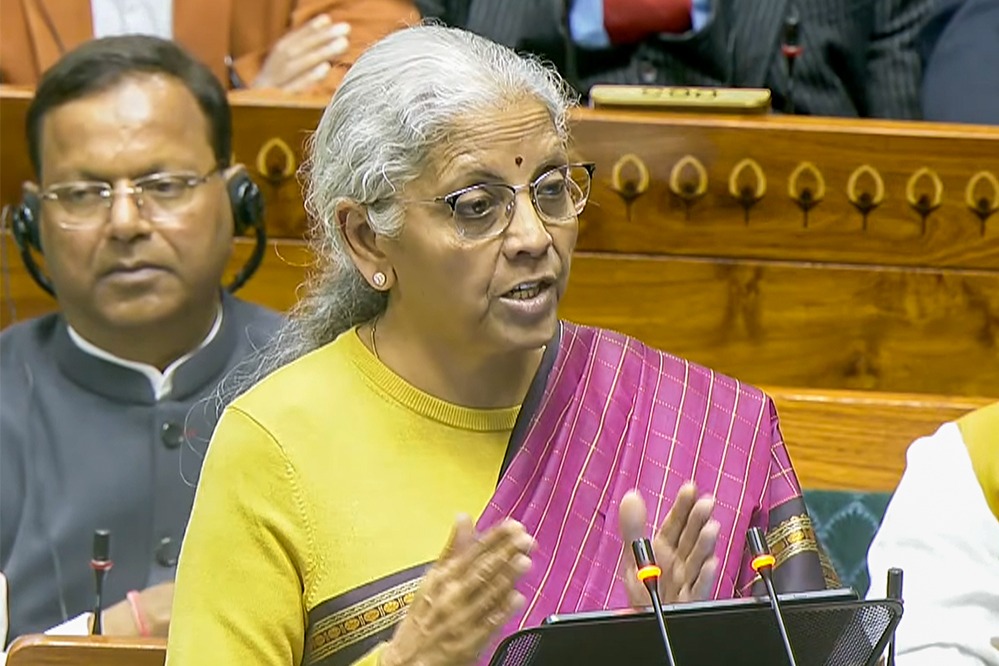
New Delhi, Feb 2026 : Union Finance Minister Nirmala Sitharaman on Sunday announced several tax and duty rationalisation measures in the Union Budget 2026–27, offering relief on select outward remittances while recalibrating customs duties and transaction taxes across a wide range of sectors.
One of the key announcements was a reduction in Tax Collected at Source (TCS) on overseas tour packages as well as education and medical remittances. Under the new provisions, TCS on these outward remittances has been cut to 2 per cent. Earlier, overseas tour packages attracted TCS ranging between 5 and 20 per cent, while remittances for overseas education and medical treatment under the Liberalised Remittance Scheme (LRS) were subject to a 5 per cent TCS. The move is expected to ease the financial burden on individuals travelling abroad or supporting education and healthcare expenses overseas.
The Budget also announced significant cuts and exemptions in basic customs duty (BCD) and transaction charges on several critical items. These include equipment related to energy transition, solar glass inputs, capital goods for critical minerals and lithium-ion cells, components used in civilian aircraft maintenance, repair and overhaul (MRO), as well as rare and cancer drugs. Certain inputs for the textile and leather industries have also been granted duty relief to enhance competitiveness.
Fish caught by Indian fishermen and goods used in nuclear power generation have been fully exempted from BCD. In a consumer-focused move, the basic customs duty on microwave ovens and personal-use imports has been reduced from 20 per cent to 10 per cent.
Import duties have also been lowered on key raw materials such as graphite, quartz, coal, sand, silicon, rare-earth metals and metal oxides. Additionally, the government has extended the export realisation period for select textile and leather shipments to one year, providing exporters greater flexibility.
Agricultural and food-related imports saw notable changes, with the basic customs duty on makhana and roasted nuts slashed to 30 per cent from a steep 150 per cent. Duties on almonds and walnuts were also reduced. The BCD on seeds and spores for sowing has been halved to 15 per cent, while wet blue leather will now attract zero import duty.
On the taxation front, penalties for income tax misreporting have been increased to 100 per cent of the tax amount, in addition to tax and interest. Trading in futures and options will become costlier, with the securities transaction tax (STT) on stock options raised to 0.15 per cent and STT on futures increased to 0.05 per cent from 0.02 per cent.
TCS rates on alcoholic liquor, minerals and scrap sales have been raised from 1 per cent to 2 per cent. Chewing tobacco products, including zarda and gutkha, will now attract a higher National Calamity Contingent Duty (NCCD) of 60 per cent, up from 25 per cent.
Presenting the Budget, the Finance Minister said it rests on three pillars—faster growth, inclusive development and structural reform—adding that its broader “sankalp” remains focused on the poor and disadvantaged sections of society.






President Of India Reviews Passing Out Parade at Indian Military Academy, Dehradun.
Dehradun; June 2026: The Supreme Commander of the Armed Forces and President of India, Dro…

President Of India Reviews Passing Out Parade at Indian Military Academy, Dehradun.
Dehradun; June 2026: The Supreme Commander of the Armed Forces and President of India, …