First Solar Eclipse of 2026 on Phalguna Amavasya, ‘Ring of Fire’ Visible Abroad, No Sutak in India

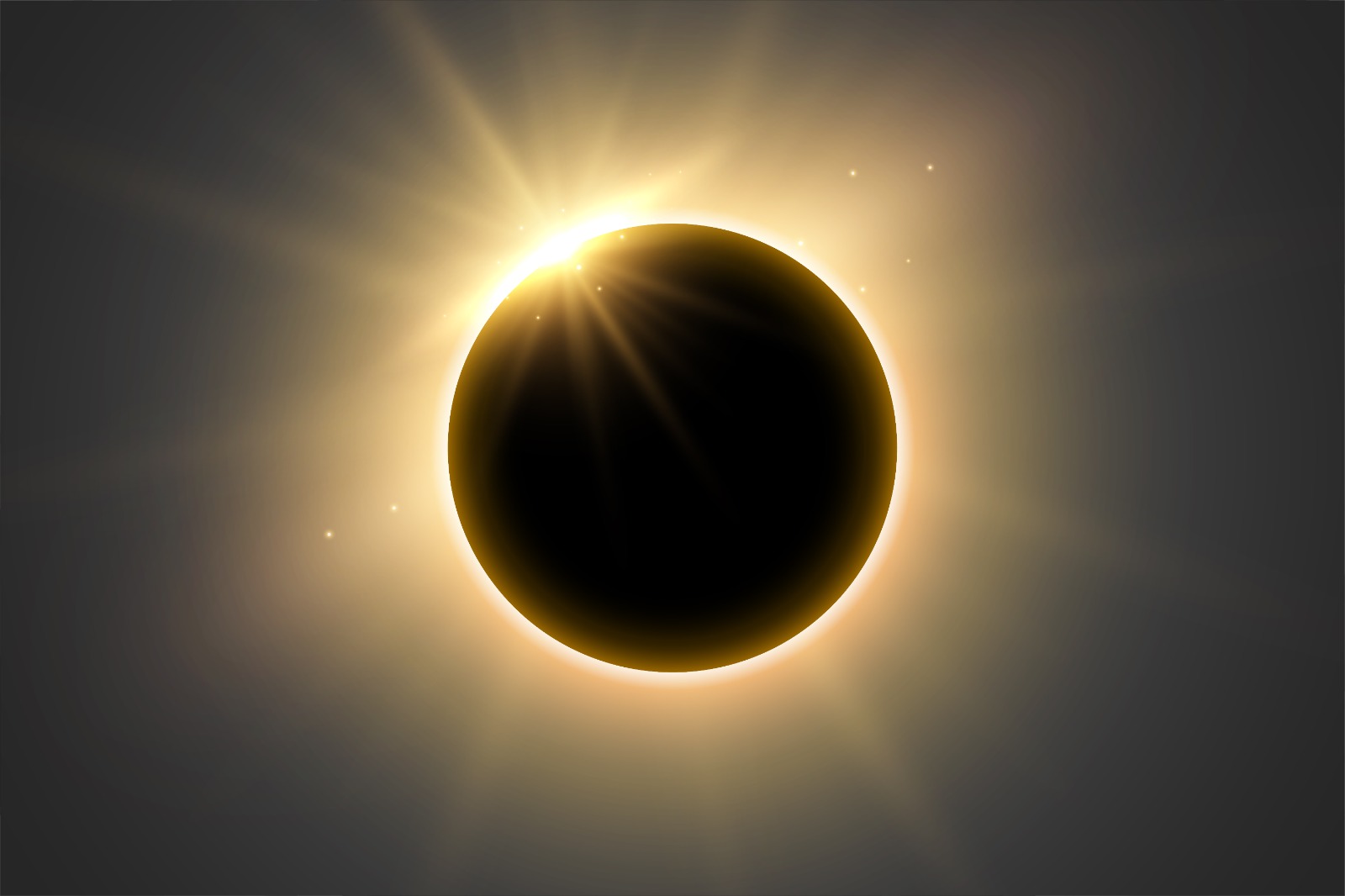
New Delhi, Feb 2026 : The first solar eclipse of 2026 will take place on Tuesday, coinciding with Darsha Amavasya, also known as Phalguna Amavasya. Astronomically classified as an annular solar eclipse, this phenomenon occurs when the Moon passes between the Earth and the Sun but remains too far away to cover the Sun completely. As a result, a brilliant ring of sunlight—popularly called the “Ring of Fire”—appears around the Moon’s dark silhouette.
While the eclipse is expected to be a spectacular sight for observers in select parts of the world, it will not be visible anywhere in India. The annular eclipse will primarily be seen across regions of the Southern Hemisphere, including Antarctica, South Africa, Zimbabwe, Zambia, Tanzania, Mauritius, and parts of South America. Partial views of the eclipse will also be visible over sections of the Southern Ocean, the South Atlantic, and the South Pacific.
Eclipse Timings (IST)
According to Indian Standard Time, the solar eclipse will begin at approximately 3:26 pm, reach its maximum phase around 5:42 pm, and conclude by 7:57 pm. During this period, the eclipse will occur while the Sun is positioned in the Dhanishtha constellation within Aquarius.
No Sutak Period in India
From a religious and cultural standpoint, solar eclipses are often associated with the Sutak period, which traditionally begins about 12 hours before an eclipse and is marked by certain restrictions on auspicious activities. However, as clarified by the Drishya Panchang, Sutak rules apply only in regions where the eclipse is visible.
Since this annular solar eclipse cannot be seen from India, no Sutak period will be observed across the country. Devotees and the general public may continue with their regular routines, including worship, ceremonies, and other auspicious activities, without any restrictions on February 17.
Panchang Details for February 17
On this day, Amavasya Tithi will prevail until 5:30 pm. The Dhanishtha constellation will remain active until 9:16 pm, after which Shatabhisha will commence. The Moon will transit through Capricorn throughout the day.
- Sunrise: 6:58 am
- Sunset: 6:13 pm
Auspicious and Inauspicious Timings
Several favorable time windows are available on February 17:
- Amrit Kaal: 10:39 am to 12:17 pm
- Abhijit Muhurta: 12:13 pm to 12:58 pm
- Vijay Muhurta: 2:28 pm to 3:13 pm
- Twilight (Sandhya) Muhurta: 6:10 pm to 6:36 pm
However, certain periods are traditionally avoided for auspicious work:
- Rahu Kaal: 3:24 pm to 4:48 pm
- Yamaganda: 9:47 am to 11:11 am
Additionally, Adal Yoga will be in effect from 9:16 am to 6:57 pm, a factor some astrologers consider while planning important tasks.
Global Viewing Highlights
The most dramatic views of this annular eclipse will be witnessed over Antarctica, where observers will see the Moon nearly covering the Sun, leaving a thin, glowing ring of light. Partial eclipses will be visible across southern parts of Africa and South America, as well as surrounding oceans.
The eclipse will not be visible from India, Sri Lanka, Nepal, Afghanistan, Myanmar, most of Europe, large parts of North America, central and northern Africa, or Australia.
In summary, while the first solar eclipse of 2026 promises a stunning celestial display for viewers in the Southern Hemisphere, India will experience an entirely normal Phalguna Amavasya—free of Sutak, rich in auspicious timings, and suitable for all customary religious and daily activities.
(The content of this article is sourced from a news agency and has not been edited by the Mavericknews30 team.)








Shivakumar Says Congress United, Assures Women Will Get Cabinet Berth
Bengaluru, Aug 2026 : Karnataka Chief Minister D.K. Shivakumar on Monday sought to dismiss…

Shivakumar Says Congress United, Assures Women Will Get Cabinet Berth
Bengaluru, Aug 2026 : Karnataka Chief Minister D.K. Shivakumar on Monday sought to dismiss …