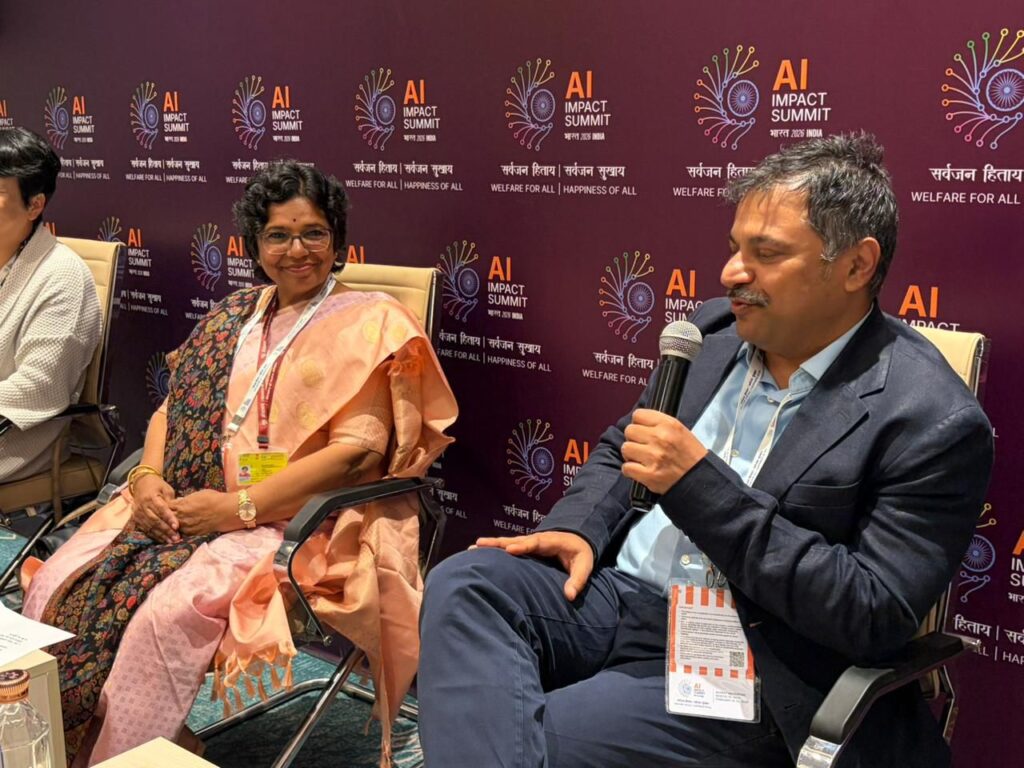
AI Can Enable Sustainable Development Through Women’s Economic Empowerment: Vijaya Rahatkar

New Delhi, Feb 16: In today’s rapidly evolving technological era, Artificial Intelligence (AI) is not merely a technical tool but is emerging as a central force in education, governance, and industry. In the coming years, AI is expected to significantly transform employment opportunities and their nature. Women, therefore, should not remain just users of this technology but must emerge as researchers and creators, leading this new wave of transformation. If AI is integrated with women’s economic empowerment, sustainable development for women can be achieved, expressed Vijaya Rahatkar, Chairperson of the National Commission for Women, here today.
She was delivering the valedictory address at a special session titled “AI and Economic Power – Blueprint for Prosperity Through Women’s Leadership”, jointly organized by the National Commission for Women, the International Telecommunication Union, and the **United Nations Institute for Training and Research (UNITAR), during the India AI Impact Summit held at Bharat Mandapam, New Delhi.
The dais included Mihoko Kumamoto, Director (Prosperity Division), UNITAR; Atsuko Okuda, Regional Director (Asia-Pacific), ITU; Brijesh Singh, Principal Secretary and Director General, Directorate General of Information and Public Relations; and AI music composer-producer Karthik Shah.
Rahatkar stated that this summit discussion was not merely a dialogue but a movement. Citing India’s long history of women leading change, she emphasized that women will not lag behind even in emerging technologies like AI. For this, appropriate training and a supportive ecosystem will be ensured. She stressed that women’s participation alone is not enough—they must have ownership of AI technologies. Becoming “AI-literate” is essential, including a deep understanding of data protection, digital ethics, and cyber security. Emphasizing implementation over announcements, she called for connecting micro and small enterprises with global supply chains and assured that the National Commission for Women would actively work toward this goal.
Support for Victims Through Nodal Officers: Brijesh Singh
Addressing the session, Brijesh Singh highlighted digital threats faced by women. He noted that since AI systems are largely developed using male-dominated data and content, they often lack sensitivity, justice, and equality. Such systems focus on hyper-optimization of efficiency, which adversely affects women’s safety. Alarmingly, statistics show that 91 percent of deepfake victims are women. He stressed the need for firm and effective controls to curb atrocities against women and misuse of deepfake technology.
He underlined platform accountability, stating that social media companies should not evade responsibility under “safe harbor” provisions. Where platforms fail to act, government intervention becomes necessary. Under India’s 2021 rules, victims can file complaints with designated nodal officers, and companies are mandated to remove objectionable content within a stipulated timeframe. He also emphasized the need to make watermarking of AI-generated images mandatory.
Mihoko Kumamoto of UNITAR emphasized capacity building and international cooperation to enable women to benefit from AI-driven global opportunities. She expressed UNITAR’s intent to work with the Government of India, the National Commission for Women, ITU, and other UN partners to implement AI-driven programs focused on practical prosperity—rooted in local realities, strengthening women’s economic empowerment, and creating evidence-based models useful for other countries. She expressed confidence that when the story of AI in the Global South is written, women will not be footnotes but authors of the main chapter of shared and inclusive prosperity.
Atsuko Okuda of ITU highlighted the need to enhance digital inclusion for women in Tier-II and Tier-III cities and reduce the digital divide. She suggested that India take the lead in developing a practical roadmap to convert AI innovation into tangible economic empowerment for women.
AI music creator Karthik Shah spoke about expanding opportunities for women in the creative and digital economy, noting that AI-driven changes in the arts would further empower women. Mihoko Kumamoto moderated the session.
At the beginning of the session, an AI-based short film focusing on women’s empowerment was screened. The session was conducted by Saloni Lakhia, while Ms. Akanksha introduced the speakers.





Shivakumar Says Congress United, Assures Women Will Get Cabinet Berth
Bengaluru, Aug 2026 : Karnataka Chief Minister D.K. Shivakumar on Monday sought to dismiss…
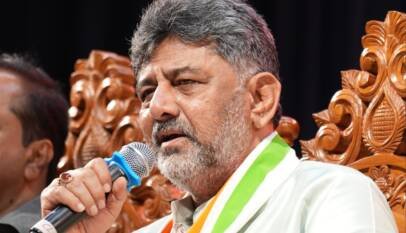
Shivakumar Says Congress United, Assures Women Will Get Cabinet Berth
Bengaluru, Aug 2026 : Karnataka Chief Minister D.K. Shivakumar on Monday sought to dismiss …