Iran Vows Uncompromising Response After US Strikes as Uncertainty Deepens Over Tehran’s Future

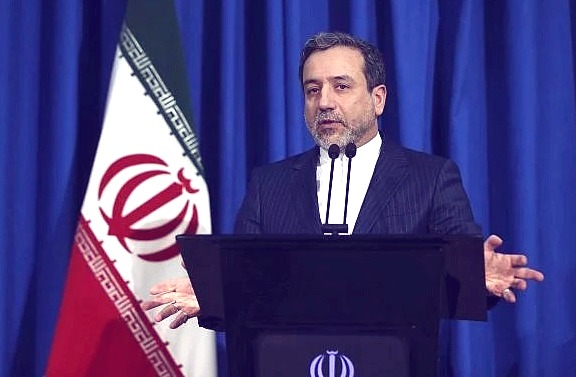
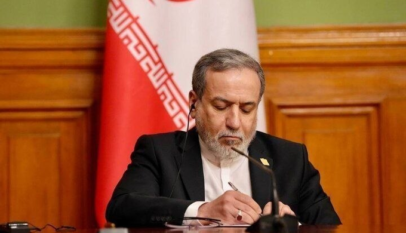
Washington, March 2026 : Tensions between the United States and Iran escalated sharply after Iran’s Foreign Minister Abbas Araghchi condemned US strikes that reportedly killed Supreme Leader Ayatollah Ali Khamenei, branding the action an unlawful act of aggression and warning that Tehran’s response would come “whatever it takes.”
Speaking to ABC News, Araghchi dismissed Washington’s justification for the strikes and framed Iran’s position in stark legal and moral terms. “What the United States is doing is an act of aggression. What we are doing is an act of self-defence,” he said, asserting that Iran’s actions were legitimate under international law. His remarks offered no hint of de-escalation, no indication of timelines, and no reference to negotiations, signalling that Tehran is prepared for an open-ended confrontation.
Araghchi also avoided acknowledging any damage to Iran’s military capabilities, despite US claims that the strikes are part of a broader campaign to degrade Iran’s missile infrastructure. He made no reference to internal instability following Khamenei’s death, projecting an image of continuity and resolve within Iran’s leadership even as the country enters an unprecedented transition.
On the American side, senior lawmakers indicated that military operations would continue. Tom Cotton, Chairman of the Senate Intelligence Committee, said the coming days would involve a “methodical and systematic focus” on Iran’s missiles, launch systems, and manufacturing capacity. He warned that retaliation was likely, adding that Iran would continue to target US bases in the region, American allies, and Israel.
In a separate interview with CBS News, Cotton said there were no plans for a large-scale ground invasion of Iran. Instead, he described an extended air and naval campaign aimed at sustaining pressure on Tehran while avoiding the deployment of American ground forces. His comments underscored Washington’s intent to maintain military leverage while limiting direct troop involvement.
However, not all US lawmakers agreed with the scale or rationale of the operation. Mark Warner, Vice Chairman of the Senate Intelligence Committee, expressed concern over the lack of clarity about what comes next. Speaking to CNN, Warner said US officials had “very little visibility” into Iran’s internal dynamics following the elimination of its supreme leader, warning that the long-term consequences remained uncertain.
Democratic Senator Adam Schiff was even more critical. Speaking to ABC News, Schiff argued that there was no imminent threat posed by Iran to justify such a sweeping military campaign. He said there was “simply no basis” for an operation that appeared aimed at regime change rather than narrowly defined security objectives. While acknowledging relief at the removal of what he called a repressive leadership figure, Schiff cautioned against assuming that Iran’s internal population would rise up or that the United States should play a role in shaping an internal transition.
With Khamenei’s death, Iran now faces a critical moment in its political history. Under the country’s constitution, the Assembly of Experts is tasked with selecting a new supreme leader. However, real power dynamics are complex, with the Islamic Revolutionary Guard Corps expected to exert significant influence during the transition. Analysts warn that the process could either consolidate hardline control or trigger internal power struggles, adding another layer of unpredictability to an already volatile regional situation.
For now, Tehran’s messaging remains defiant and unified. Araghchi’s repeated insistence that Iran is acting in self-defence reflects a strategy aimed at rallying domestic support while laying the groundwork for diplomatic and legal arguments on the international stage. By framing the strikes as unlawful aggression, Iran appears intent on challenging US actions in global forums even as it prepares for potential military retaliation.
The sharply contrasting narratives from Washington and Tehran highlight the deep uncertainty surrounding Iran’s next phase. While the United States has signalled sustained military pressure, Iran has made clear that it does not consider itself weakened or defeated. As both sides brace for what comes next, the region—and the wider world—faces a period of heightened risk, with few signs of restraint and even fewer of dialogue.
(The content of this article is sourced from a news agency and has not been edited by the Mavericknews30 team.)


Chandrababu Naidu Reviews Preparations for PM Modi’s August 1 Inauguration of Bhogapuram International Airport
Amaravati, July 2026 : Andhra Pradesh Chief Minister N. Chandrababu Naidu on Monday conduc…
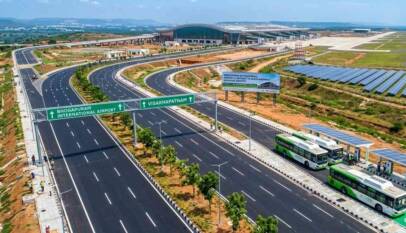
Chandrababu Naidu Reviews Preparations for PM Modi’s August 1 Inauguration of Bhogapuram International Airport
Amaravati, July 2026 : Andhra Pradesh Chief Minister N. Chandrababu Naidu on Monday conducted …