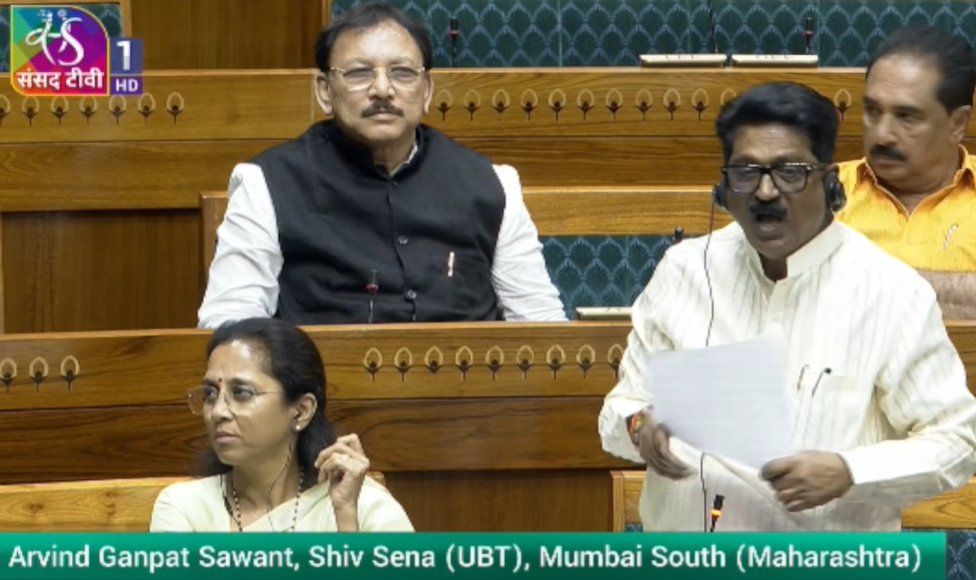
Opposition Objects to Clubbing of Delimitation and Constitution Amendment Bills in Lok Sabha

New Delhi, April 2026 : A sharp exchange unfolded in the Lok Sabha on Thursday after Congress MP K. C. Venugopal opposed the government’s decision to take up the Delimitation Bill alongside the Constitution (One Hundred and Thirty-First Amendment) Bill, 2026, for discussion and passage, calling the move procedurally inappropriate.
The issue arose when Union Law Minister Arjun Ram Meghwal introduced the Constitution Amendment Bill and the Delimitation Bill, 2026, as part of the government’s legislative agenda. The move follows an earlier round of voting in which Members of Parliament approved the introduction of the proposed legislation for debate.
Raising objections in the House, Venugopal argued that combining different types of legislation—particularly a Constitution amendment with ordinary bills—was not in line with parliamentary conventions. “This is against the rule. One is a Constitution Amendment Bill, and the others are not. Clubbing them is not a good practice. We cannot allow this; there are consequences,” he said.
He further questioned the rationale behind grouping the Bills, suggesting that each should be debated independently given their distinct legal and procedural implications. Venugopal also remarked that if the Constitution Amendment Bill were to fail, the relevance of the associated bills would be undermined.
Responding to the concerns, Union Home Minister Amit Shah defended the government’s approach, asserting that the legislative strategy was both logical and necessary. He clarified that the voting requirements for a Constitution amendment differ from those of ordinary legislation, but maintained that the subject matter of the Bills justified their simultaneous consideration.
“The votes in a constitutional amendment are different compared to an amendment to a law,” Shah said, adding that the government had introduced the Bills together as part of a comprehensive plan to implement women’s reservation effectively.
He emphasised that the Constitution Amendment Bill lays the foundation for women’s reservation, while the Delimitation Bill and the Union Territories Laws (Amendment) Bill are essential to operationalise the policy. “To take women’s reservation to its logical end, these Bills are interconnected. That is why they have been introduced together,” he explained.
Shah also pointed out that similar legislative practices have been followed in the past. Referring to the passage of the Nari Shakti Vandan Adhiniyam, 2023, he said that the Opposition had previously agreed to simultaneous discussions on related Bills.
Taking a political swipe, Shah accused Opposition parties of adopting a blanket approach to resistance. “They have come here with a decision to oppose everything, so they are opposing everything,” he said.
The debate highlights the broader tensions in Parliament over the process and substance of key reforms, particularly those linked to women’s reservation and electoral restructuring. With discussions set to continue, the procedural dispute is likely to remain a point of contention even as lawmakers deliberate on the substance of the proposed legislation.



Microsoft Cuts 4,800 Jobs as AI Investments Reshape Business Strategy
New Delhi, July 2026: Microsoft has announced another major round of layoffs, cutting appr…
Recenzja gry zautomatyzowanych w kasynie online Potter Slots Casino: analiza funkcjonalności i rozgrywek hazardowych.
Co to jest Potter Slots Casino? Potter Slots Casino to aplikacja internetowa, która oferuje …