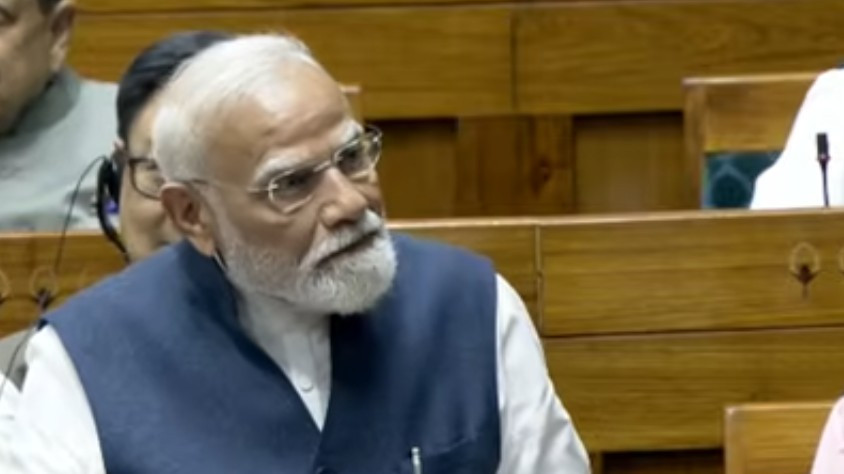
Women’s Reservation Bill Will Transform India’s Political Landscape, Says PM Modi

New Delhi, April 2026 : Prime Minister Narendra Modi on Thursday asserted that the Women’s Reservation Bill would fundamentally transform the “disha and dasha” (direction and condition) of India’s politics by ensuring greater participation of women in decision-making processes.
Highlighting the broader vision of Viksit Bharat @2047, the Prime Minister said the legislation would empower half of the country’s population and deepen democratic values. He emphasised that the move was not merely a political reform but a structural change aimed at strengthening governance through inclusive representation.
“We are privileged to have the opportunity to give a new direction to the nation’s politics and reinforce democracy,” Modi said, urging political parties to rise above partisan considerations and support the initiative in the national interest. He also noted that women voters have consistently demonstrated their political awareness, adding that those who opposed such measures in the past have faced electoral consequences.
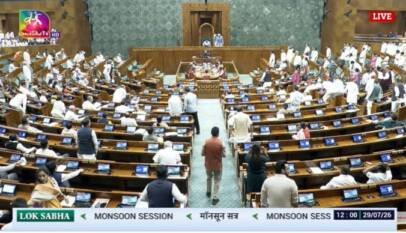
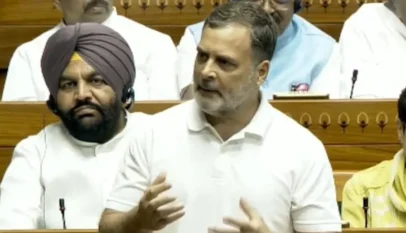
Earlier in the day, the Lok Sabha approved the introduction of the Constitution (One Hundred and Thirty-First Amendment) Bill, 2026, following a division of votes demanded by the Opposition. The Bill, along with the Delimitation Bill, 2026, and the Union Territories Laws (Amendment) Bill, 2026, was tabled by Union Law Minister Arjun Ram Meghwal, marking a crucial step in the legislative process.
The voting saw 251 members supporting the introduction of the Bill, while 185 voted against it, as announced by Lok Sabha Speaker Om Birla. The process followed a formal division, a method used when voice votes are contested. In such cases, votes are recorded electronically under categories such as “Ayes”, “Noes”, and “Abstain”.
Subsequently, vote slips were also utilised, with a total of 333 members participating in the process and no abstentions recorded during that round. The division reflected the heightened political engagement surrounding the Bill, which has triggered strong reactions from both the government and the Opposition.
Lok Sabha Secretary General Utpal Kumar Singh briefed members on the technical aspects of the voting process, explaining that votes must be cast within the designated time frame between the first and second gong to be registered. He also clarified that members could opt for vote slips if they wished to modify their votes.
The Opposition had insisted on a recorded vote as the House took up the motion, which required a simple majority for approval. The government, however, maintained that the Bill represents a long-overdue reform aimed at enhancing women’s representation in legislatures.
With the introduction now cleared, the Lok Sabha is set to hold an extended debate on the proposed legislation. The discussion is expected to be closely watched, as it carries significant implications for the future of political representation and gender equality in India.



RECPDCL Hands Over Two Power Transmission SPVs
RECPDCL Hands Over Bhadla Ramgarh Power Transmission limited to Power Grid Corporation of …

RECPDCL Hands Over Two Power Transmission SPVs
RECPDCL Hands Over Bhadla Ramgarh Power Transmission limited to Power Grid Corporation of India …