Ukraine Managed To Obtain $ 500 Million As Additional Revenue Amid Efforts To Reassure Partners.

Kyiv/Washington DC; April 2026: Ukraine collected $ 500 million more revenue than expected in the first quarter of FY:2026, the country’s Finance Minister Serhii Marchenko said, as Ukraine tries to better line its war coffers and reassure key partners. “Revenue mobilisation is strong”, Marchenko said at the US-Ukraine Partnership Forum hosted by the US Chamber of Commerce on April 15 in Washington DC, where he spoke on a panel on financing Ukraine’s recovery.
Big donors to Ukraine, including the International Monetary Fund and the European Union, want the country to boost revenue collection and reduce tax evasion and avoidance. Now in its fifth year of fighting Russia’s full-scale invasion, the country relies heavily on foreign cash, especially from the EU, to fund its 900,000 strong army and keep the state afloat.
But while Kyiv is unable to raise all those funds domestically and is likely to rely on allies for years to come, partners want the country to bear more of the burden — especially in preparation for an eventual peace when financing might not be so generous. Marchenko explicitly recognized the temporary nature of foreign cash, while also alluding to the need to attract private capital going forward. “We need to think about what we can do if we don’t have access to this money”, he said.
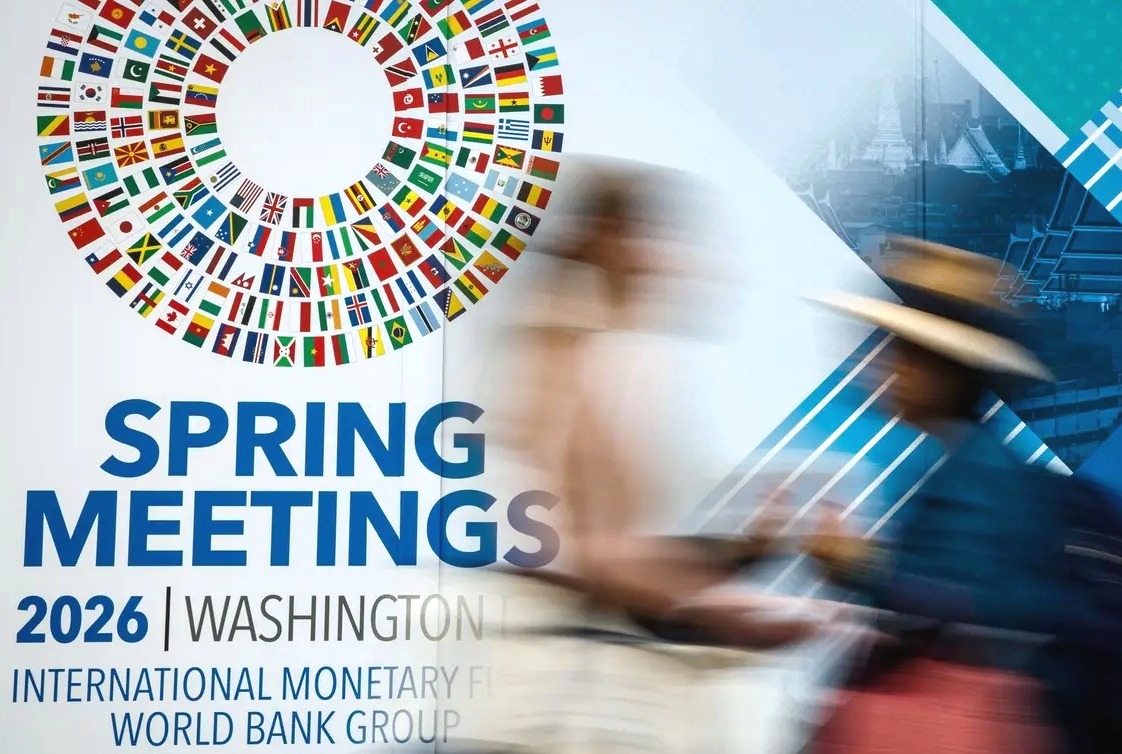
The comments come as a large Ukrainian delegation attends the IMF and World Bank Spring Meetings in Washington, DC this week for a series of high-level meetings. That includes talks with the IMF, with whom Kyiv signed an $8.1 billion loan program with Ukraine in February this year.
Part of the deal is for Kyiv to implement four new taxes. Ukraine also most recently appointed a new head of its notorious customs service, which has been accused of possessing a sieve-like ability to collect revenue, fulfilling a longstanding IMF requirement. But the war-torn country has since missed a March 31 deadline on three of the taxes, including a widely unpopular VAT tax on self-employed entrepreneurs in the country, a status widely used by companies to optimize taxes.
Nevertheless, Managing Director of the IMF Kristalina Georgieva praised Kyiv in an interview with Face the Nation on April 12, pointing out that the country collected 34% of its gross domestic product in tax revenues, a high level for a country in its fifth year of war. “We are working with Ukraine so they can continue on this path of reforms that gives them the credibility to earn massive support from the rest of the world, especially from Europe”, she said.
Marchenko also spoke more widely about Ukraine’s economic prospects, as global headwinds led the IMF to downgrade the country’s growth prospects for 2026 in their flagship report yesterday. “We are struggling”, he said, highlighting Russia’s attacks on Ukraine’s energy infrastructure and the creeping rise of inflation following the war in the Middle East.
Despite being on a downward trajectory since May last year, inflation rose to 7.9% in March according to the National Bank of Ukraine. But Marchenko said that despite the attacks on Ukraine’s energy infrastructure over the winter and the difficult challenges faced, there are already signs of recovery. The finance minister was also upbeat on a 90 billion euros ($105 billion) loan from Ukraine, which is likely to be unlocked in the coming weeks following Viktor Orban’s electoral defeat in Hungary on April 12, who had blocked the loan. “I hope that the successful resolution of the European loan to Ukraine will help us to boost additional investment incentives to Ukraine”.
Earlier, on 10th April 2026, as per official sources, Ukraine appointed a new head of the country’s customs service, fulfilling a long-delayed commitment to international partners as part of a reform push. Ukraine’s Finance Minister Serhii Marchenko approved Orest Mandziy as head of the State Customs Service, Ukrainian Prime Minister Yulia Svyrydenko said on April 10. Mandziy was formerly a detective at the National Anti-Corruption Bureau of Ukraine, or NABU. The country’s customs service is widely seen as one of the most problematic government institutions in Ukraine, with billions of dollars in revenues forgone each year due to smuggling.
“We expect the new head to continue the reform of the customs service, forming a modern, transparent, and efficient customs system that works to ensure the financial stability of the state”, Svyrydenko had then said in a post on Telegram.
As part of a push to improve Kyiv’s revenue collection to raise money for the war effort, Ukraine agreed to select a new permanent head of the service as part of a 2023–2025 lending agreement with the International Monetary Fund. But the selection process was repeatedly stalled.
The fund extended the deadline to March 31 as part of a new $8.1 billion program, agreed in February this year, which today’s appointment fulfills.
Ukraine is in a race against time to fill its state coffers before June, when it faces a cliff in foreign financing needed to keep the country afloat. Failure to adopt all the conditions of the $8.1 billion program could jeopardise the next tranche of the program, worth almost $700 million and scheduled for June.
Ukraine’s parliament passed one of four new taxes required by the IMF under the fund’s new lending agreement on April 07th, although the other three are yet to pass. The most contentious of the new IMF-backed taxes that has yet to pass is a value-added tax on individuals earning above a certain threshold under Ukraine’s “self-employed entrepreneur” regime, known by its Ukrainian acronym FOP.
The status is widely used across all sectors in Ukraine, and the change has been met with fierce opposition. While Kyiv had originally agreed to push through the tax by March 31, public outcry has given officials pause. Several lawmakers have apprised the media outlets, that they expect the Ukrainian team to try and negotiate on some of the most controversial elements of the IMF loan program, particularly the tax on self-employed entrepreneurs. The move to appoint a customs head in the lead up to the meetings in DC could be a way of seeking leverage in the talks by showing progress on reforms closely watched by the IMF.
A similarly high-profile appointment was also stalled last year after Ukraine’s government refused to appoint Oleksandr Tsyvinsky, a former detective at NABU, to head the Economic Security Bureau, despite his selection by an independent commission. The appointment of a new director to the bureau by the end of July was also a requirement under Ukraine’s commitments to the EU and the IMF. But the government rejected Tsyvinsky on the grounds that he had ties to Russia, a claim lawmakers and activists said was unfounded.
Following the government’s move to weaken NABU, which sparked the first wartime protests and drew widespread condemnation from Ukraine’s partners abroad, officials ultimately reversed course. Tsyvinsky was appointed head of the agency and has served as its chief since August last year.
Team Maverick.
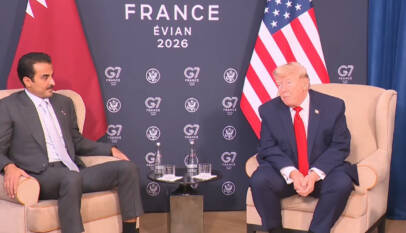
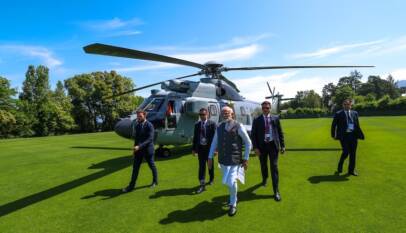
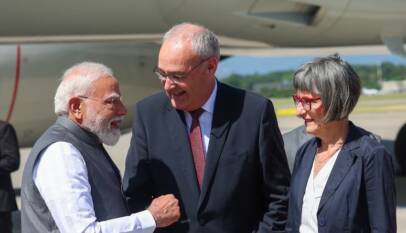

Mutual trust is world’s most valuable strategic asset: PM Modi at G7 Summit
Evian (France), June 2026 : Prime Minister Narendra Modi on Tuesday underscored the import…
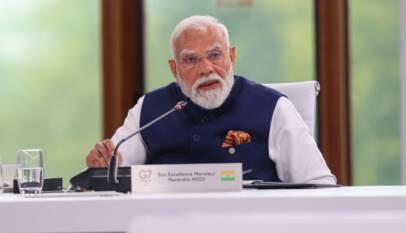
Mutual trust is world’s most valuable strategic asset: PM Modi at G7 Summit
Evian (France), June 2026 : Prime Minister Narendra Modi on Tuesday underscored the importance …