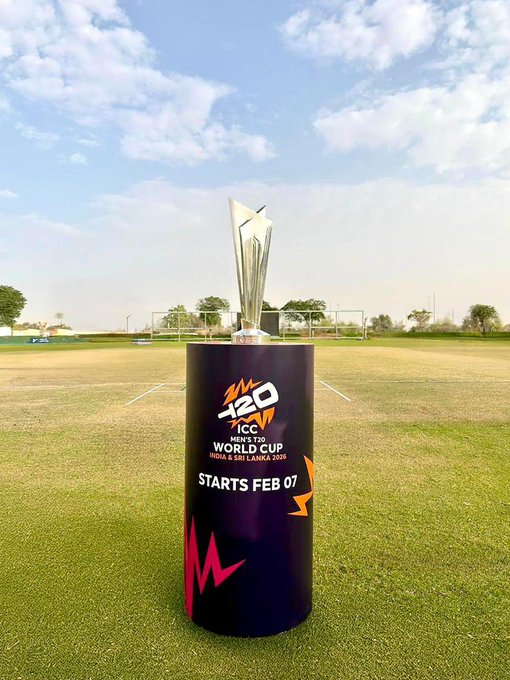
ICC Men’s T20 World Cup 2026 Smashes Viewership Records as India Drives Global Cricket Boom

New Delhi, March 2026 : The ICC Men’s T20 World Cup 2026 has etched its name into cricketing history, emerging as the most-watched edition of the tournament to date. With viewership in India alone surpassing an unprecedented 500 million, the 2026 event has set a new benchmark for popularity, reach, and fan engagement, reaffirming India’s central role in the global growth of the sport.
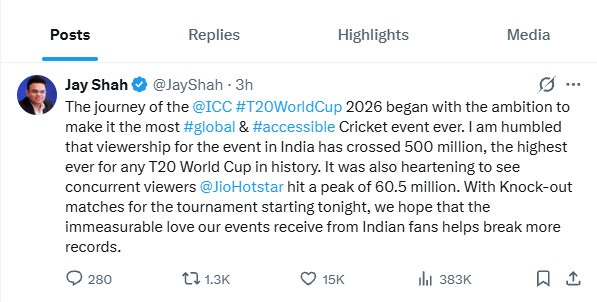
The milestone was confirmed by International Cricket Council (ICC) Chairman Jay Shah, who shared the achievement in a post on X. Shah said the tournament was conceived with the ambition of making it the most global and accessible cricket event ever, and the response from fans—particularly in India—had exceeded all expectations. He also highlighted the digital revolution underpinning the event, noting that concurrent viewership on JioHotstar peaked at an extraordinary 60.5 million, a record for live cricket streaming.
As the tournament entered its knockout phase, Shah expressed confidence that the overwhelming support from Indian fans would help the event break even more records in the days ahead, underlining the momentum behind the competition.
On the field, the 2026 T20 World Cup has matched its off-field success with high-octane cricket and gripping narratives. The group stage featured 20 teams divided into four groups of five, with only the top two from each group advancing. While traditional powerhouses such as Australia and Pakistan faced stiff challenges early on, emerging teams like Zimbabwe and Nepal impressed with fearless performances, reflecting the increasing depth and competitiveness of global T20 cricket.
The Super Eights stage raised the intensity further. Eight teams—India, Sri Lanka, West Indies, South Africa, England, New Zealand, Zimbabwe, and Pakistan—were split into two groups, with just the top two from each earning a place in the semi-finals. Several matches went down to the final overs, with net run rate playing a decisive role in determining the final standings, keeping fans hooked until the very end.
Ultimately, India, England, New Zealand, and South Africa emerged as the semi-finalists, a line-up that blends pedigree, consistency, and tactical excellence. India are set to face England in a marquee clash at Wankhede Stadium, renewing one of modern cricket’s fiercest rivalries. The second semi-final will see New Zealand take on South Africa at Eden Gardens, a venue renowned for its electric atmosphere. Both encounters promise explosive batting, strategic duels, and high-pressure drama, with a coveted spot in the final at stake.
Beyond the stadiums, the ICC’s digital platforms have recorded historic growth. The ICC’s streaming service, catering to fans in emerging cricket markets, registered a new peak for concurrent viewers during the Super Eight clash between India and the West Indies, surpassing the previous record set during the 2024 T20 World Cup final. ICC.tv has already exceeded the total number of users and minutes watched across the entirety of the 2024 event. Compared to the same stage of the previous tournament, unique users have grown by 28 percent, while total playtime has surged by 56 percent.
Social media engagement has followed a similar trajectory. Across platforms, the ICC has crossed 10 billion video views during the 2026 tournament and remains on track to surpass the 16 billion views achieved in 2024, highlighting cricket’s expanding digital footprint and appeal among younger audiences.
The record-breaking viewership has also drawn praise from Lalit Modi, the founder of the Indian Premier League. Reposting Jay Shah’s announcement, Modi lauded the achievement as a testament to India’s unmatched influence in world cricket. He credited the ICC leadership for steering the game’s growth despite geopolitical and administrative challenges, asserting that cricket would continue to expand globally under Shah’s stewardship.
Modi also used the moment to comment on the evolving structure of the sport. He predicted increasing pressure on international cricket calendars due to the rise of domestic franchise leagues such as the IPL, CPL, Big Bash League, and South Africa’s T20 competitions. In contrast, he suggested that some newer formats and leagues may struggle to sustain long-term relevance.
Looking ahead, Modi highlighted cricket’s return to the Olympics as a transformative opportunity. He said the inclusion of cricket at the Los Angeles Games would expose the sport to new audiences and inspire generations of children unfamiliar with the game. He also reignited debate around the future of the 50-over format, questioning its relevance in an era dominated by T20 cricket and packed schedules. According to Modi, reassessing the international calendar could ease player workload while aligning the sport with evolving fan preferences.
As the ICC Men’s T20 World Cup 2026 heads into its decisive stages, the tournament stands as a landmark moment for cricket—on the field, on screens, and across the global sporting landscape—powered by record-breaking engagement and an ever-expanding fan base.


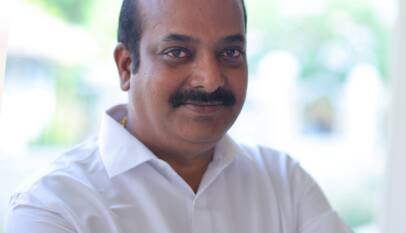
Jana Sena Picks Lingamaneni Ramesh for Rajya Sabha, Strengthening NDA’s Parliamentary Presence in Andhra Pradesh
Amaravati, June 2026 : The Jana Sena Party has officially nominated senior leader Lingaman…
Coronavirus disease 2019
COVID-19 is a contagious disease caused by the coronavirus SARS-CoV-2. In January 2020, the …