Trump’s Pearl Harbor Remark Creates Awkward Moment During Takaichi’s White House Visit

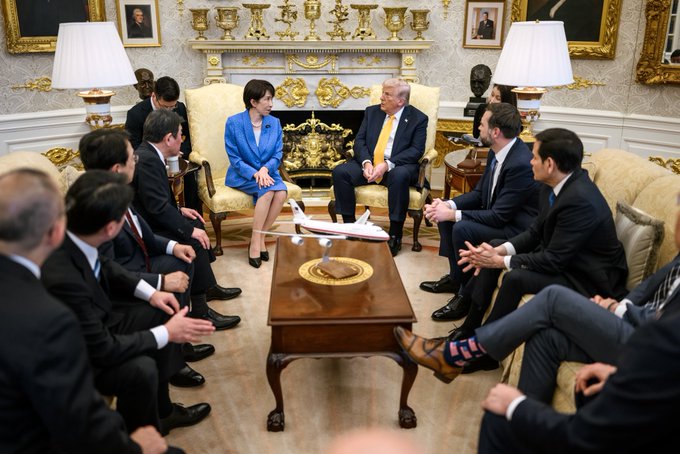
Washington, March 2026 : A remark by US President Donald Trump invoking the Pearl Harbor attack briefly cast a shadow over an otherwise cordial meeting with Japanese Prime Minister Sanae Takaichi at the White House, highlighting sensitivities even among close allies.
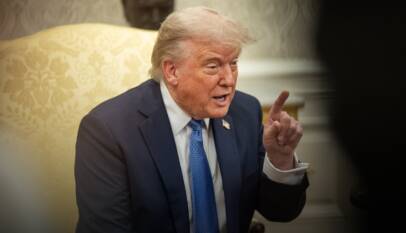
The moment came when Trump was asked why key allies, including Japan, had not been informed in advance about recent US strikes on Iran. Defending the decision, Trump emphasised the importance of maintaining operational secrecy. “You don’t want to signal too much. We went in very hard and didn’t tell anybody because we wanted surprise,” he said.
He then drew a historical comparison that appeared to unsettle the Japanese leader. Referring to Japan’s 1941 attack on Pearl Harbor, Trump remarked, “Who knows better about surprise than Japan? Why didn’t you tell me about Pearl Harbor?” He added that the element of surprise had been crucial in achieving military success in the initial phase of the operation.
According to reports from the meeting, Takaichi visibly reacted to the comment. Observers noted that her expression changed noticeably, with her smile fading as she leaned back, appearing taken aback by the sudden and sensitive reference. While she did not respond publicly to the remark, the exchange created a brief moment of discomfort during an otherwise carefully managed diplomatic engagement.
Trump defended his approach, arguing that advance notification to allies would have undermined the effectiveness of the strikes. He claimed that the element of surprise had allowed US forces to inflict significant damage early in the operation. “If I tell everybody, there’s no longer a surprise,” he said, suggesting that secrecy was essential to the mission’s success.
Despite the awkward moment, the broader tone of the meeting remained positive. Trump repeatedly praised Takaichi, describing her as a “great” and “spectacular” leader, and highlighted the strength of US-Japan relations. He said it was an honour to host her at the White House and underscored the importance of continued cooperation between the two nations.
Takaichi, for her part, emphasised the strong personal rapport between the two leaders and reaffirmed Japan’s commitment to the bilateral alliance. “I am confident that we can work together to achieve shared goals,” she said, projecting a message of unity and collaboration.
However, Trump also used the meeting to press allies to take on greater responsibility, particularly in safeguarding critical global trade routes such as the Strait of Hormuz. He pointed out that Japan depends heavily on oil shipments passing through the strait and suggested that Tokyo should play a more active role in ensuring its security.
Takaichi maintained a cautious tone on broader geopolitical issues, including relations with China. She reiterated that Japan remains open to dialogue with Beijing and expressed hope that US-China relations would contribute to regional stability and the smooth functioning of global supply chains.
The exchange underscored the complex dynamics of modern diplomacy, where even close allies must navigate historical sensitivities. While the United States and Japan have built one of the world’s strongest alliances since World War II, references to events like Pearl Harbor continue to carry deep symbolic weight.
Despite the brief tension, both leaders reaffirmed their commitment to strengthening ties in defence, trade, and regional security, ensuring that the longstanding partnership remains resilient amid evolving global challenges.


China Open: Lakshya, Sindhu and Ayush Shetty Advance to Second Round After Gritty Wins
Changzhou (China), July 2026 : India’s top badminton stars Lakshya Sen, P.V. Sindhu …
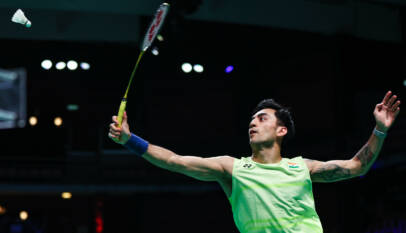
China Open: Lakshya, Sindhu and Ayush Shetty Advance to Second Round After Gritty Wins
Changzhou (China), July 2026 : India’s top badminton stars Lakshya Sen, P.V. Sindhu and …