In A Bid To Bolster Transparency Russia Limit Cashless Limits.

Moscow; April 2026: The Ministry Of Finance, Government Of Russia in a bid to bolster the tax infrastructure has decided to control transfers more than 2.4 million rubles per year. Unconfirmed non-cash income of individuals exceeding the 2.4 million ruble annual limit may be automatically subject to monitoring by tax authorities. This is expected to occur as part of the government’s proposed expansion of information exchange between the Federal Tax Service and the Central Bank starting in 2027. Among the criteria that tax authorities will consider are the systematic and regular nature of receipts, as well as the range of counterparties. The Ministry of Finance assures that the changes will not affect the majority of individuals: transfers from close relatives and other receipts not related to business activities will not be subject to monitoring.
The Ministry of Finance has briefed the Media outlets, new measures to expand the exchange of data on non-cash transfers between individuals between the Central Bank and the Federal Tax Service involve a shift in the approach to administration: instead of the current selective control, a transition to automated control is envisaged, which will be implemented when risk indicators for conducting business without state registration are triggered.
The Federal Tax Service clarified to Media outlets that the starting point for such monitoring will be exceeding the annual undeclared income limit of 2.4 million rubles per year. This amount corresponds to the maximum income for the self-employed and the maximum income for an individual when applying the “lower” personal income tax rate of 13%. In 2024, the Ministry of Finance reported that only 3% of the working population had incomes exceeding this amount.
These changes are contained in a package of bills introduced to the State Duma this week, prepared as part of a plan to clean up the economy. Specifically, the Tax Code requires the Central Bank to submit information to the Federal Tax Service on individuals who are not sole proprietors and whose account transactions indicate entrepreneurial activity or systematically receive income from other individuals.
The bill does not specify the specific criteria; they, along with the interaction procedures, will be determined by an agreement between the Central Bank and the Federal Tax Service. The Federal Tax Service explained to Media outlets that the criteria for information exchange transactions will include a number of factors: the systematic and regular nature of the receipt of funds, the range of counterparties, the transfer amounts, and other essential characteristics. However, the service clarifies that transfers to personal accounts from close relatives, “including frequent ones and those related to life circumstances, but not related to business activities”, will not be subject to this control.
According to the Federal Tax Service, “the risk analysis model will ensure a balanced approach to assessing the information received about transactions”. The changes will allow for a more accurate analysis of information about individuals who are required to declare income and who exhibit characteristics of entrepreneurial activity.
“Conscientious citizens who fully declare their income and pay taxes on it will not face additional oversight”, the ministry added. The Ministry of Finance also noted that the initiative is aimed at detecting signs of unregistered entrepreneurial activity and “does not affect everyday transfers by citizens”.
Upon receiving information from the Central Bank, according to the bill, tax authorities will be able to request bank statements for such individuals. Currently, tax authorities are limited to requesting bank statements for individuals. Such measures are permitted only in cases of an audit of an individual, failure to comply with debt payment demands, a decision to collect a debt, or a decision to suspend account transactions.
The further consequences of discovering undeclared income are not specified. Based on the logic of the bill, the “discovery” of income received from other individuals should have tax consequences for citizens, the Federal Tax Service will likely then initiate an audit, which may result in additional assessments.
The initiative, as noted in the explanatory note to the bill, is related to the fact that income received in non-cash form from other individuals is outside the scope of tax control. Funds received by individuals free of charge are completely exempt from taxation, and this exemption is used to disguise payments to other individuals for remunerative transactions. It should be noted that to ensure the unambiguous identification of bank account holders, the amendments introduce mandatory use of a Taxpayer Identification Number (TIN) when opening accounts.
Evgeny Vlasov, head of the tax practice at GSL Law & Consulting, notes that the mechanism will expand tax authorities’ tools for identifying gray income, but its effectiveness depends on the correct configuration of the algorithms. Among the criteria that may indicate “suspicious” transfers, he cites regular large payments (for example, for rent) or numerous small transfers from different individuals—indicative of retail trade or services, such as tutoring. Vlasov believes that tightened controls could encourage a shift to cash or cryptocurrency, which would “somewhat reduce the expected benefit”.
According to Dmitry Kletochkin, partner at Rustam Kurmaev & Partners, have said, “citizens have already become unaccustomed to cash payments, and we can expect an increase in the number of those registering as self-employed or individual entrepreneurs”.
Team Maverick.

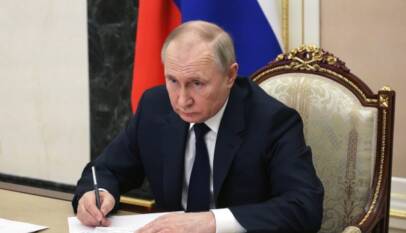





Prashant Kishor to Contest Bankipur Bypoll, Jan Suraaj Eyes Breakthrough in BJP Stronghold
Patna, July 2026 : Election strategist-turned-politician Prashant Kishor will contest the …
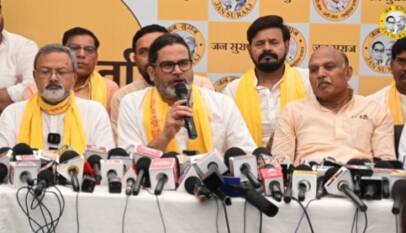
Prashant Kishor to Contest Bankipur Bypoll, Jan Suraaj Eyes Breakthrough in BJP Stronghold
Patna, July 2026 : Election strategist-turned-politician Prashant Kishor will contest the upcoming by-election from …