Iranian Foreign Minister Had To Convince IRGC Commanders To Accept The Ceasefire Proposals.

Tehran/Washington DC; April 2026: Iranian Foreign Affairs Minister Abbas Araghchi had to convince Islamic Revolutionary Guards Corps (IRGC) commanders to accept the US proposal for a ceasefire, according to official sources. The ceasefire follows reports that a group of veteran hardline IRGC commanders has consolidated power within the Iranian regime in recent weeks and is playing an increasingly central role in decision-making, such as appointments to key positions. These commanders have been deeply involved in the highest levels of the regime since its foundation in 1979.
That Araghchi reportedly had to convince members of the IRGC to accept the ceasefire suggests that the IRGC maintains significant influence over key regime decisions and continues to push for more hardline, anti-Western policies. Sources familiar with talks also described Iranian Supreme Leader Mojtaba Khamenei’s approval for the ceasefire as a “breakthrough” and added that he approved all major decisions related to the ceasefire on April 6 and 7. This suggests that Mojtaba may also retain at least some level of decision-making authority amid reports that Mojtaba is badly injured due to US-Israeli airstrikes and is absent from decision-making.
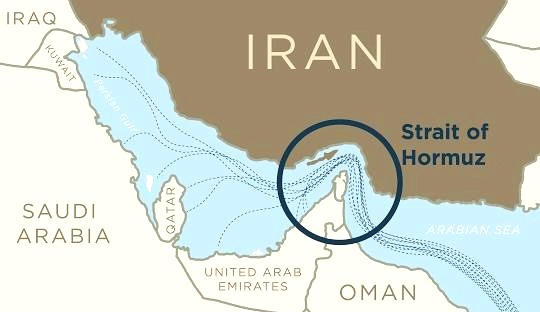
Meanwhile, Iran has continued to threaten shipping in the Strait of Hormuz despite the ceasefire, which is making vessels reticent to transit the strait. Unspecified Iranian maritime and military authorities have issued radio warnings that vessels transiting without permission could be destroyed. Iran is levying these threats so that it can extract tolls on traffic through an international waterway.
The Iranian Oil, Gas, and Petrochemical Product Exporters’ Union spokesperson, close to the Iranian regime, told the media reporters on April 08th that Iran intends to continue to monitor everything entering and exiting the strait to prevent unspecified weapons transfers to unspecified states. The spokesperson added that Iran requires vessels to transit along Iran’s coastline and to submit cargo details by email to Iranian authorities. The spokesperson added that Iran will impose a $1/barrel tariff on oil shipments — reportedly payable in bitcoin to bypass sanctions — while empty tankers would transit for free. According to official sources, the fees could alternatively be paid in Chinese yuan and could rise as high as $2 million for large tankers.
Iranian shipping officials on April 8 have publicly defended tolls and monitoring as lawful and enforceable under international maritime norms, citing environmental protection and enforcement obligations. Omani Transport Minister Saeed bin Hamoud bin Saeed al Maawali stated on April 8 that Oman will not impose fees as it has signed international maritime agreements; however, and pointed to a legal vacuum created by non‑signatory states such as Iran and the United States.
A hardline Iranian Parliament member added on April 8 that political conditions, including mandating the use of the term “Persian Gulf” on shipping documents and pledging to devote 30% of Strait‑related revenues to defense and 70% to war‑loss compensation. These measures follow parliament’s approval of a new management plan that introduces transit fees and Iranian approval for passage on March 30.
Traffic through the Strait of Hormuz remains significantly low amid Iran’s lingering threats and uncertainty over a fragile ceasefire. Commercial maritime tracking data showed only 05 Iranian‑flagged cargo vessels entered the strait, while just 03 international oil tankers, 06 international cargo vessels, and 01 unknown Iranian-flagged vessel exited via Iran’s alternative route between April 7 at 14:00 Hours (ET) and April 8 at 14:00 Hours (ET).
The S&P Global Market Intelligence recorded that Iran permitted only 04 vessels to transit on April 7, the lowest daily total so far in April. Major shipping companies, including Maersk and Mitsui O.S.K. Lines, continue to suspend or tightly limit transits, citing the absence of clear rules and security guarantees. Shipping and maritime intelligence executives told media reporters that daily traffic has fallen to just 10 to 15 vessels, compared with roughly 135 per day before the crisis. Around 800 tankers are now waiting to transit, with an estimated 300 to 400 vessels effectively stranded inside the Persian Gulf.
Suvro Sanyal – Team Maverick.





As Israel Drew First Blood; Hezbollah Retaliated Vowing To End The Israel-US Aggressions.
Beirut; April 2026: Lebanon’s Hezbollah resistance movement has unleashed a rocket b…
As Israel Drew First Blood; Hezbollah Retaliated Vowing To End The Israel-US Aggressions.
Beirut; April 2026: Lebanon’s Hezbollah resistance movement has unleashed a rocket barrage towards an …