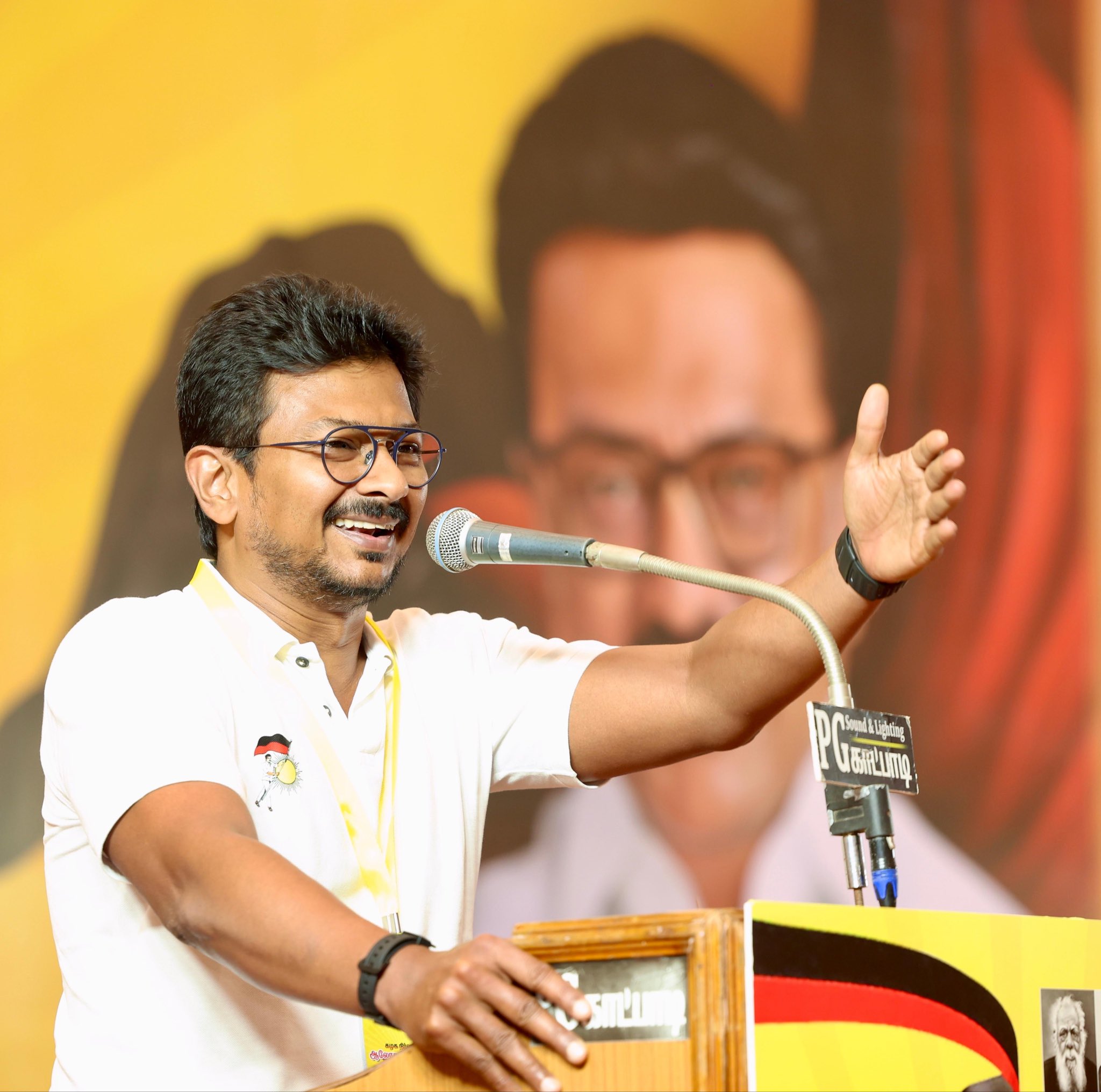
Madras High Court Orders Probe into Udhayanidhi Stalin’s Asset Disclosures Ahead of Polls

Chennai, April 2026 : In a crucial development just days before the Assembly elections, the Madras High Court on Wednesday directed the Income Tax Department to conduct a preliminary investigation into alleged discrepancies in the asset declarations of Udhayanidhi Stalin and submit a report within a tight timeframe.
A First Division Bench comprising Chief Justice Sushrut Arvind Dharmadhikari and Justice G. Arul Murugan instructed the Director General of Income Tax (Investigation) to file a report by April 20. The court подчеркed the urgency of the matter, noting that voters will go to the polls on April 23 and have a right to accurate and transparent information regarding candidates’ financial disclosures.
The petition was filed by R. Kumaravel, a resident of the Chepauk-Thiruvallikeni constituency, where Udhayanidhi Stalin is contesting for re-election. Representing the petitioner, senior counsel V. Raghavachari argued that a comparison of affidavits submitted by Stalin during the 2021 Assembly elections and the current election cycle revealed several inconsistencies.
According to the petitioner, these discrepancies include the omission of previously declared assets, unexplained changes in liabilities, misrepresentation of certain financial transactions, and inconsistencies between election affidavits and corporate filings. The counsel contended that such irregularities raise serious concerns about transparency and accountability, particularly in the context of democratic processes.
Appearing for the Election Commission of India, advocate Niranjan Rajagopalan clarified that while candidates are required to submit complete and truthful disclosures as mandated by the Supreme Court, Returning Officers do not have the authority to independently verify the accuracy of such declarations during the nomination stage.
He further pointed out that Section 125A of the Representation of the People Act, 1951, provides for penalties in cases of false declarations, including imprisonment of up to six months, a fine, or both. However, such legal action is typically initiated only after due process, often following the conclusion of elections.
The petitioner, however, maintained that the intent behind the plea was not to initiate criminal proceedings but to ensure that voters are informed about the correct financial details of candidates before casting their votes.
Taking note of the arguments, the court emphasized the importance of transparency in electoral democracy and the voters’ right to make informed choices. The bench adjourned the matter to April 20, pending submission of the Income Tax Department’s report, which is expected to shed light on the alleged discrepancies.






Young Changemaker Jia Chandra Inspires Community with Message of Neurodiversity and Inclusion
Secunderabad, June 2026 : An evening of inspiration, empathy and awareness unfolded at Oms…

Young Changemaker Jia Chandra Inspires Community with Message of Neurodiversity and Inclusion
Secunderabad, June 2026 : An evening of inspiration, empathy and awareness unfolded at Omsree …