Iran’s IRGC Navy Claims Strait of Hormuz Blocked Amid Escalating Tensions with US

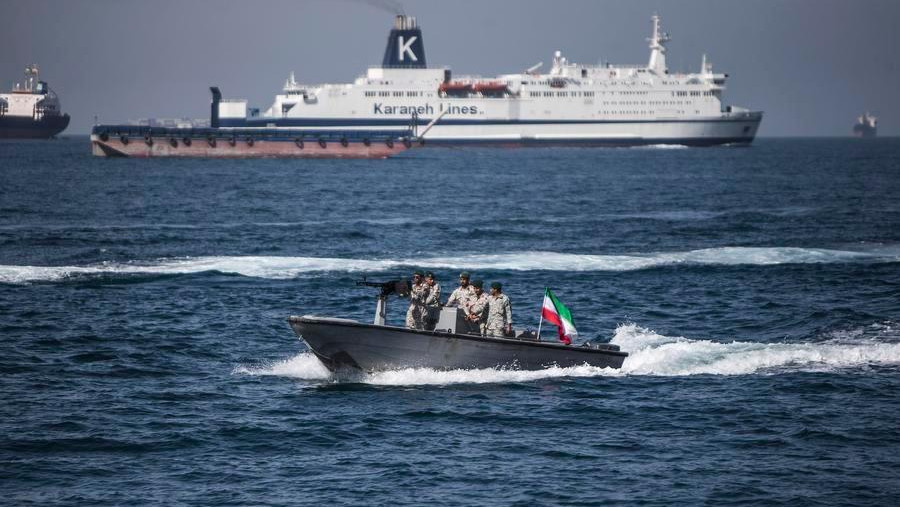
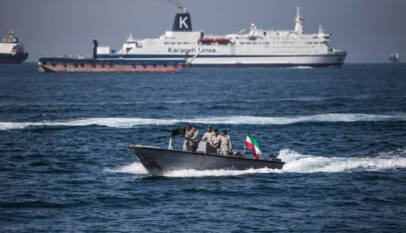
Tehran, April 2026: The Navy of Iran’s Islamic Revolutionary Guard Corps (IRGC) has announced that the strategically crucial Strait of Hormuz has been blocked since Saturday evening and will remain closed until the United States lifts its naval blockade in the region, significantly escalating tensions between the two countries.
In an official statement released through its news outlet Sepah News, the IRGC said the decision was taken after Washington allegedly violated commitments made under a two-week ceasefire that came into effect on April 8. According to the statement, the United States failed to end its naval blockade against Iranian vessels and ports despite the temporary truce, prompting Iran to take retaliatory action.
The IRGC Navy urged all vessels operating in the region to strictly follow its official communication channels, including updates broadcast via VHF Channel 16, the international maritime frequency used for distress, safety, and communication. It also dismissed statements made by US President Donald Trump, saying they “hold no credibility” in the waters of the Gulf and the Strait of Hormuz.
Issuing a stern warning, the IRGC stated that no vessel should leave its anchorage in the Gulf or the Gulf of Oman. It added that any ship attempting to approach the strait would be considered as “cooperating with the enemy” and would be treated as a potential target.
Tensions in the region have been mounting over the past several weeks. Iran had already tightened its control over the Strait of Hormuz since February 28, when it barred the passage of vessels linked to Israel and the United States. This move followed joint military strikes by the two countries on Iranian territory, which further deepened hostilities.
In response, the United States imposed its own naval blockade on the waterway after peace negotiations with Iran, held in Islamabad, Pakistan, collapsed. The breakdown of these talks effectively stalled diplomatic efforts to de-escalate the situation.
Interestingly, just a day earlier, Iran’s Foreign Minister Seyed Abbas Araghchi had indicated that the Strait of Hormuz would remain “completely open” to commercial shipping during the ongoing ceasefire period with the United States. His remarks were aligned with broader efforts to maintain stability in the region following a ceasefire announcement related to Lebanon.
However, the situation took a sharp turn after President Trump reiterated on Friday that the US naval blockade would “remain in full force” until a broader agreement is reached with Iran. He further stated on Saturday that Iran would not be allowed to “blackmail” the United States by leveraging control over the Strait of Hormuz.
The Strait of Hormuz is one of the world’s most critical maritime chokepoints, through which a significant portion of global oil shipments passes. Any disruption in this route raises serious concerns for international trade and energy security.
With both sides hardening their positions, the latest developments signal a deepening standoff in the Gulf, with potential implications for global markets and regional stability.
(The content of this article is sourced from a news agency and has not been edited by the Mavericknews30 team.)


“Learning to Drive is a Path to Self-Reliance”: Chhaya Gangan Empowers Women Through Atharva Motor Training School
“Learning to drive is not just a skill, it is a path to self-reliance.” With this guiding …

“Learning to Drive is a Path to Self-Reliance”: Chhaya Gangan Empowers Women Through Atharva Motor Training School
“Learning to drive is not just a skill, it is a path to self-reliance.” …