Understanding Voting Rights and Procedures in Indian Elections

As elections unfold across several Indian states, eligible citizens have the opportunity to engage in the democratic process. The Indian Constitution ensures that all citizens above 18 years, regardless of caste, religion, or socio-economic status, possess the right to vote. This universal franchise embodies the principles of equality and inclusivity. While voting is not a fundamental right, it is a legal entitlement bestowed upon citizens. The Constitution delineates the rights and responsibilities of voters, safeguarding their interests and defining the parameters within which this privilege operates. As voters, individuals hold certain rights and duties crucial to the electoral process. These encompass various aspects, ranging from exercising the franchise to upholding democratic principles. By understanding and embracing these rights, citizens play an active role in shaping the nation’s future through the power of their vote.
Who Can Vote?
According to the Indian Constitution, all citizens aged 18 and above, who are registered as voters, can participate in national, state, district, and local government elections. No individual can be restrained from voting unless disqualified. Each voter is entitled to one vote, cast in their registered constituency. Eligible voters must register in their residing constituency to obtain a Photo Election Identity Card (EPIC). Without registration or a voter ID card, individuals are ineligible to engage in the electoral process. This ensures fair and accountable democratic participation across India’s diverse population. Any citizen may cast a vote in any of the upcoming elections as long as they have a valid voter ID.
Disqualification from Voting Process
The Indian Constitution has laid down the following rules regarding disqualification of voters from the election process:
Individuals who are convicted of offenses committed under Section 171E (which deals with bribery) and Section 171F (which deals with personation or undue influence at an election) of the Indian Penal Code are disqualified from participating in elections.
Those convicted of offence under Section 125 (which deals with various electoral offence), Section 135 and Section 136 of the Representation of People’s Act face disqualification from elections.
If an individual votes in more than one constituency, his vote is disqualified.
How Can You Vote?
Polling Booth:
In India, eligible voters must personally cast their ballots at designated polling booths during elections. This requirement aims to guarantee that each registered voter directly participates in the electoral process, preventing any unauthorized use of their vote by impersonators.
Postal Ballot:
In certain circumstances, individuals can utilize postal ballots, allowing them to vote without physically visiting a polling booth. This option is primarily extended to members of the armed forces stationed domestically or abroad, as well as individuals on election duty (e.g., electoral officers, on-duty policemen, etc.). Additionally, those under preventive detention, unable to attend a polling booth, are also eligible for postal ballots. This provision ensures that despite constraints such as duty obligations or detention, eligible voters maintain their democratic right to participate in elections through an alternative voting method.
Voting Rights
Below are some of the rights of voters as granted and safeguarded by the Indian Constitution.
Right to Know:
All voters have the right to know about the candidates who are contesting for the elections. This right has been granted to voters under Section 19 of the Indian Constitution. This Section empowers voters to seek information pertaining to the election manifesto of the candidates, their total financial worth as also their criminal record, if any.
Right Not to Vote (NOTA):
Voters have been granted the right not to vote, which is recorded in the system. Also known as a NOTA (None of the above) vote, the voter participates in the election but chooses not to vote for any of the candidates contesting the elections.
In this way, voters are participating in the electoral process and exercising their right to choose if they wish to vote for the candidates contesting or not.

Special Assistance to Infirm and Illiterate Voters:
An NRI (Non Resident Indian) was not permitted to vote until recently. However an amendment was made in 2010 which allows NRI’s to register themselves as voters and vote in elections, even if they have not been in the country for over 6 months for any reason.
As per the guidelines of the Election Code, voters who are unable to cast their votes due to physical disability or other such infirmity and can’t cast their vote through postal ballot, can take the assistance of an electoral officer, who will record their vote.
NRI and Prisoner Voting Rights:
Prisoners are not permitted to exercise their franchise as per the current law.
First Time Voters in India
The Indian Constitution bestows voting rights upon all mentally sound citizens aged 18 and above, regardless of caste, religion, or socio-economic standing. Voting is a legal entitlement rather than a fundamental right. First-time voters must undergo a registration process prior to casting their ballots. This process can be conveniently completed online, requiring the upload of necessary documents for verification.
Online Registration Process to Vote in India:
The procedure that must be followed to complete the registration process online is mentioned below:
Visit https://voters.eci.gov.in/.
1) Click on ‘Sign-Up’.
2) Once the sign-up process has been completed, log in to your account.
3) Next, Form 6 must be filled and the necessary documents must be uploaded to complete the registration process.
Offline Registration Process to Vote in India:
The process that must be followed to complete the registration process offline is mentioned below:
1) Two copies of Form 6 must be filled. You can visit the offices of Booth Level Officers and Electoral Registration Officers/ Assistant Electoral Registration Officers to get Form 6.
2) The relevant documents must be submitted along with Form 6.
What is the Voting Process in India?
The process that is followed at the voting booth when you vote is mentioned below:
First, an official at the polling booth will ensure your name is mentioned on the voter list. Identity proof must be submitted.
Next, your finger will be inked by the second official.
Next, you can go to the polling booth.
Next, you can record your vote.
Once you vote, a beep sound will be heard.
Once your vote has been caste, a slip will appear.
You can opt for NOTA as well.
What is the Eligibility Criteria to Vote in India?
The eligibility criteria that must be met in case you wish to vote are mentioned below:
1) Indian citizens are allowed to vote.
2) You must be at least 18 years old.
3) You are an ordinary resident in the polling area.
4) Disqualified individuals cannot vote.
Identity Card
As per Election :
1) Aadhaar Card
2) Pension document with a photograph
3) MNREGA Job Card ( Mahatma Gandhi National Rural Employment Guarantee Act )
4) PAN Card
5) Driving License
6) Voter ID
7) Identity cards that have been issued by MLCs/ MLAs/ MPs
8) Health Insurance Smart Card issued under the scheme of the Ministry of Labour
9) Bank or Post office Passbook with a photograph present
10 ) Passport
11) Service ID cards ( with Photograph) issued by Central or State Government
12) Unique Disability ID ( UDID) issued by the Ministry of Social Justice and Empowerment.
Tendered Votes:
This scenario pertains to an individual who asserts their status as a voter but discovers that a vote has already been cast using their identity. In such instances, if the individual can furnish proof of their identity, they are permitted to cast their vote. The Election Commission has stipulated that their vote will be recorded on a separate ballot paper to ensure proper documentation and prevent duplication.




Trailblazing Excellence: The Remarkable Journey of Dr. Vijay Dikshit, Pioneer in Cardio-Thoracic Surgery
Dr. Vijay Dikshit is a highly experienced Cardio-Thoracic Surgeon with a career spanning o…
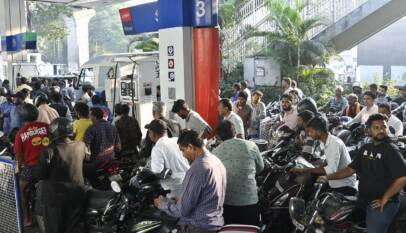
Panic Buying Triggers Fuel Chaos Across Hyderabad Amid Rumour-Driven Shortage Fears
Hyderabad, March 2026 : Widespread panic gripped fuel stations across Hyderabad on Wednesday as …