Unplanned Pregnancies: Access to Safe Abortion Care Critical to Women’s Health and Rights

Need for Autopsy in every death
[The article is drawn from a true incidence, and is designed to provide information and motivation to our readers. The publisher is not engaged to render any form of psychological, legal or any kind of professional advice. The content of the article is the sole expression and opinion of the author, and not necessarily that of the publisher. No warranties or guarantees are implied by the publisher’s choice to include any of the content in this article. Neither the publisher nor the author shall be liable for any physical, psychological, emotional, financial, commercial damages. Our views and rights are the same: You are responsible for your own choices, actions & results.]
[Readers are adviced to sought medical guidance]
Pregnancy – ignominious & Abortion – catawampus:
An unplanned pregnancy happens to any woman irrespective of age or social background. Finding out if someone is pregnant as early as possible, gives more time to think about the best options. The length of time of being pregnant is measured from the first day of the last period. If one decides to continue the pregnancy, she should consult a General Practitioner as soon as possible. If someone decides to have an abortion, it is best to perform it as early as possible. However, there are viable options to take into consideration, while in the early phase of an unplanned pregnancy:
- continuing the pregnancy in partnership;
- continuing the pregnancy on one’s own;
- continuing the pregnancy followed by adoption or foster care;
- terminating the pregnancy in the form of aborting the foetus.
If the naïve decides to abort the foetus, then there are two ways that an abortion can be performed – one is the medical abortion, and the other is the surgical abortion. Abortion is legal in all states and territories of India under the Medical Termination of Pregnancy Act, 1971. Termination of a pregnancy of length less than 20 weeks, with the opinion of a registered medical practitioner and for length 20 – 24 weeks, the opinions of two registered medical practitioners will be required.
Medical Abortion – also called the abortion pill is the common name for using two different medicines: ‘Mifepristone’ and ‘Misoprostol’ to end a pregnancy. At first, the Mifepristone is taken which blocks the body’s own progesterone, stopping the pregnancy from growing; then 48 hours later the second medicine, Misoprostol, is taken, which causes cramping and bleeding to disburden the uterus resembling an early miscarriage. Because medication abortion is similar to a miscarriage, many people feel like it’s more “natural” and less “invasive”. And some people may not have an in-clinic abortion provider close by, so abortion pills are more available to them.
However, Medical Abortion falls foul to safe options if:
- Someone is in an advance pregnancy stage;
- Allergic to the medications used;
- If the pregnancy is outside of the uterus (ectopic pregnancy);
- One who is using long-term corticosteroids;
- Having a blood clotting disorder, significant anaemia or chronic adrenal failure.
Surgical Abortion – in certain medical abortion’s, some tissue gets retained resulting in an incomplete abortion. This is when surgical abortion becomes inevitable. There are numerous names of this method. Such as: Vacuum Aspiration; Dilation and Evacuation; Dilation and Curettage; Suction evacuation. Prior to the execution of the invasive procedure ultrasound and blood tests are done. The procedure is done under ultrasound guidance to prevent trauma to the uterus, and to ensure complete suctioning of the contents.
However, when people with unintended pregnancies face barriers to attaining safe, timely, affordable, geographically reachable, respectful and non-discriminatory abortion care, they often resort to unsafe abortion. It was estimated that between 2010–2014, 45% of all induced abortions were unsafe. Of all unsafe abortions, one third were performed under the least safe conditions, i.e., by untrained persons using dangerous and invasive methods.
A study conducted in 2018 estimated, that 1.5 crore abortions took place in India in 2015 alone. A significant proportion of these are expected to be unsafe. Unsafe abortion is the third largest cause of maternal mortality leading to death of 10 women each day and thousands more facing morbidities. There was a serious need to strengthen women’s access to CAC services and preventing deaths and disabilities faced by them. The last large-scale study on induced abortion in India was conducted in 2002 as part of the Abortion Assessment Project. The studies as part of this project estimated 64 Lakh’s abortions annually in India.
Medical Termination of Pregnancy Rules, 2021:
The new rules as per the amendments were announced by the Government of India, on 12th. October, 2021. Following are the revised rules as per the amendment act:
- The gestation period upper limit for terminating a pregnancy with 1 doctor’s opinion has been extended from 12 weeks to 20 weeks, with the rule being expanded to include unmarried women as well.
- The gestation period upper limit for termination of pregnancy with 2 doctors’ opinion has been extended from 20 weeks to 24 weeks, for the following special categories:
- survivors of sexual assault or rape or incest;
- minors;
- change of marital status during the pregnancy (widowhood and divorce);
- women with physical disabilities;
- mentally ill women;
- the foetal anomalies that have substantial risk of being incompatible with life or if the child is born it may suffer from such physical or mental abnormalities to be seriously handicapped;
- women with pregnancy in humanitarian settings or disaster or emergency.
- A state-level Medical Board will determine the request for termination of a pregnancy longer than 24 weeks in the cases of foetal anomalies.
There is significant variance in the estimates for the number of abortions reported and the total number of estimated abortions taking place in India. According to HMIS reports, the total number of spontaneous/induced abortions that took place in India in 2016–17 was 970,436, in 2015–16 was 901,781, in 2014–15 was 901,839, and in 2013–14 was 790,587. It is reported that ten women die every day in India due to unsafe abortions.
The United Nations Special Programme of Research, Development and Research Training in Human Reproduction, known as the Human Reproduction Programme or HRP, had published in 2023, that 800 women still die every day from pregnancy-related causes – One woman dies every two minutes, from pregnancy-related causes. It is mention-worthy that: “Pre-eclampsia” is a high blood pressure disorder that typically develops after 20 weeks into pregnancy; “Maternal Sepsis” is a life-threatening condition caused by an infection during or soon after abortion or miscarriage.
The provision of comprehensive and safe abortion care is critical and life-saving. Conversely, prohibitions on access to quality abortion care put the lives of women and girls at risk and are a violation of their human rights to privacy, dignity and bodily autonomy. Even if not prohibited, lack of support and limited access to safe abortion care also present risks for women and girls seeking to terminate a pregnancy. Unsafe abortion typically remains underreported or misclassified.
It is claimed that our country has strengthened the maternal and perinatal death surveillance systems with particular attention to reporting deaths due to unsafe abortion, along-with reviewing and revising the National Score Cards to include CAC and family planning indicators.
As per the report published in 2023, the approximate number of female genital mutilation (FGM) in India is about 1 crore annually resulting in death, and / or disability.
Reason for Unsafe Abortions –
Unsafe abortion, the third leading cause of maternal deaths in our country, contributes eight per cent of all such deaths annually with 13 women dying each day. Several factors contribute to women opting for abortion outside the accredited abortion centres including:
- A Woman denied of services as she is unable to fulfill the requirement as laid down in the provisions of MTP act, thus resorting to unsafe means.
- Shortage of providers / absence of competent health professionals and poor perceived quality of care in government facilities in rural areas, is another major reason, as many rural and poor areas lack registered medical service providers, supplies and infrastructure.
- High abortion cost at hospitals in the cities. Private sector charges are exorbitantly higher – which are unaffordable for the poor.
- Reluctance to obtain services from known neighbourhood clinics due to lack of confidentiality.
- Lack of awareness about the need to seek abortion early in pregnancy.
- Providers denying services because of biases or misinformation around how laws governing sex selection, child sexual abuse and abortion intersect.
To be continued…………………

Writer Suvro Sanyal
Log on : www.mavericknews30.com
Follows us on : Twitter @mavericknews30
YouTube : @MarvickNews30







Rahul Gandhi, INDIA Bloc Hold Candlelight Vigil at Gandhi Smriti Over NEET Paper Leak Row
New Delhi, July 2026 : The Opposition intensified its campaign over the alleged NEET exami…
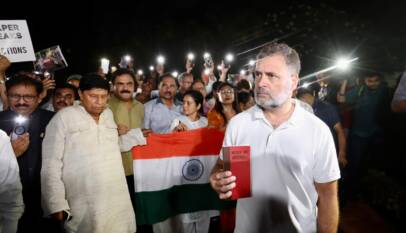
Rahul Gandhi, INDIA Bloc Hold Candlelight Vigil at Gandhi Smriti Over NEET Paper Leak Row
New Delhi, July 2026 : The Opposition intensified its campaign over the alleged NEET …