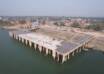
Celebrating 100 Years of Howrah Division: A Journey from Vision to Reality

The traffic and engineering feasibility report on the practicability and advantages of “Railays in British India”
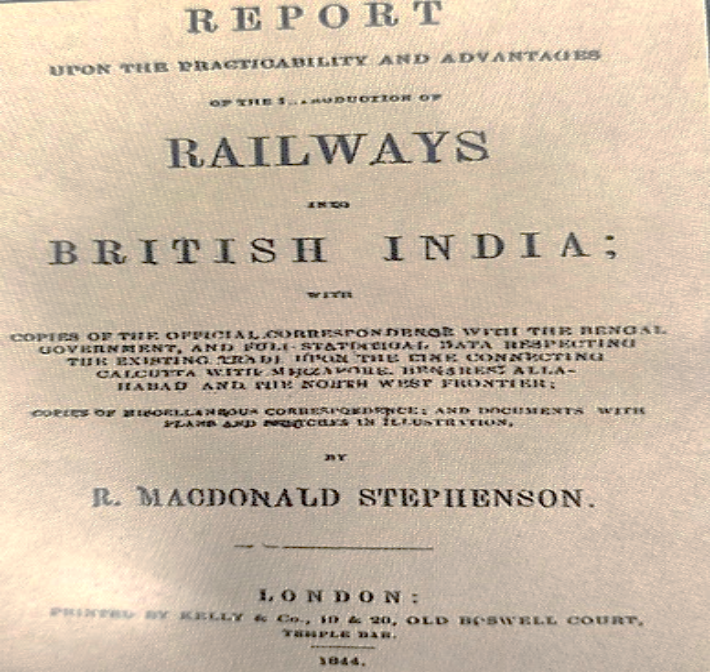
The Howrah Division of Indian Railways is celebrating a century of its monumental contribution to the nation’s transportation network, and its history is deeply rooted in the vision, perseverance, and determination of several remarkable individuals. The story of Howrah’s railway network begins long before its establishment as a division, with the pioneering efforts of Prince Dwarakanath Tagore, Lord Dalhousie, and Sir Rowland McDonald Stephenson.
The vision for railways in Eastern India can be traced back to Prince Dwarakanath Tagore, the enterprising grandfather of Rabindranath Tagore. In 1833, his company, Carr, Tagore & Company, acquired the Raniganj Colliery, setting the stage for the industrial development of the region. Dwarakanath recognised the need for a railway network to connect the coal-rich regions of Bengal with Calcutta. In pursuit, he founded the Great Western Bengal Railway (GWBR), which proposed a railway line from Calcutta to Rajmahal along the Ganga River, with an East-West spur to connect the coalfields. Despite his ambitious plans and offers of financial support, his dream remained short of realisation, as his Union Bank had collapsed, and he could not garner influence in England – which had led to his defeat by the East Indian Railway (EIR).
While Dwarakanath’s vision faltered, Rowland McDonald Stephenson, the first agent of the East Indian Railway Company, continued to push forward with the railway’s development. In 1845, the EIR was formed with Stephenson at the helm, and after years of tireless negotiations with the British government, a contract was signed in 1849 to build a line from Calcutta to Rajmahal, largely based on Dwarakanath’s original proposal. The first sod was turned in 1851 by Lord Dalhousie, marking the beginning of railway construction in Eastern India. In 1854, sixteen months after the first train in India ran between Bombay and Thane, the first train in Eastern India chugged out of Howrah Station for Hooghly on August 15, 1854. This marked a significant milestone, not just for Howrah, but for the entire Eastern Railway network.
Over the years, Howrah Station, initially a small stop, grew into a bustling railway hub. It became the gateway to Eastern India, with multiple expansions over the decades to accommodate rising passenger and freight traffic. The electrification of the station in 1957 and subsequent developments expanded the station from a few platforms to 23 platforms, handling over 500 trains carrying millions of passengers daily.
Today in 2025, Howrah Division stands as a beacon of progress, offering a glimpse into the resilience and vision that built the railways. The last century has been a tale of innovation and growth, and Howrah Station’s legacy continues to be a cornerstone of India’s railway network.
Team Maverick

Alvarez, Lautaro Fire Argentina Past 10-Man Switzerland in Extra Time, Set Up Blockbuster World Cup Semi-final Against England
Score: Argentina 3 (Alexis Mac Allister 10′, Julian Alvarez 112′, Lautaro Mart…

Alvarez, Lautaro Fire Argentina Past 10-Man Switzerland in Extra Time, Set Up Blockbuster World Cup Semi-final Against England
Score: Argentina 3 (Alexis Mac Allister 10′, Julian Alvarez 112′, Lautaro Martinez 120+1′) beat …