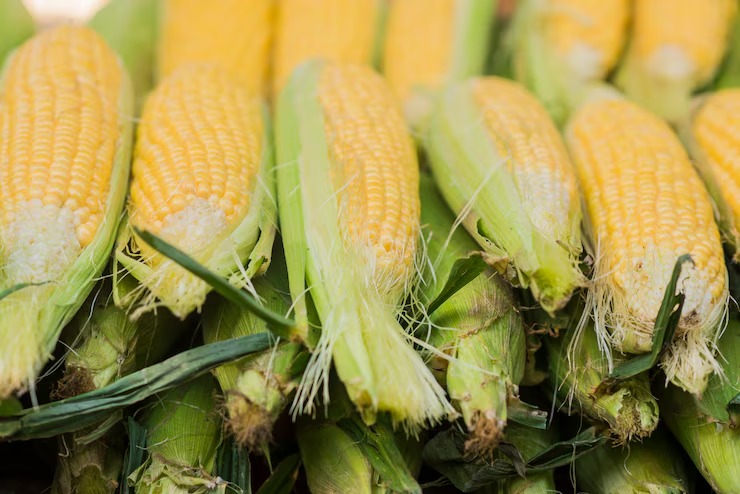
Maize cultivation sees surge in popularity among UP farmers

Lucknow : Farmers in Uttar Pradesh are increasingly turning to maize cultivation, impressed by its economic viability, minimal water requirement, and nutritional value. In Barabanki, many progressive farmers have even shifted from water-intensive crops like mentha to maize, with its acreage expanding consistently in the district.
The growing interest in maize is not incidental—it is backed by strong support from the double-engine government. Key drivers include assured procurement at the minimum support price (MSP) and benefits under the Quick Maize Development Programme.
For the 2024–25 marketing season, the Yogi government has announced an MSP of Rs 2,225 per quintal for maize. Procurement began on June 15 and will continue until July 31 in several districts including Bulandshahr, Badaun, Aligarh, Etah, Kasganj, Firozabad, Hathras, Mainpuri, Hardoi, Unnao, Kanpur Nagar, Auraiya, Kannauj, Etawah, Farrukhabad, Bahraich, Ballia, Gonda, Sambhal, Rampur, Ayodhya, and Mirzapur.
At a recent event in Auraiya, CM Yogi Adityanath applauded farmers engaged in maize cultivation, noting that in around 20–25 districts, farmers are earning nearly Rs 2.5 lakh per hectare (₹1 lakh per acre). He highlighted maize as a versatile crop, useful in producing sweet corn, baby corn, biofuels, and bioplastics.
Why Barabanki farmers are shifting from mentha to maize
In a notable shift, Barabanki—traditionally known for mentha cultivation—is seeing a steady rise in maize farming. Progressive farmers, including Padma Shri awardee Ram Saran Verma, are opting for maize due to its low water requirement and suitability for the zaid season. With quality seed support from the local administration, blocks like Masauli, Ramsanehighat, Fatehpur, and Nindura have seen growing interest. Offering yields with market prices reaching Rs 2,500/quintal and enabling multiple cropping cycles, maize is proving to be both a profitable and sustainable choice.
Maize: a crop of multiple uses
Recognising its vast potential, the Yogi government aims to double maize production in the state by 2027. During the recent State Level Kharif seminar in Lucknow, the agriculture minister urged farmers to scale up cultivation of strategic crops like maize.
Maize thrives in all three cropping seasons and on various soil types. Its only major requirement is proper drainage. It is well known that maize is a key raw material in various industrial sectors, including ethanol production, animal and poultry feed, pharmaceuticals, paper, and the alcohol industry. In addition to its industrial use, it is widely consumed in the form of corn, flour, baby corn, and popcorn. Maize is also a common ingredient in many soups, making it an integral part of everyday diets. Each of these areas presents significant growth potential.
Better demand, better prices
Given its wide range of uses, demand for maize is expected to increase steadily. The government is creating awareness, offering technical support, and ensuring that farmers receive fair prices through MSP. Rich in carbohydrates, proteins, vitamins, and minerals, maize is rightly called the “Queen of Grains.”
Scope for higher yields through improved practices
Experts believe that with modern farming techniques, maize yields can go up to 100 quintals per hectare. Currently, Tamil Nadu leads with an average yield of 59.39 quintals per hectare. The national average stands at 26 quintals and UP’s average was 21.63 quintals in 2021–22, indicating vast potential for growth.
Ideal sowing period and guidelines
According to Dr. S.K. Tomar, Incharge of Krishi Vigyan Kendra, Belipar (Gorakhpur), the best sowing window for kharif maize is from June 15 to July 15. If irrigation is available, sowing can begin in late May. This ensures early growth before heavy rains. About 8 kg of seed is required per acre, and farmers are advised to sow in rows with 60 cm row spacing and 20 cm plant-to-plant distance. Where available, bed planters should be used to ensure uniform spacing and better yield.






South Africa Midfielder Jayden Adams Dies at 25, Nation Mourns Rising Football Star
Johannesburg, July 2026 : South African football has been plunged into mourning following …

South Africa Midfielder Jayden Adams Dies at 25, Nation Mourns Rising Football Star
Johannesburg, July 2026 : South African football has been plunged into mourning following the …