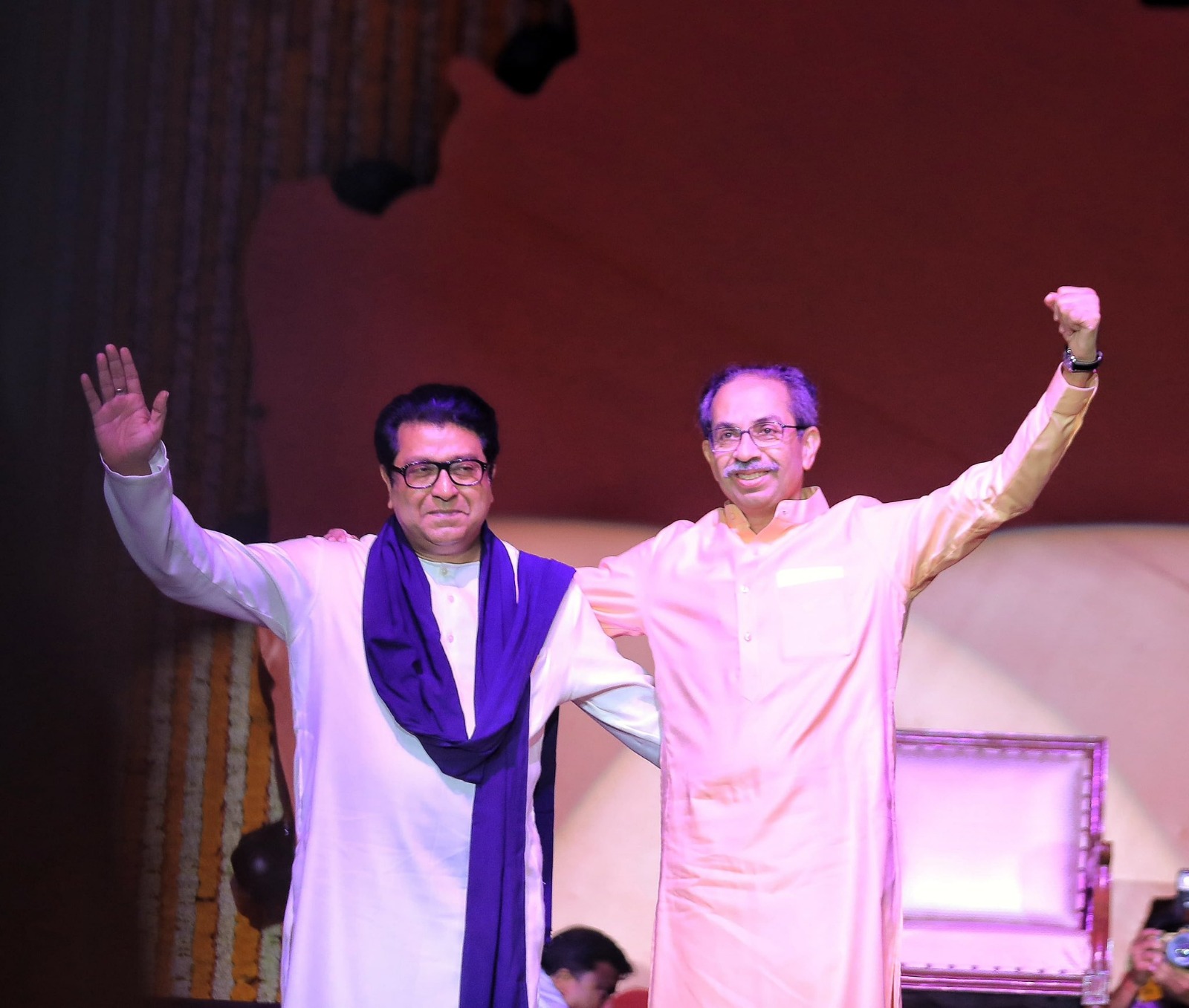
Thackeray Brothers Reunite After Two Decades, Sparking Political Frenzy in Maharashtra

At Mumbai’s Victory Rally, Uddhav and Raj Thackeray’s shared stage sends strong message on Marathi pride, cultural unity, and signals possible political realignment ahead of civic polls
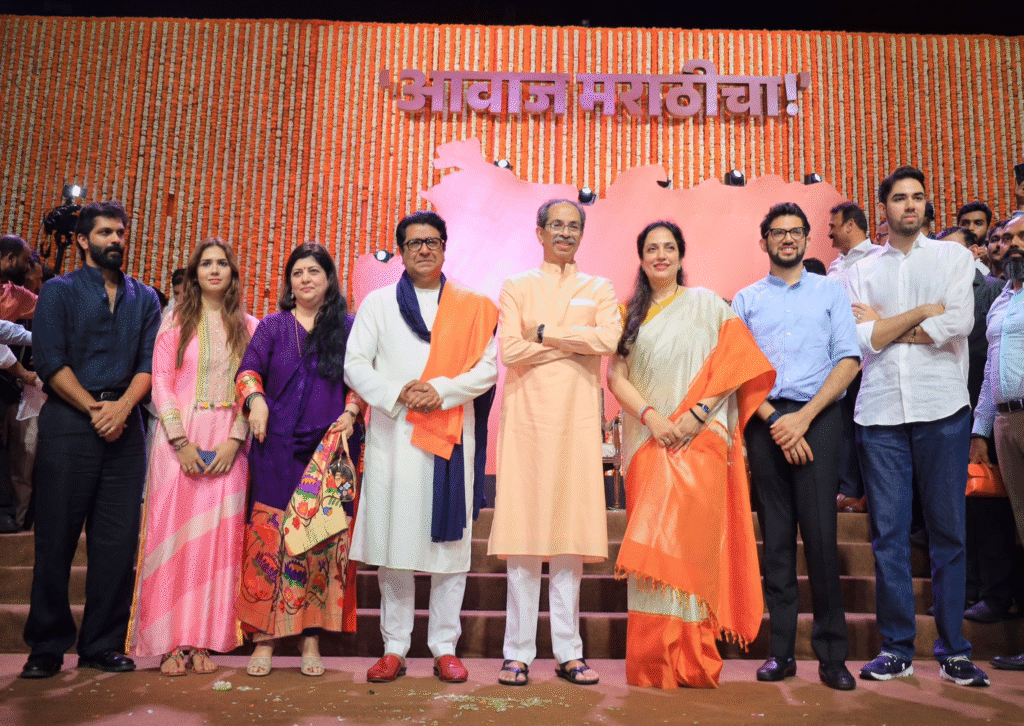
Mumbai – In a moment rich with symbolism and political undertones, Uddhav Thackeray and Raj Thackeray came together on stage after nearly twenty years, reigniting memories of a once-powerful political family that shaped Maharashtra’s identity politics. The occasion was the ‘Victory Rally’ at Worli Dome, Mumbai, a mass celebration held after the Maharashtra government withdrew its controversial Three Language Policy, widely criticized for sidelining Marathi.
Though framed as a non-political event, the rally was loaded with cultural pride, political jabs, and clear hints of a potential realignment in the state’s political landscape. Both Thackeray cousins spoke fiercely about Marathi identity, resistance to Hindi imposition, and regional self-respect—themes that have long defined their political journeys.
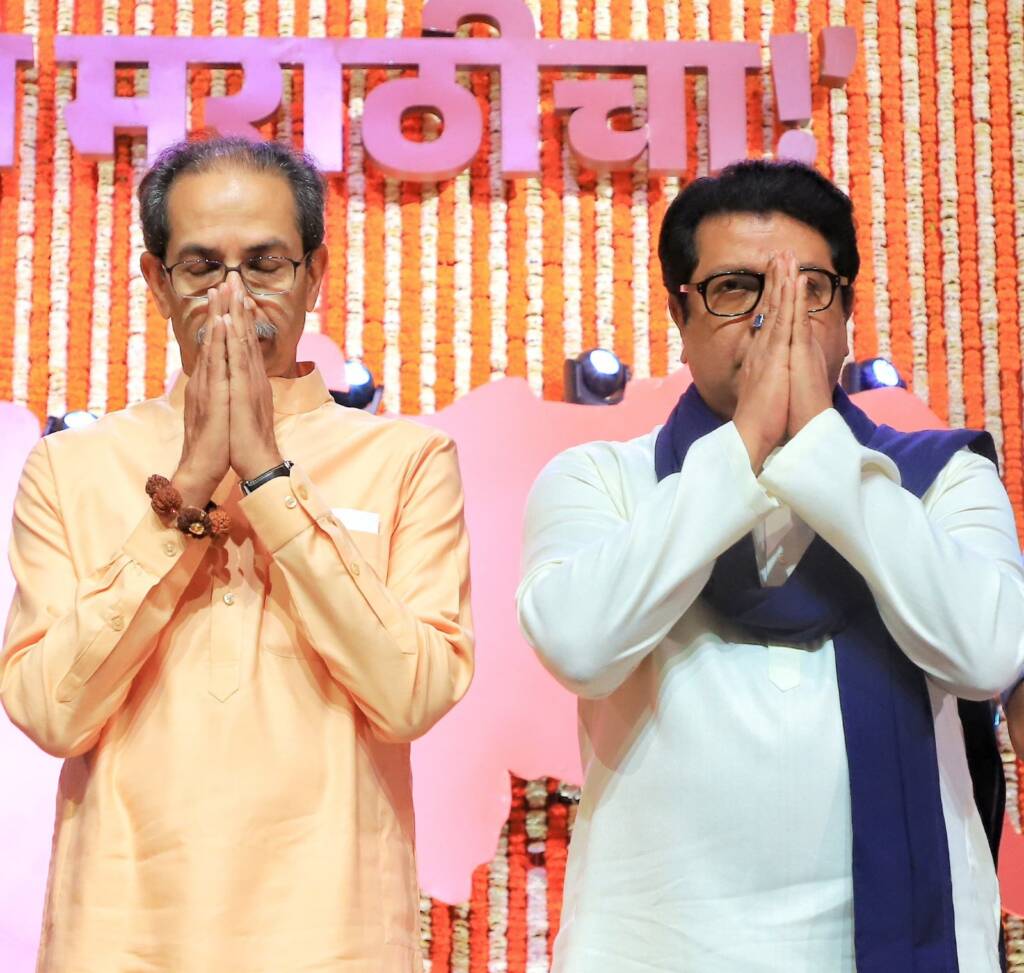
The Unlikely Reunion and Political Ripples
Uddhav Thackeray, chief of Shiv Sena (UBT), and MNS chief Raj Thackeray have long stood apart due to personal and political differences following a bitter split. Their shared stage, however, has now fueled speculation about a potential alliance in the upcoming BMC elections and other local bodies in Maharashtra.
While Uddhav kept his remarks focused on cultural unity, he did not commit explicitly to any alliance. Raj Thackeray, meanwhile, used the platform to sharply criticize the state government’s neglect of the Marathi language and culture. Both leaders appeared aligned in spirit, if not formally in strategy—yet.
Political observers believe that a Shiv Sena (UBT)–MNS alliance could consolidate the Marathi vote bank, particularly in urban centers like Mumbai, Thane, Nashik, and Pune. Within Mumbai, key constituencies such as Worli, Parel, Lalbaug, Sewri, Bhaykhala, Chembur, and Vikhroli could see a strong resurgence of Marathi-centric politics.
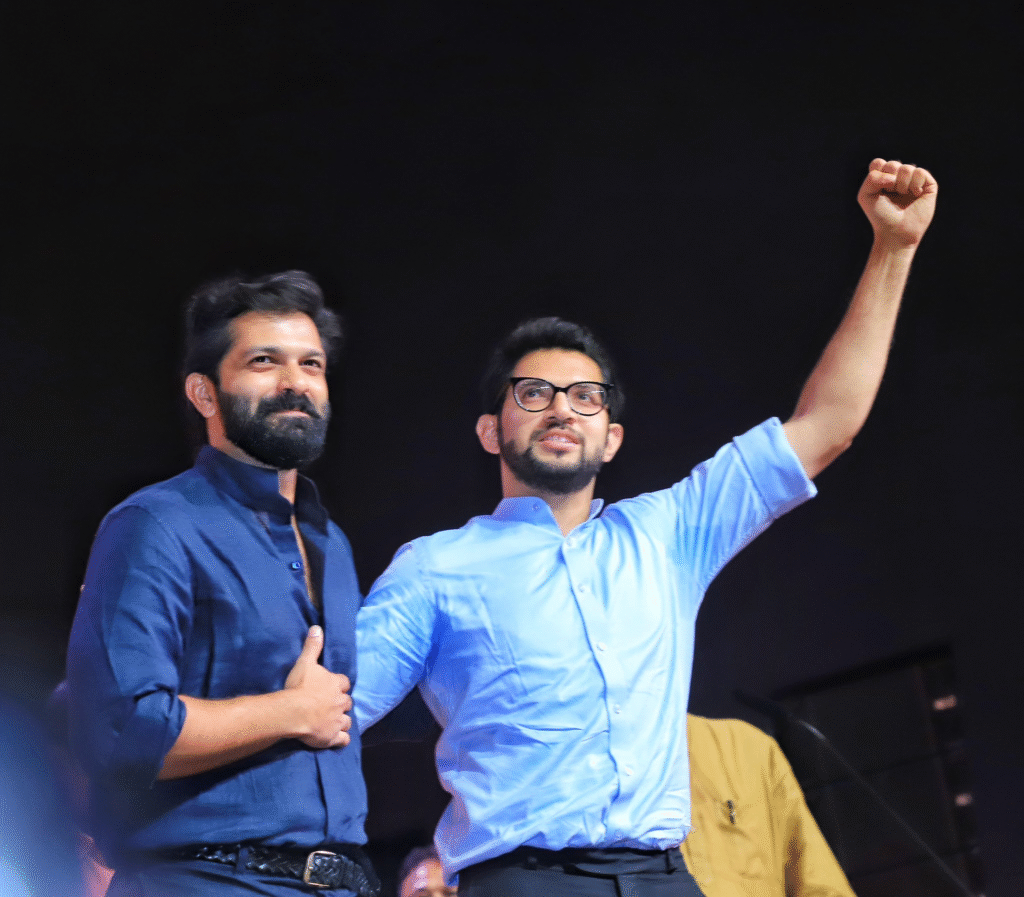
However, forming a unified political front isn’t without hurdles. Both parties differ in ideological orientation, organizational structure, and leadership styles. Seat-sharing agreements, leadership roles, and lingering mutual distrust may all prove to be stumbling blocks. Decades of rivalry and divergent approaches to politics could challenge the sustainability of any alliance.
Moreover, a consolidated Marathi vote could inadvertently benefit the BJP, which may attract non-Marathi Hindu voters looking for a familiar ideological home. In such a scenario, the Shinde-led Shiv Sena faction and the Congress—which partially rely on Marathi support—could suffer significant setbacks.
The Rally as a Cultural Movement
The mood at the rally was celebratory yet defiant. Raj Thackeray, in a statement posted on X, hailed the victory as a triumph of Marathi resilience:
“The Marathi community made the government bend. Today, Mumbai witnessed a victorious gathering. I forgot to mention some important contributors during the event—Marathi newspapers, news channels, advocacy groups, and a few artists who stood firm. I thank them all wholeheartedly. Let this unity for Marathi identity remain forever.”
Uddhav Thackeray also took a veiled swipe at Deputy CM Eknath Shinde, criticizing his “Jai Gujarat” remarks, while emphasizing that Marathi pride and rights cannot be sidelined.
Shiv Sena-UBT MP Sanjay Raut likened the event to a festival, stating:
“Every Marathi household must be dancing with joy. It is a historic day.”
He credited Raj Thackeray and the dialogue between them as the key to making this rally a reality.
“Politics is about dialogue—even with those you disagree with,” Raut said. “If there wasn’t trust, this event wouldn’t have happened.”
He added, with a pointed jab at the ruling dispensation:
“The enemies of Maharashtra are in power. It’s time we teach them a lesson. Devendra Fadnavis deserves credit—ironically—for bringing the Thackeray brothers together.”
Emotion Overwhelms Sena and MNS Leaders
The event’s emotional resonance wasn’t limited to speeches. Senior Shiv Sena-UBT leaders like Anil Parab, Kishori Pednekar, and Sudhir Salvi, alongside MNS leader Bala Nandgaonkar, were visibly moved—some even brought to tears.
“This moment is golden and historic for the Marathi people,” said Parab.
“I’ve been a Shiv Sainik since childhood, raised in the vision of Balasaheb Thackeray. Today’s event is for those who have walked the path he paved.”
Former Mumbai Mayor Kishori Pednekar added poignantly:
“This is a celebration not just of language, but of blood ties. The same blood flows in both Uddhav and Raj Thackeray. Even if you hit water with a stick, it does not separate.”
She compared the Marathi solidarity of the day to the community’s unity after the 1993 Mumbai riots, noting that when push comes to shove, the Marathi people know how to rise and rally together.
A Political Earthquake or a Cultural Flashpoint?
While the reunion of the Thackeray cousins has certainly electrified Marathi voters and stirred speculation, whether it leads to a lasting political front remains to be seen. The symbolic victory over the Three Language Policy has clearly reenergized the cultural core of Marathi politics, but how that translates into electoral calculus will depend on whether the two leaders can bridge their differences for a larger cause.
The message was loud and clear: Marathi pride is non-negotiable, and those who ignore it do so at their peril. Whether this moment marks the beginning of a new era or a flash of nostalgia will depend on what comes next. But one thing is certain—Maharashtra’s political landscape just shifted, and all eyes are now on what the Thackerays do next.

Cristiano Ronaldo Silences Critics with Historic Double as Portugal Thrash Uzbekistan 5-0 in World Cup 2026
Houston, June 2026 : Just a few days after facing intense criticism for failing to score i…
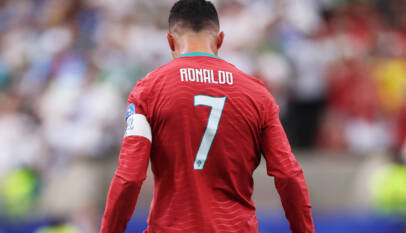
Cristiano Ronaldo Silences Critics with Historic Double as Portugal Thrash Uzbekistan 5-0 in World Cup 2026
Houston, June 2026 : Just a few days after facing intense criticism for failing …