Ambassadors urge focused global action to combat climate change.

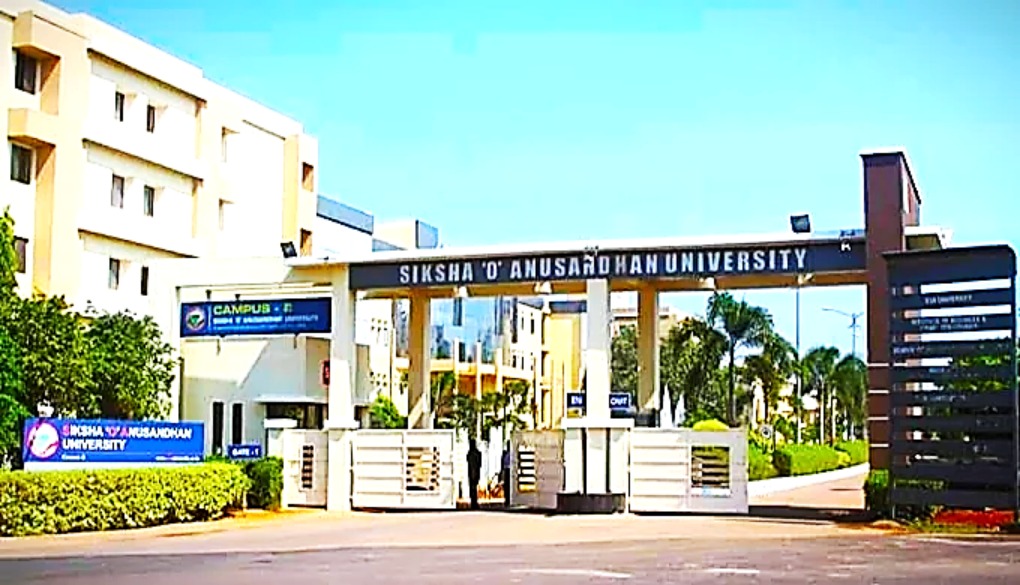
Ambassadors and diplomats from eight countries today emphasised the urgent need for focused global action to combat climate change and global warming, warning that the crisis is no longer a distant threat but a present and pressing challenge. “It is not a distant threat—it poses a massive challenge to humanity”, said Juan Antonio March Pujol, Ambassador of Spain, during the inaugural session of the two-day international conclave on ‘Climate Change and Global Warming—Issues and Prospects’ organised by Siksha ‘O’ Anusandhan (SOA) Deemed to be University, Bhubaneswar, Odisha.
Among the dignitaries addressing the conclave were Alberto Guani (Uruguay), Javier Paulinich (Peru), Fernando Bucheli (Ecuador), Omar Castaneda Solares (Guatemala), Antonio Bartoli (Italy), Lalatiana Accouche (Seychelles), and Kayshav Tewari, a diplomat from the High Commission of Guyana.
Lalatiana Accouche, High Commissioner of Seychelles, said her island nation is among the worst affected by climate change despite contributing the least to global emissions. Rising sea levels, coastal erosion, and extreme weather events are threatening both the nation’s economy— especially its tourism and fisheries sectors—and its fragile ecosystem. “We are the least responsible but suffer the most”, she said.
Echoing similar concerns, Guyanese diplomat Kayshav Tewari said those who have contributed the least to climate change are often its greatest victims. With a population of only 800,000, Guyana has safeguarded 85% of its forest cover, positioning itself as a “green superpower”. These forests serve as vital carbon sinks, and he emphasised the need for international compensation for countries making such environmental contributions.
IMD Director General Dr. Mrutyunjay Mohapatra said the rise in greenhouse gas emissions due to human and socio-economic activity has led to the current crisis, evident in the increasing frequency of extreme weather events. He pointed out that deforestation and the degradation of wetlands—key carbon sinks—have worsened the situation. Dr. Mohapatra added that climate change has already caused a 6% – 10% drop in agricultural yield and has severely impacted fishing industries, affecting both lives and livelihoods. He stressed the need for early warning systems in climate-vulnerable areas and advocated for sustainable development at the micro level.
Ambassador Pujol noted that human activity has raised sea levels by over 20 cm since 1900, and many nations are now grappling with cyclones, floods, and droughts. He reiterated Spain’s commitment to achieving carbon neutrality by 2050 and highlighted the European community’s joint efforts in addressing climate challenges. “Universities are incubators of solutions to the crises we face. It is the responsibility of students to ensure the planet remains a safe home”, he added.
Italian Ambassador Antonio Bartoli referred to the devastating floods in Texas, noting that no one had predicted their intensity. He said it was paradoxical that despite major technological advancements, humans still lacked control over nature.
Italy, Bartoli added, is also witnessing record-breaking extreme weather events.
Javier Paulinich, Ambassador of Peru, warned of the alarming retreat of glaciers—key sources of freshwater in his country. “It’s not just ice that is melting—it’s our future”, he said.
Prof. Uma Charan Mohanty, a Distinguished Professor at SOA and an environmental expert, said that 17 speakers—including leading scientists, researchers, and academics from institutions like IMD, ISRO, IITs, and IITM—will address various sessions during the conclave.
Team Maverick





PM congratulates Major Abhilasha Barak on being conferred the UN Military Gender Advocate of the Year Award
Prime Minister Shri Narendra Modi today congratulated Major Abhilasha Barak on being confe…
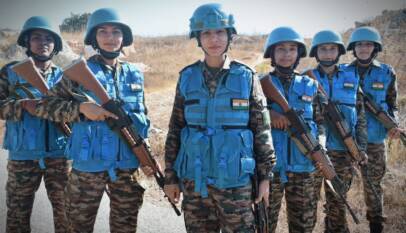
PM congratulates Major Abhilasha Barak on being conferred the UN Military Gender Advocate of the Year Award
Prime Minister Shri Narendra Modi today congratulated Major Abhilasha Barak on being conferred the …