Poland pushing back from the Rhetoric Populism.

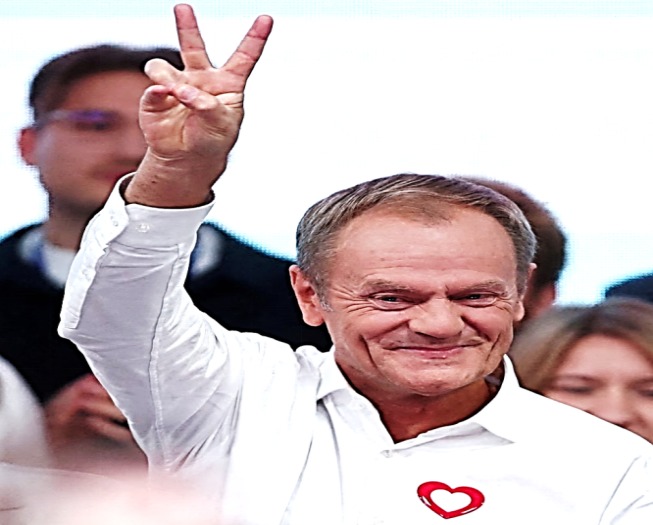
In 2023, the people of Poland had ousted, the 08 years old the national populists of the Law and Justice party, from power on a record turnout of 75% of voters. This had ushered a new hope that the Donald Tusk led government would bring in an array of changes breaking the country from the shackles of stagnations.
However, in a less than 02 years’ time, half of the voters wants Donald Tusk to be ousted. The Law and Justice-backed candidate Karol Nawrocki won the presidential election run off in June, 2025 with 50.89% of the vote, securing the admiration of Donald Trump in the process. Donald Tusk’s liberal democratic government may turn out to be nothing more than an intermezzo, a pause between rightwing populist governments.
After living in a global sense, with the new wave of populism, a pattern of missed opportunities can be observed, which Poland is just one example. In countries ruled by new populists, voters often come to feel disappointment and anger. In recent years, liberal candidates, carried by a tide of opposition, have ousted the populists: before Tusk managed it in Poland there was Joe Biden in the US, Luiz Inácio Lula da Silva in Brazil and Zuzana Čaputová in Slovakia. The victories of these politicians seemed briefly like beacons of hope for the post-cold war liberal democratic consensus.
But rebuilding after the populists vacate office can bring around a daily struggle in the political mud. A victorious election campaign is not the same as a definitive victory. The war against populists is a permanent one, and a global one, amplified by digital media.
In Poland, countless legal decisions and acts in force were intended to undermine liberal democratic institutions. Dismantling them constitutionally and restoring the rule of law takes time and energy. It also requires looking back to the past rather than focusing on the future as the new government addresses its predecessor’s mistakes. In Poland and Brazil, this has stifled any ambitions to offer an exciting roadmap for the years ahead. Inevitably, any initial euphoria is quickly followed by public frustration and the rise of another challenge from the rightwing populists.
Since the anti-communist Solidarity movement in the 1980s, Poland since then has become the central place in the battle for democracy. After returning to power in 2023, Tusk faced a dilemma: should he completely distance himself from his predecessors’ agenda or else, manipulate with their legacy?
Donald Tusk had chosen the second option. He maintained the populists’ programme of direct financial support for families with children. He continued with the construction of a mega transport hub, a flagship project for the previous government that he had previously attacked as wasteful. It is especially striking that he has failed to liberalise Poland’s abortion laws, which were tightened by the populists. Echoing the nationalists’ rhetoric about migration and defence of national borders has led to Poland reimposing checks at its borders with EU neighbours Germany and Lithuania, despite all three countries being in the Schengen area.
Letting the national populists set the political tone for him is driving Tusk’s failure. The defeat of his presidential candidate, Rafał Trzaskowski was followed by a collapse of support in the polls. The absence of an inspiring vision, or even a sense of what Tusk stands for, is painful to witness. Tusk’s ratings slump can be blamed on a whole set of unfulfilled promises, poor messaging and a poor presidential campaign. He is also affected by the global tendency to reject establishment politicians. To many Polish voters, especially younger ones, Tusk, who has been active in Polish politics for more than 25 years and was prime minister from 2007 to 2014, seems like part of a tired old elite whose time has come to step aside.
Elections have to be understood as a chance to rebuild democracy, and to do so in tune with the new media environment. Without a forward-thinking approach, the liberal intermezzo will remain just that: a brief interval between acts in a longer populist play. Democrats must learn this lesson – contending with populism means not only confronting the past, but also offering a compelling vision for the future.
Team Maverick





Mission Shakti 6.0: Over 37,000 Girls Learn Practical Banking and Health Skills
Lucknow, March 2026 : Under the ‘Mission Shakti’ campaign, a total of 37,685 girls across …
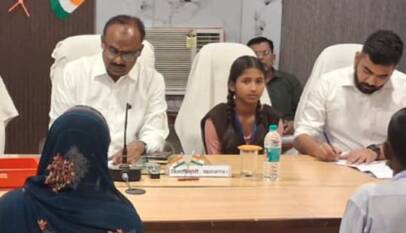
Mission Shakti 6.0: Over 37,000 Girls Learn Practical Banking and Health Skills
Lucknow, March 2026 : Under the ‘Mission Shakti’ campaign, a total of 37,685 girls …