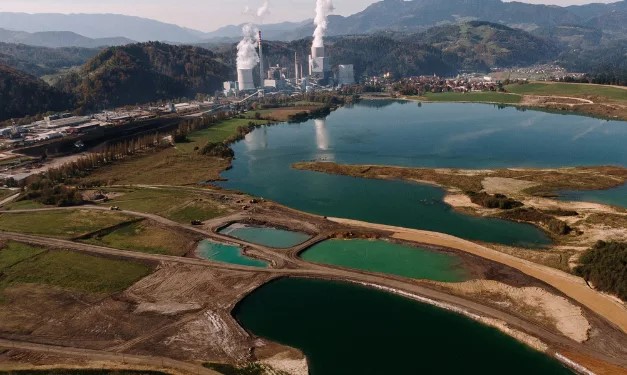
India’s renewable energy growth is central to achieving its 2070 Net Zero target.

Sept 2025 : The Ministry of New and Renewable Energy (MNRE) has formally notified the National Policy on Geothermal Energy, 2025, marking a significant step in diversifying the country’s clean-energy mix. The policy lays out a comprehensive framework, from exploration and financing to state-level guidelines, for unlocking the nation’s untapped geothermal potential.
India’s renewable energy growth is central to achieving its 2070 Net Zero target. While solar, wind, biomass and hydropower dominate today’s capacity, the MNRE recognises geothermal energy, heat stored in the Earth’s crust, as a stable, 24/7 baseload option with very low life-cycle greenhouse gas emissions. Recently, Union Minister for New and Renewable Energy Prahlad Joshi have instructed senior officials to draft a new geothermal energy policy to make the best use of this renewable resource. The meeting was held in early September and the ministry unveiled the policy details just a few weeks later.
The policy defines geothermal applications across electricity generation, direct heat uses (district heating, greenhouses, aquaculture, industrial drying, geo-tourism), and ground-source heat pumps (GSHPs) for space heating/cooling. It highlights the opportunity to repurpose oil and gas drilling expertise and idle wells for low-carbon energy production.
All stakeholders, central and state governments, public and private developers, research institutions, start-ups and entrepreneurs are required to follow the policy, with additional guidelines and incentives to be issued as needed. Existing environmental, mining and electricity laws, such as the MMDR Act 1957, Environment Protection Act 1986 and Electricity Act 2003, will apply depending on project location.
The policy’s vision is to establish geothermal energy as a major pillar of India’s renewable energy landscape, contributing to energy security and climate commitments. Its goals include:
- Advancing research, drilling techniques and reservoir management.
- Collaborating with global geothermal bodies and national research institutes.
- Deploying GSHPs and other direct-use applications to decarbonise buildings, agriculture and industry.
- Repurposing abandoned oil wells for large-scale power generation.
- Building a robust public-private ecosystem and fostering capacity building.
Geothermal plants are capital-intensive and site-specific. According to the document released by the ministry, costs cover exploration, drilling, production and injection wells, field infrastructure, surface installations, and grid connection. Plant types (dry steam, flash, binary/Organic Rankine Cycle) and well productivity affect cost. However, there are no fuel expenses and capacity factors can exceed 80 per cent, making them reliable baseload sources.
Since the 1970s, the Geological Survey of India (GSI) has mapped 381 hot springs with surface temperatures from 35°C to 89°C. High-temperature Himalayan sites reach up to 200°C.
Ten key geothermal provinces are identified: Himalayan, Naga-Lusai, Andaman–Nicobar, SONATA (Son–Narmada–Tapi), West Coast, Cambay Graben, Aravalli, Mahanadi, Godavari and South Indian Cratonic.
GSI has identified some geothermal energy sites, which are:
- Puga, Chumathang, Gaik, Demchok, Nubra, (Panamik), Galhar, in UT, Ladakh
- Sidhu, Jammu and Kashmir
- Manikaran, Kasol, Tattapani, Tapri in Himachal Pradesh
- Tapoban, Gari, Joshimath, Juma, Yamunotri, Ganganani, Beda, Joti, Nyu, Dar, Bheti in Uttarakhand
- Tsachu (Tawang), Takshing, Arunachal Pradesh
- Polok, Yumesamdong, Sikkim
- Sohna, Haryana
- Bhimband (Munger), Bihar
- Surajkund, Tantloi, in Jharkhand
- Bakreshwar, West Bengal
- Tattapani in Chhattisgarh
- Anhoni, Madhya Pradesh
- Dholera, Tuwa, Tulsishyam, Gujarat
- Deulajhari (Athmallik), Attri, Odisha
- Unhavare (Khed), Sativali, Tural, Maharashtra
- Manuguru, Telangana
The MNRE plans a national geothermal resource data repository with inter-ministerial collaboration, linking the Ministry of Mines, Earth Sciences, Hydrocarbons, and institutions such as CSIR-NGRI and CGWB, to share drilling data, including from abandoned oil wells. As per the document, project development moves through exploration, drilling, feasibility, design, commissioning and long-term reservoir management. Key features include:
- 100% FDI permitted in renewables and a preference for indigenous technologies to reduce import dependence.
- Government support for safe reinjection of geothermal fluids and priority funding for the Northeast and special category states.
- Mechanisms to share exploration risk and convert abandoned oil/gas wells into geothermal plants through collaboration with the Ministry of Petroleum & Natural Gas and the Directorate General of Hydrocarbons.
The policy supports partnerships where oil, gas and mineral companies work with geothermal developers to use their expertise and existing infrastructure. This approach helps cut costs and speed up project development. It also outlines diverse funding routes such as MNRE research grants, foreign direct investment, concessional loans, sovereign green bonds, viability-gap funding, and assistance from multilateral or philanthropic agencies. Risk-mitigation loans, grants and feed-in tariffs can further improve project viability.
To make projects more attractive, the government may offer fiscal incentives, including import duty and GST exemptions on geothermal equipment, tax holidays, accelerated depreciation, and property-tax concessions for ground-source heat pump users, subject to final approval from relevant ministries.
Geothermal projects qualify for renewable-energy incentives, must-run status, interstate grid access, open access charge waivers, renewable purchase obligations, and inclusion in the Indian Carbon Credit Trading Scheme. MNRE and MoEFCC may issue environmental and social impact guidelines.
States will allocate potential sites and grant exploration permits and land leases. Key provisions:
- Developers must obtain all state-level clearances (land, water, forest, environment) through a single-window nodal agency.
- Exploration licences can run three years, extendable by up to four years in high-altitude regions; development leases may last 30 years or more, depending on resource availability.
- States may offer concessional land leases and must ensure stakeholder consultations and compensatory measures, particularly in tribal areas.
- Projects overlapping oilfields require MNRE–MoPNG coordination.
- Defence clearance will be considered on a case-by-case.
The MNRE will lead the implementation of the geothermal policy by fostering international technology collaborations and knowledge exchange, working with multilateral donor agencies and development finance institutions to secure grants and concessional finance, and supporting pilot projects and detailed resource assessments under its Renewable Energy Research and Technology Development programme.
It will facilitate soft loans through IREDA and other financiers, set up Centres of Excellence in Geothermal Energy for research, capacity building and industry-driven technology deployment, and regularly issue progress reports along with standard operating procedures to guide project implementation.
By codifying everything from exploration protocols to fiscal incentives, the National Policy on Geothermal Energy (2025) positions geothermal as a credible, round-the-clock renewable resource.
With abundant hot-spring provinces, the ability to integrate oil-and-gas infrastructure and a clear roadmap for financing and regulation, India aims to make geothermal a strong complement to its fast-growing solar and wind sectors, pushing the country closer to its net-zero 2070 commitment.
Team Maverick




Haaland’s Late Double Sends Norway into Historic World Cup Quarter-finals, Brazil Crash Out
London, July 2026 : Erling Haaland delivered when it mattered most, scoring twice in the c…

Haaland’s Late Double Sends Norway into Historic World Cup Quarter-finals, Brazil Crash Out
London, July 2026 : Erling Haaland delivered when it mattered most, scoring twice in …