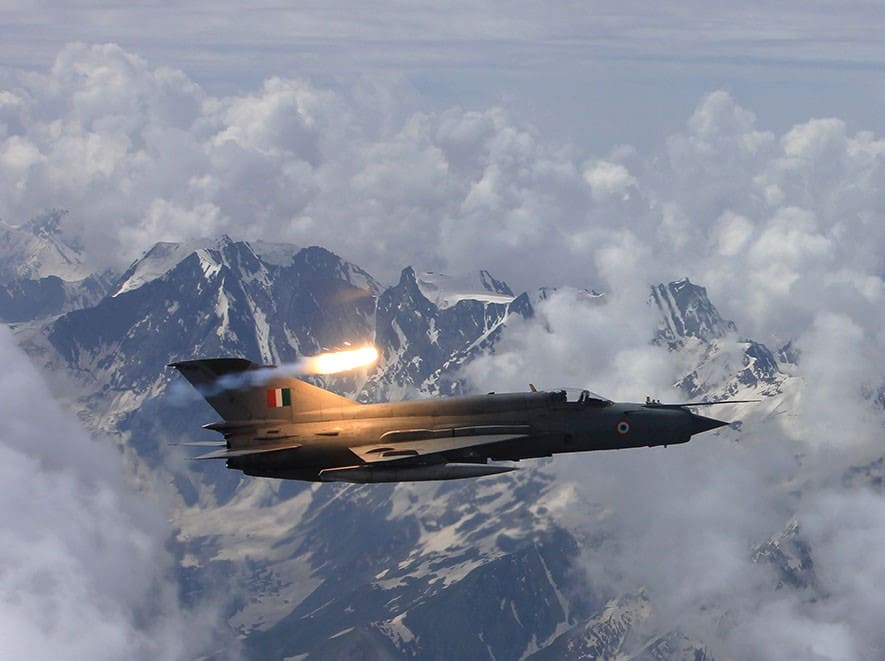
Flying into the Sunset: The MiG-21’s Final Salute to the Indian Air Force

India bids farewell to its longest-serving fighter jet, marking over six decades of unmatched aerial legacy.
Mumbai, Sept 2025: The Indian Air Force (IAF), since its inception on October 8, 1932, has evolved from a modest aerial unit into one of the largest and most formidable air forces in the world. Starting with just a handful of aircraft and personnel, the IAF has expanded steadily, establishing over 30 flying squadrons today, covering fighter, transport, helicopter, and reconnaissance roles. Each squadron is a specialized unit, equipped with specific aircraft to meet combat, logistical, and training objectives, reflecting India’s unwavering commitment to air defense, strategic reach, and operational readiness.
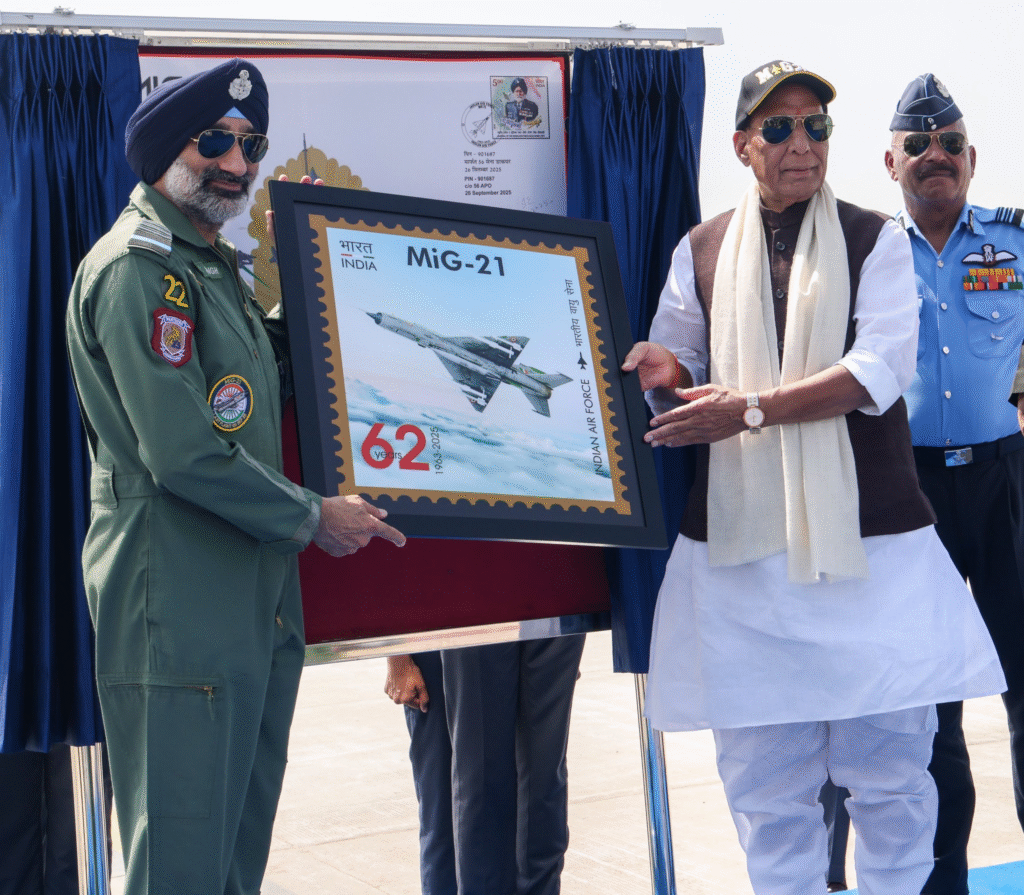
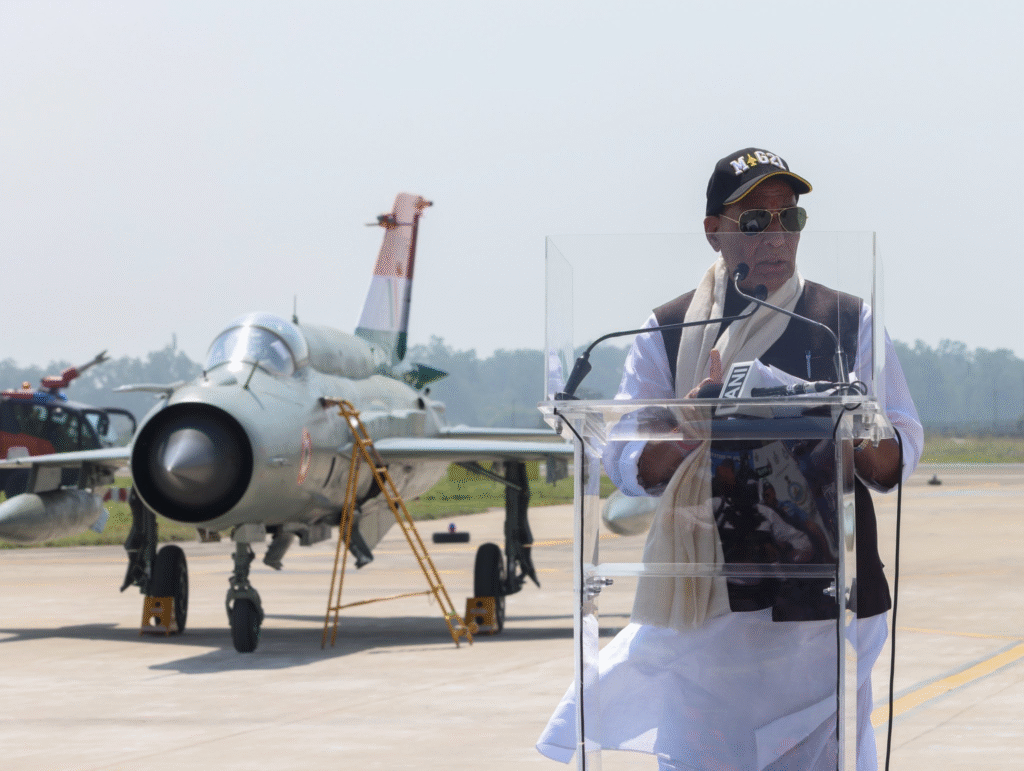
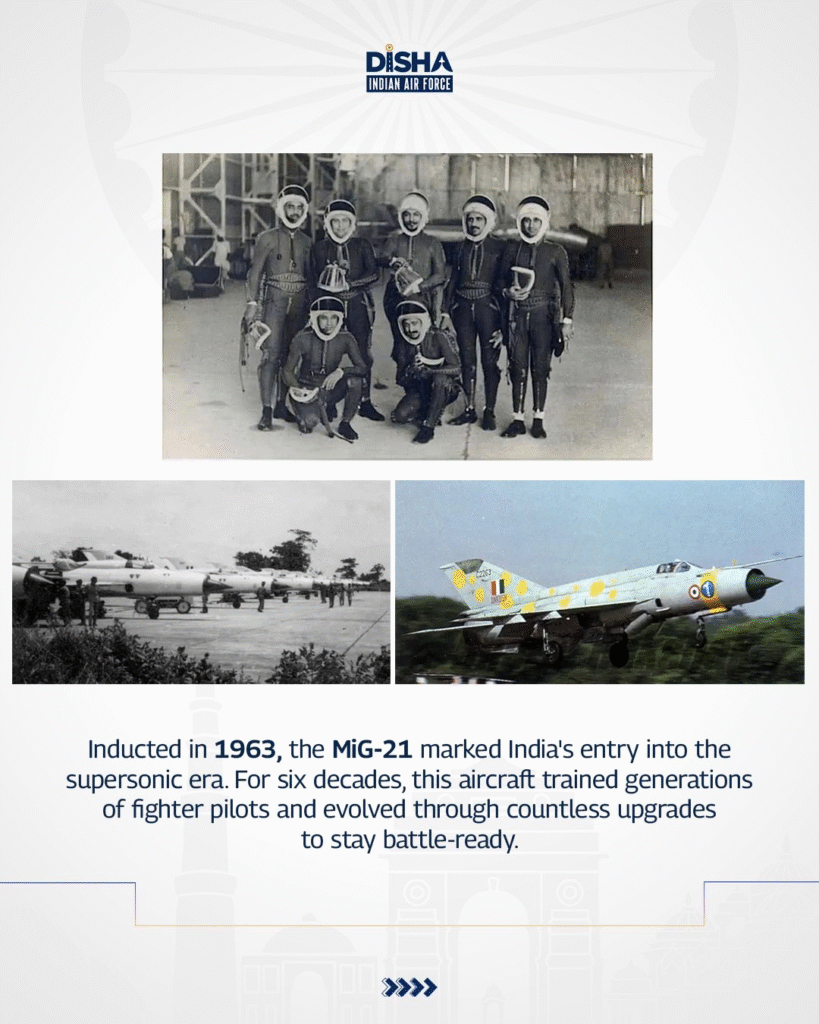
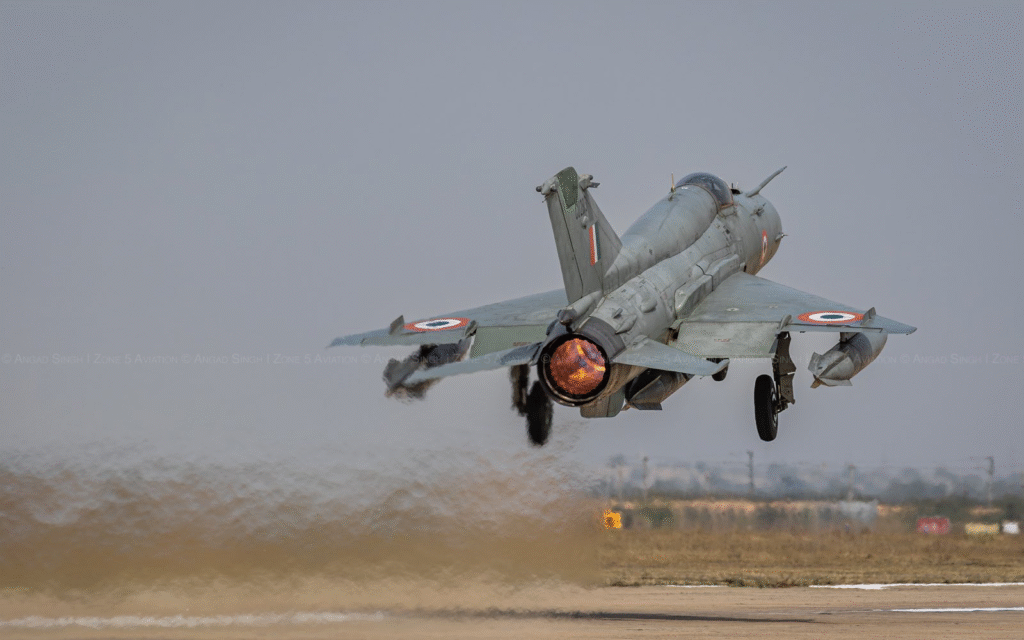
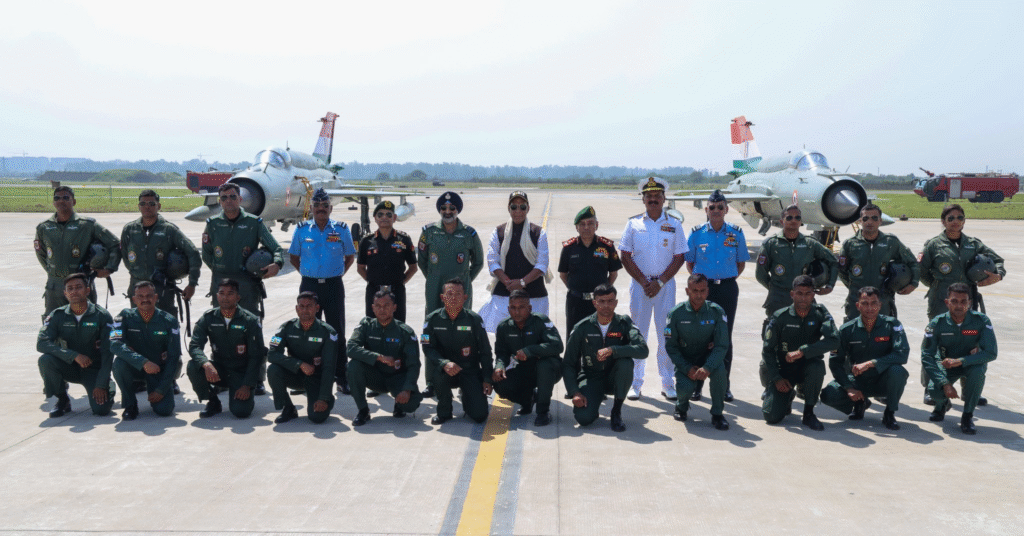
On September 26, 2025, the IAF bid farewell to one of its most iconic fighter jets, the MiG-21, marking the end of over six decades of distinguished service. The final two MiG-21 squadrons—the No. 23 “Panthers” and No. 3 “Cobras”—operating a total of 36 jets, were decommissioned during a solemn ceremony in Chandigarh, attended by Defence Minister Rajnath Singh and senior Air Force officials. This historic moment symbolized both an end and a tribute: the end of an era for India’s longest-serving fighter jet and a celebration of its unmatched contribution to India’s aerial warfare history.
A Legacy Across Six Decades
The MiG-21, a supersonic jet fighter of Soviet origin, was commissioned into the IAF in 1964. Almost immediately, it became the backbone of India’s fighter fleet, admired for its speed, agility, and adaptability. Known affectionately as the “Flying Sikh,” the aircraft has played a pivotal role in multiple conflicts, earning a reputation as a versatile and reliable aerial warrior.
Generations of Indian pilots trained and flew the MiG-21, establishing it as more than just a machine—it became a symbol of courage, skill, and the indomitable spirit of the IAF.
MiG-21 Timeline & Milestones
| Year | Milestone / Event | Significance |
|---|---|---|
| 1964 | MiG-21 inducted into IAF | Strengthened India’s aerial combat capabilities. |
| 1965 | Indo-Pak War | Deployed for air defense patrols; enhanced combat readiness. |
| 1971 | Indo-Pak War | Played a pivotal role in strikes on strategic targets, including operations near Dhaka; decisive contribution to India’s victory. |
| 1980s | Bison Upgrade | MiG-21 Bison modernization program enhanced avionics, weapons systems, and radar capabilities. |
| 1999 | Kargil War | Supported precision strikes in high-altitude Himalayan terrain alongside Mirage 2000s, MiG-29s, and Jaguars. |
| 2010–2020 | Operational Challenges | Over 20 accidents noted; upgrades and pilot training maintained operational readiness despite aging airframes. |
| 2019 | Post-Balakot / Abhinandan Mission | Wing Commander Abhinandan Varthaman flew a MiG-21 Bison to engage and shoot down a Pakistani F-16, demonstrating continued combat relevance. |
| 2025 | Retirement Ceremony | Final two squadrons decommissioned in Chandigarh, ending over six decades of service. |
This timeline highlights how the MiG-21 adapted to changing threats, upgrades, and operational demands over 61 years of active service in the IAF.
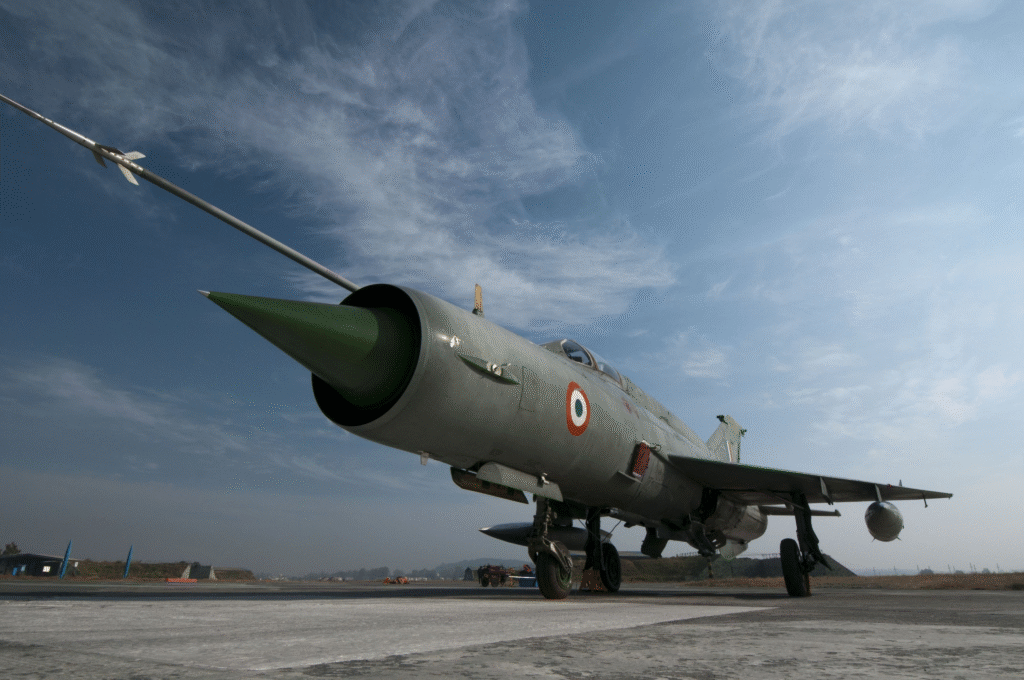
Key Wars and Operations
1965 Indo-Pak War: Newly inducted MiG-21s were primarily used for air defense, boosting India’s combat preparedness and patrolling the skies during tense border confrontations.
1971 Indo-Pak War: MiG-21s undertook daring strikes on strategic locations, including Dhaka, contributing decisively to the creation of Bangladesh.
1999 Kargil War: Despite high-altitude challenges, MiG-21s executed precision strikes in support of ground forces, alongside Mirage 2000s and Jaguars, showcasing versatility and combat endurance.
2019 Balakot / Wing Commander Abhinandan Mission: A MiG-21 Bison successfully engaged an enemy F-16, demonstrating that even decades-old jets could still serve in modern air combat scenarios.
Safety Record and Operational Challenges
Over its six decades, more than 500 MiG-21 aircraft reportedly crashed, with over 20 accidents since 2010 alone. Aviation experts often cite the aircraft’s single-engine design and extended operational flying hours as contributing factors. Nonetheless, senior officers maintain that the safety specifications were relatively robust, considering the aircraft’s intensive usage over decades.
Upgrades, including the MiG-21 Bison program, ensured avionics, radar, and weapon systems were continually modernized, keeping the jets operationally relevant.
Transition to Modern Technology
The retirement of MiG-21s signals India’s ongoing fleet modernization. Alongside the MiG-21, Jaguar and Mirage 2000 fleets are also scheduled for phase-out. The IAF is inducting advanced platforms to maintain aerial supremacy:
- Tejas Mk1 & Mk1A: Two operational squadrons already active; numerous deliveries of Mk1A variants are underway.
- Tejas Mk2 & Advanced Medium Combat Aircraft (AMCA): HAL is developing next-generation jets to complement existing fleets.
- Global Fighter Deals: The IAF plans to acquire 114 fighter jets from international defense manufacturers, including some for immediate deployment and others for collaborative production in India.
Strategic Partnerships
Russia remains a vital partner, providing defense systems such as the S-400 mobile surface-to-air missile system. Meanwhile, India’s own Akash-Teer air defense system complements aerial security, particularly after operations like Sindoor.
These partnerships, combined with domestic development of platforms like Tejas and AMCA, ensure that the IAF maintains technological edge and readiness for the next decades.
Fate of the Retired Fleet
The exact plans for retired MiG-21s are not finalized, but possibilities include:
- Stripping for spare parts to support other aircraft
- Display in museums to preserve aviation heritage
- Ceremonial aircraft for special IAF events
- Transfer to private collectors or enthusiasts
- Use as aerial targets for training purposes
Regardless of the outcome, the retired jets remain a symbol of decades-long dedication to India’s air defense.

Final Salute
The decommissioning ceremony in Chandigarh was a poignant moment of reflection and honor. Defence Minister Rajnath Singh and senior IAF officials paid tribute to a jet that shaped India’s aerial combat doctrine and inspired generations of pilots.
The MiG-21’s story mirrors the evolution of the IAF itself—from a fledgling force in 1932 to today’s technologically sophisticated, multi-dimensional air force. It symbolizes resilience, courage, and operational excellence, leaving behind an indelible legacy.
The MiG-21’s Enduring Legacy
After 61 years of service, the MiG-21 may have flown its final sortie, but its legacy is immortal. Its contribution to major wars, skirmishes, and operations exemplifies India’s aerial resilience and strategic capability. For over six decades, it stood as the workhorse of the IAF, defending the skies with unmatched dedication and inspiring a culture of bravery and skill among India’s pilots.
The MiG-21 is more than a retired aircraft—it is a symbol of India’s airpower journey, a bridge between the IAF’s pioneering past and its technologically advanced future. Its final salute is not only a farewell but a celebration of a fighter that truly earned its place in India’s history.
Team Maverick.






When Blood Sugar Hit 550, Family Turned to Faith & Bhagwant Mann Govt’s Mukh Mantri Sehat Yojana Became Lifeline
62-Year-Old Patient Receives Lifesaving Treatment Under Mukhi Mantri Sehat Yojana After Bl…

When Blood Sugar Hit 550, Family Turned to Faith & Bhagwant Mann Govt’s Mukh Mantri Sehat Yojana Became Lifeline
62-Year-Old Patient Receives Lifesaving Treatment Under Mukhi Mantri Sehat Yojana After Blood Sugar Reached …