Indian Government appointed Panel urges faster nuclear approvals, fuel security to meet 100 GW goal.

The Government appointed panel has affirmed vide a report that India should cut nuclear project timelines, secure long-term fuel uranium supplies and expand its reprocessing capacity. India is relaxing rules to end decades old state monopoly and a stringent liability provision to free up private participation and attract foreign suppliers of technology in the nuclear power sector. India targets 100 gigawatts (GW’s) of nuclear capacity by 2047 against the current 8.88 GW’s.
The panel, formed by the Ministry of Power, said the average time from site approval to nuclear reactor commissioning which is currently 11 to 12 years, must be reduced through faster land acquisition and regulatory clearances. It has recommended using existing sites and retiring thermal plant locations for new nuclear projects. Simultaneously, India should boost domestic uranium mining, acquire mines abroad, open up uranium sourcing and fuel fabrication to private companies and stockpile fuel for reactor lifespans of up to 60 years, the panel said. It also backed reprocessing of spent fuel, with the process being handled by a government entity.
While India plans to continue using its homegrown nuclear reactor design for most new plants, the committee has recommended that the country also start using newer, more advanced reactors from abroad. The committee has suggested the government rework the nuclear insurance pool to ensure 15 billion rupees, which is roughly $169 million (taken into consideration after calculating 1 US Dollar equivalent to Rs. 88.65 Paisa) coverage per incident per operator, rather than the current caps on total annual liability across all installations.
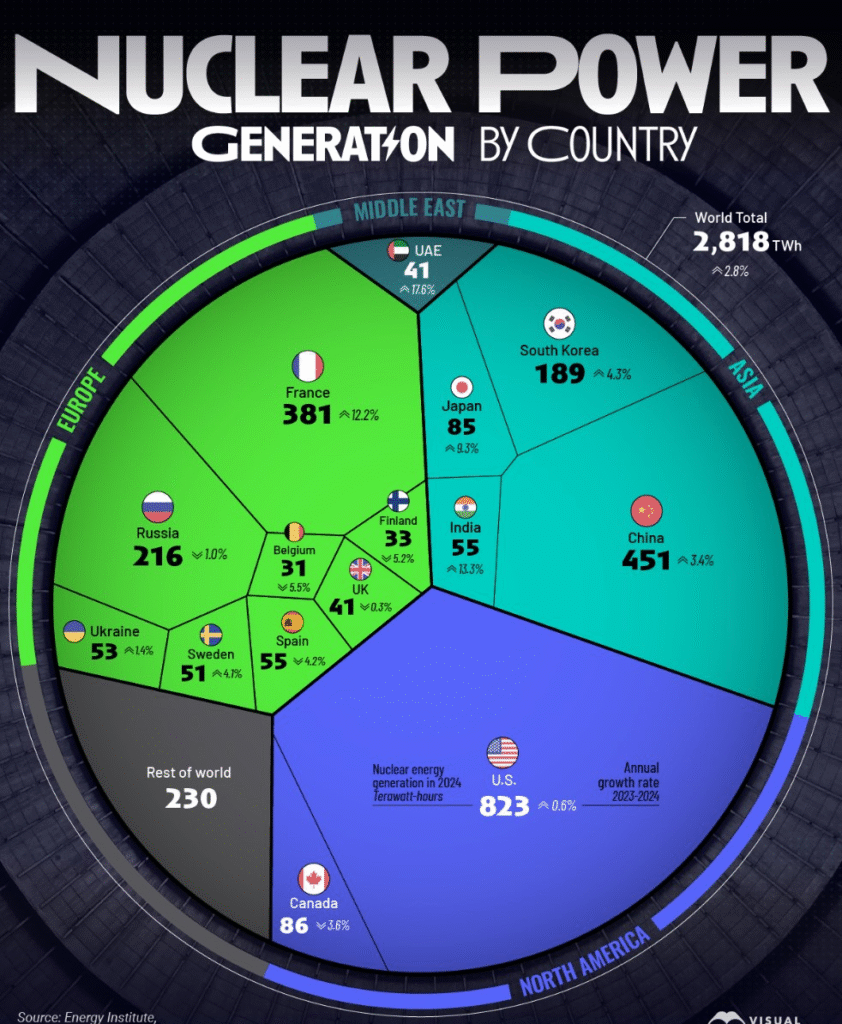
India’s rank amongst the Nuclear Power Generating Countries –
Nuclear power remains one of the world’s largest sources of low-carbon electricity, providing reliable baseload energy for millions of people. In 2024, global nuclear power plants generated 2,818 terawatt-hours (TWh) of electricity, accounting for roughly 10% of the world’s total electricity generation.
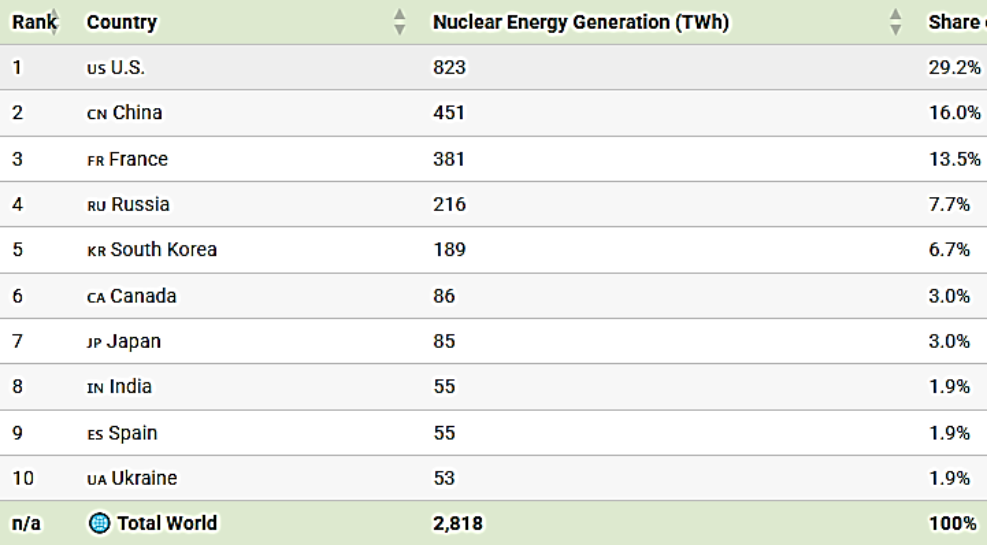
From the above illustration, it is evident that United States is the undisputed leader with 823 TWh generation having a share of 29.2%, while China stands second with 451 TWh at 16.0%. India ranks 08th with just 55 TWh having a mere 1.9% share.
As of 2025, there are 416 operating nuclear reactors worldwide, and around two-thirds of these are more than 30 years old. Nuclear reactors are typically designed to operate for 40–50 years, although they can operate for longer with lifetime extensions. Although the currently operating fleet is aging, more than 60 new reactors have commenced operations in the last 10 years. Furthermore, around 70 new reactors are currently under construction across 15 countries, brightening the outlook for the world’s reactor fleet.
Team Maverick






India Beat Pakistan 3-1 to Clinch FIH Youth Hockey5s Asian Championship Title
Muscat, July 2026: India’s Sub-Junior men’s hockey team delivered a commanding performance…

India Beat Pakistan 3-1 to Clinch FIH Youth Hockey5s Asian Championship Title
Muscat, July 2026: India’s Sub-Junior men’s hockey team delivered a commanding performance to defeat …