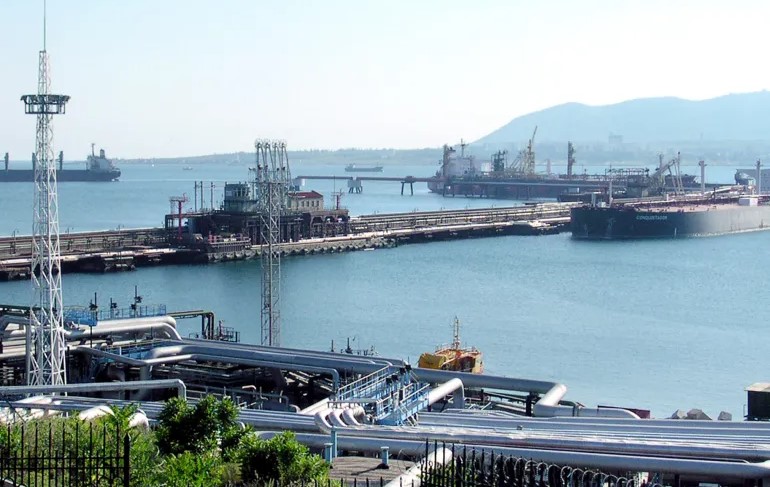
Russia’s Novorossiysk Port resumes Oil Loadings after Ukrainian attack.

Russia’s Novorossiysk Port have resumed oil loadings from today (16th November, 2025) after a 02 days of suspension triggered by a Ukrainian missile and drone attack, two industry sources said and LSEG data showed. Novorossiysk had temporarily suspended oil exports, equivalent to 2.2 million barrels per day, or 2% of global supply, on 14th November 2025. Global oil prices rallied by more than 2% on supply fears after the attack.
According to LSEG data, two tankers, the Suezmax class Arlan and Aframax class Rodos, are currently loading oil at the port’s berths. The Ukrainian attack damaged two oil berths at Novorossiysk. The attack on Novorossiysk, Russia’s largest Black Sea export hub, was the most damaging Ukrainian attack to date on Russia’s main Black Sea crude export infrastructure.
Novorossiysk which accounts for about a fifth of Russian crude exports, would have suffered if a long shutdown deem necessary, could have forced costly shuttering of oil wells in West Siberia, a step that would have significantly reduced the amount of oil sent to world markets by the world’s second largest exporter.
The attack on Novorossiysk came after months of Ukrainian drone attacks on Russian refineries, oil depots and pipelines. Reuters reported on Thursday that Russia’s oil processing has fallen just 3% this year, despite Ukraine’s biggest drone attacks to date.
Russian crude oil shipments via Novorossiysk’s Sheskharis terminal totalled 3.22 million tons, or 761,000 barrels a day, in October, according to industry sources. A total of 1.794 million tons of oil products were exported through Novorossiysk in October, the sources said.
As per industry sources, Russian refineries were running well below full capacity before the attacks and were able to mitigate their impact by restarting spare units at both damaged and unaffected plants as well as putting back into operation the attacked units after repairs. Russia has total refining capacity of around 6.6 million bpd, but industry sources say it is rarely fully utilised.
The International Energy Agency said that Russian revenue garnered vide the sales from crude oil and oil products have declined in August to one of the lowest levels seen since the start of the war in 2022.
Ukraine’s President Volodymyr Zelensky said last month that the long-range strikes may have reduced gasoline supplies in Russia by up to a fifth. The Kremlin, however, says that the fuel market is stable, and Russian President Vladimir Putin has said that Moscow will never bow to pressure from abroad.
And since the start of August, it has launched at least 58 attacks on key Russian energy sites, sending drones as far as 2,000 kilometres (1,200 miles) into Russian territory, according to data compiled by UK-based non-profit group Open Source Centre. However, Russian firms have said they have found ways to produce equipment domestically or import from China, which is a strategic ally of Russia, and repairs have ensured distillation units get back online within weeks in most cases, industry sources said.
Team Maverick






Solar Defence Showcases Indigenous ‘Bhargavastra’ Counter-Swarm Drone System to Indian Army
New Delhi, July 2026 : Solar Defence and Aerospace Ltd. (SDAL) on Friday showcased its ind…
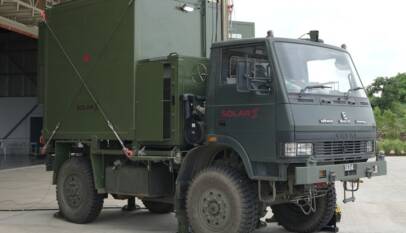
Solar Defence Showcases Indigenous ‘Bhargavastra’ Counter-Swarm Drone System to Indian Army
New Delhi, July 2026 : Solar Defence and Aerospace Ltd. (SDAL) on Friday showcased …