The Struggle for Control in Northern Europe and the High North Has Manifested From Shadow Conflict to Open Conflict.

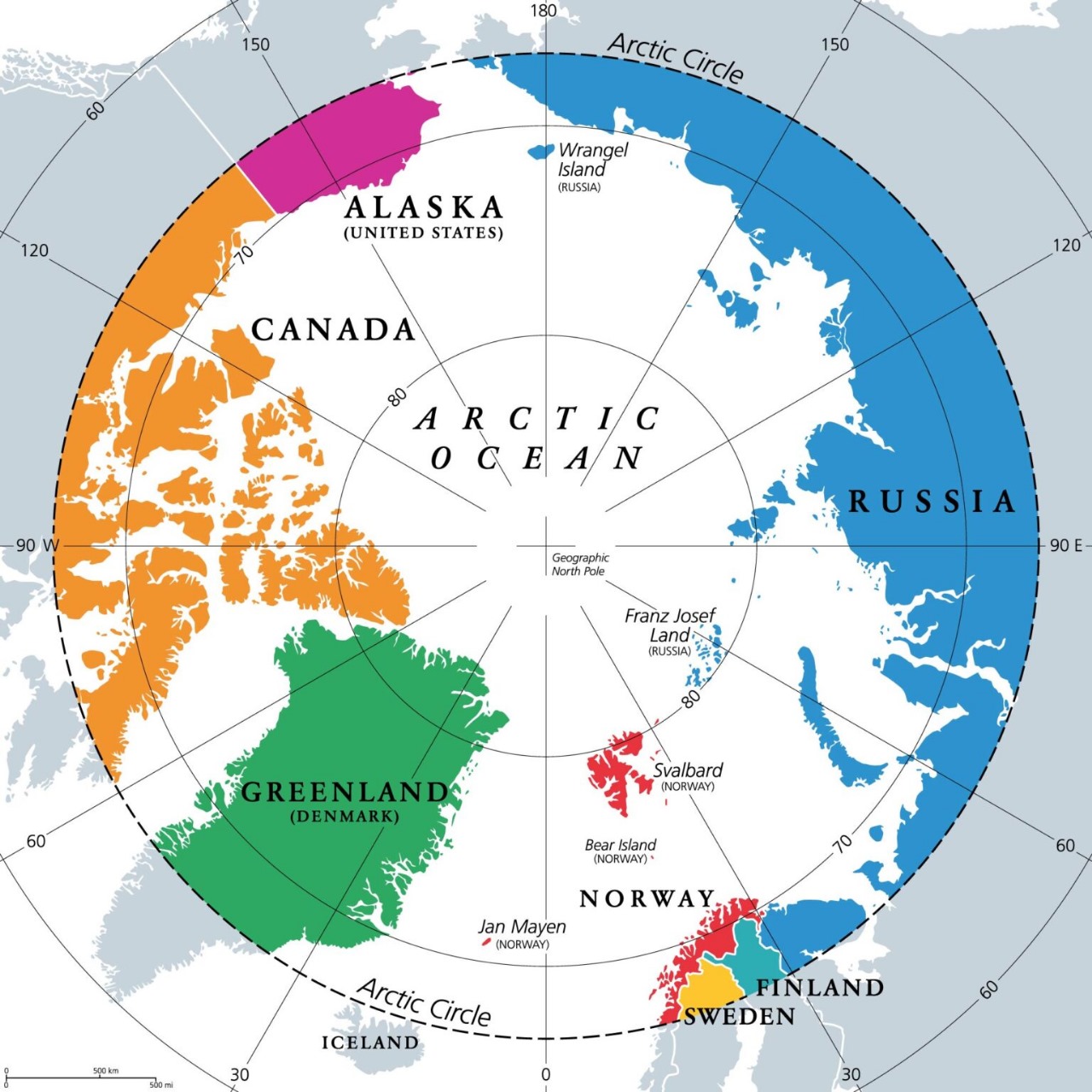
The winds of war in northern Europe have been escalating in the past year and have become an integral part of the shadowy confrontation between the Scandinavian countries and Russia since the war in Ukraine. Although Denmark is a small country in northern Europe and currently holds the rotating presidency of the European Union, it finds itself at the centre of prominent geopolitical issues. Over the past year, it has continued to conduct intensive and secret negotiations with the United States on new security arrangements in Greenland, against the backdrop of President Trump’s declaration of his desire to purchase the island, and Vice President J.D. Vance’s visit to the US military’s Pitopik Space Base (formerly Thule Station). These changes indicate the shift of tectonic plates in northern Europe and the Arctic Circle, which will also affect US-European relations.
Europe in a continuing crisis –
The drone incidents at airports and military bases in Jutland, western Denmark, and in neighbouring countries, while not causing damage or exposing those responsible, illustrated the country’s vulnerability and the danger of disabling defence systems remotely. Denmark decided to ban drone flights during the European Union summit in Copenhagen, as part of its rotating presidency, reflecting once again the silent war that is expected to intensify.
Denmark has been leading the way in boosting military shipments to Ukraine in recent years, and has even delivered, with American approval of F-16 fighter jets and increased indirect military aid, along with the Scandinavian countries. It is also conducting an independent investigation into the sabotage of the Nord Stream 2 gas pipeline that exploded near the Danish island of Bornholm in the Baltic Sea, and is trying to tighten supervision in cooperation with the German navy. Denmark, in cooperation with Germany and the Scandinavian navies, has also increased the security of oil and gas rigs in the North Sea. But while Denmark hopes that the European military umbrella will protect its strategic assets, it is too early to know how well the existing forces will be able to withstand the strain of deliberate incidents. Recent security assessments address the threat to strategic infrastructure, including submarine cables, cyber resilience, and counterintelligence, which have led to closer scrutiny of telecom companies winning tenders and concerns about increasing dependence on non-European companies.
These moves have led Denmark, along with the Scandinavian countries, to deepen NATO’s strategic alignment in Northern Europe. The simulated or hybrid war in the Nordic region highlights that the Nordic countries (including Iceland and the Faroe Islands) are particularly vulnerable to air threats. Denmark hopes to forge a long-term partnership with its southern neighbour, Germany, and to strengthen its eastern and southern borders along the coastline. Since the Cold War, the communications networks – and especially the air and sea space near Germany and Denmark have been a focus for Russian aircraft and submarine activity. With the renewed buildup of Russian forces on the border with Finland and the deployment of missile batteries in Kaliningrad, Northern Europe is becoming a focus of regional tension and is therefore receiving increasing attention. According to intelligence estimates, the war in the Middle East is diverting attention from the conflicts in Europe – an issue that serves Russia. This is a possible reason why drones have also been spotted in the region. The border with Germany, in Schleswig-Holstein, within whose territory is the seaport of Kiel, one of the most important in Northern Europe.
NATO’s European Headquarters spokesman, Colonel Martin O’Donnell, announced that NATO is increasing its naval forces in the Baltic Sea region, especially near Denmark – the German frigate “Hamburg” has already been deployed in the region after a series of deliberate sabotage of power cables, communications, and gas pipelines in the Baltic Sea – but European readiness has not yet been finalised, while Germany is announcing an increase in its defence budget.
In this context, Denmark backs itself up with the diversity of its allies and risk management through NATO powers, the Nordic-Baltic Alliance, and the Scandinavian bloc. Sweden, for example, announced that it would provide Denmark with anti-drone interception equipment – but no further details were provided. Copenhagen, for its part, announced an upgrade of systems for detecting and neutralizing drones, but also reserved its position on purchasing the Israeli “Barak” defence system. Denmark understands that there is currently no complete solution to shooting down drone swarms, and although Prime Minister Mette Frederiksen has ordered an increase in military procurement – there is no immediate solution, other than laser interception systems, which are also not yet operationally mature in Britain.
In this situation, Denmark is trying to diplomatically manoeuvre its relations with the United States and maintain open channels of communication, with the backing of European powers.
The Danish-American Alliance and Arctic Supremacy –
Denmark continues to hold formal talks with the United States over control of Greenland, but American pressure is expected to increase as the Trump administration seeks to expand the American military presence in the Arctic, in order to secure American interests, there. In response, Denmark is beefing up its military and holding a large-scale exercise in the Arctic with France and the Nordic countries – a signal of its commitment to protecting its sovereignty on the remote island and in the Arctic region. There is growing concern in Denmark that part of the American digital infrastructure is being used as a lever for pressure on all communications between Greenland and the Arctic – which undermines its digital sovereignty.
The revelation that Greenland was funding an influence campaign to secede from Denmark has also added to the level of suspicion toward the Americans. These events are putting NATO relations to the test, and may serve Russia in a long-term effort to weaken the military alliance.
Although relations between the two countries are currently in a period of testing, Denmark has traditionally maintained close ties and cooperation with the United States, especially during the Cold War, when strategic American bases operated under joint agreements between the countries. Even after the Cold War, Denmark continued its commitment to transatlantic security and the alliance with the United States.
In 2004, Danish Foreign Minister Per Stig Møller concluded negotiations to upgrade US bases including Thule, which serves as a key base for missile detection and satellite tracking. At the signing ceremony, then-US Secretary of State Colin Powell humorously referred to Greenland as “the 51st state of the United States of America”. However, the Igaliku Agreement, signed that year, established a framework for cooperation between the United States, Greenland and Denmark, and strengthened their military and strategic partnership.
The Arctic Arena between China, Russia and the West –
The Arctic is a focus of broader geopolitical competition. Washington sees the growing competition there as extending beyond Russia to include China. China has published its official policy toward the Arctic Circle in a White Paper, has shown growing interest in the region, has attempted to establish a station on Spitsbergen, and has launched a fourth icebreaker—along with other vessels developed for the northern shipping lanes.
Norway’s 2024 National Assessment highlighted Chinese activity in the Svalbard archipelago as part of a Chinese attempt to normalize its presence in the Arctic region, including failed attempts to build facilities in Iceland and Greenland. A similar scenario occurred in Finland in 2018, when a Chinese delegation attempted to purchase an airport in Lapland. At the same time, space observation stations were built in Kiruna, Sweden, and Sudenkilä, Finland, in collaboration between local and Chinese scientific institutions.
In response to Chinese activity, Norway took preventive measures: it blocked the sale of private land in Svalbard after reports of interest from a foreign party, including a Chinese real estate tycoon who tried to purchase strategic territory. The archipelago’s location along the Northern Sea Route makes the region a focus of competition for Arctic shipping and trade routes.
In 2020, Chinese mining company Shandong Gold attempted to acquire Canada’s TMAC Resources, but the acquisition was thwarted after an internal Canadian security assessment determined it posed a security risk. Canada’s foreign policy includes maintaining supremacy in the North, implementing agreements with Denmark on maritime boundaries, and negotiating with the United States on Northern Navigational Areas, including opening a Canadian consulate in Greenland.
A new law in Denmark stipulates that only companies or individuals from Greenland, the Faroe Islands or Denmark may purchase land in Greenland, a move designed to reduce Chinese infiltration. The current Greenlandic government is also working to diversify investment through the European Union, the United States, and Japan, and has suspended mining licenses for Chinese companies, citing negative environmental impacts. However, the government elected in 2025 expresses a willingness for controlled mining and even openness to foreign investment, including from China. The continued hesitation from the West may push Greenland to deepen ties with China.
Team Maverick






Prashant Kishor to Contest Bankipur Bypoll, Jan Suraaj Eyes Breakthrough in BJP Stronghold
Patna, July 2026 : Election strategist-turned-politician Prashant Kishor will contest the …

Prashant Kishor to Contest Bankipur Bypoll, Jan Suraaj Eyes Breakthrough in BJP Stronghold
Patna, July 2026 : Election strategist-turned-politician Prashant Kishor will contest the upcoming by-election from …