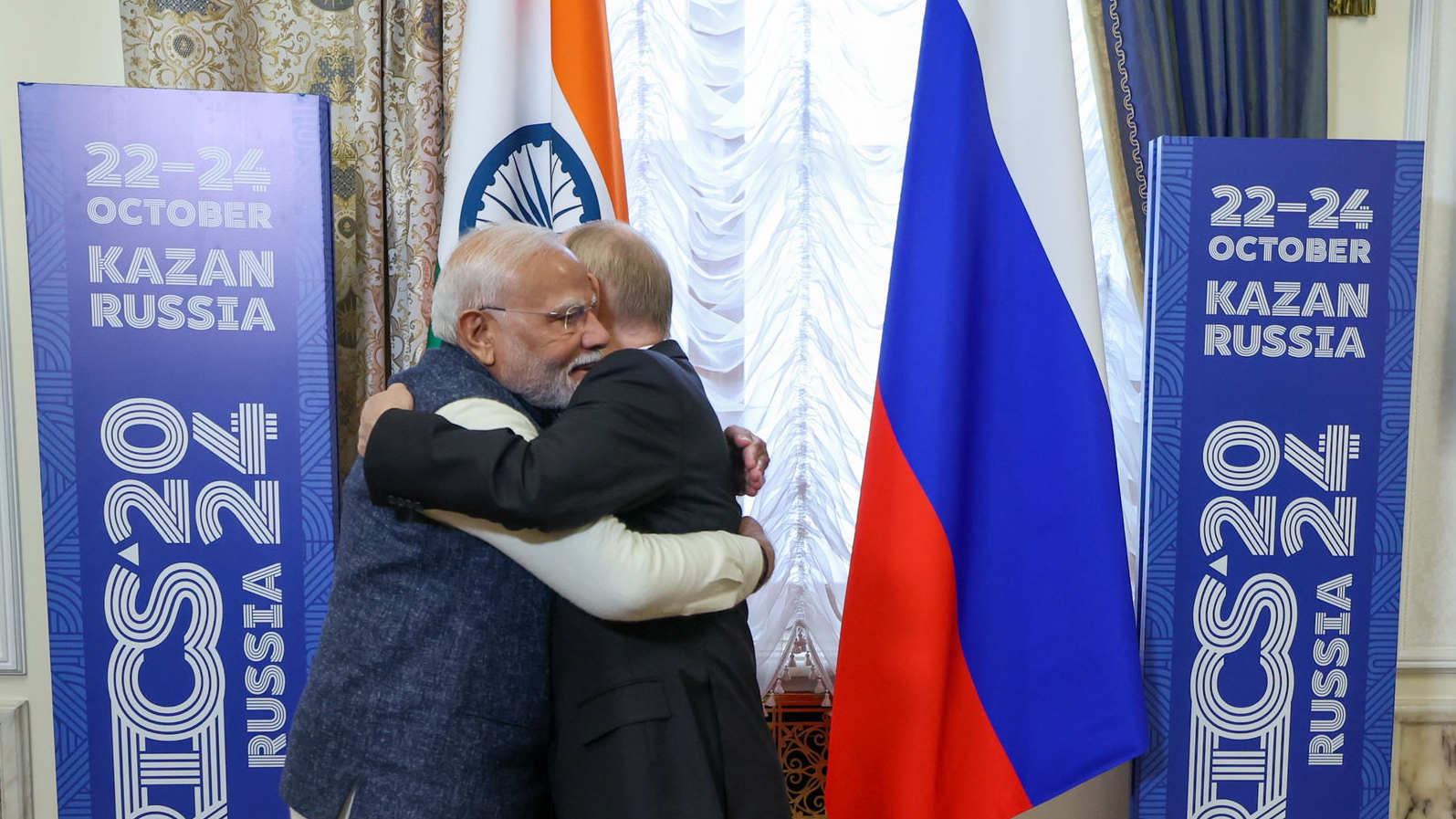
Modi–Putin Meet Under Global Spotlight as Russian President Arrives in India for Strategic Talks

New Delhi, Dec 2025 : Russian President Vladimir Putin is set to arrive in India on December 4 at around 7 p.m. for a crucial two-day visit, marking his first trip to the country since the outbreak of the Russia-Ukraine war. The visit, which includes a highly anticipated meeting with Prime Minister Narendra Modi, has drawn intense global attention, with major world powers closely monitoring the developments and outcomes.
Delhi is fully prepared to welcome the Russian leader, with heightened security and diplomatic arrangements in place. The Modi–Putin meeting is expected to focus on a wide range of critical issues, including defence cooperation, energy security, trade, and global geopolitical challenges. There is also widespread speculation that the leaders may exchange views on possible pathways toward reducing the intensity of the Ukraine conflict, though no official confirmation has been given.
This high-profile visit comes at a sensitive time, as the United States and several European nations continue to pressure India to reduce its economic engagement with Russia because of the ongoing war in Ukraine. Washington has recently intensified its economic pressure through new tariff measures, widely interpreted as an attempt to limit India’s growing energy ties with Moscow. However, New Delhi has consistently maintained that its foreign policy choices are guided solely by national interest and the welfare of its people.
Despite Western pressure, India has continued to pursue strategic and defence cooperation with both Russia and the United States, following a carefully balanced foreign policy approach. India’s long-standing defence partnership with Russia, in particular, remains a matter of concern for Western capitals. Countries such as Britain, France and Germany have adopted a firm anti-Russia stance since the Ukraine war began, making the Modi–Putin engagement in New Delhi a potentially uncomfortable development for Europe and the US.
Putin’s visit is widely being interpreted as a strong signal that India will not compromise its strategic autonomy under external pressure. It underscores New Delhi’s position that its relationships with global powers are based on independent decision-making, not dictated by any single bloc.
At the same time, China is also closely tracking the developments. Relations between China and Russia remain strong, and the Modi–Putin meeting is being widely analysed across Chinese and American media platforms. Several foreign policy analysts told international media that the US national security establishment will be paying close attention to the intent of the visit, the nature of any agreements signed, and the political response from the White House.
Lisa Curtis, former Trump administration official and currently Director of the Indo-Pacific Security Program at the Center for a New American Security, observed that Washington would not view the timing of the visit favorably. She pointed out that the meeting is happening at a time when President Putin is intensifying his military campaign in Ukraine and allegedly expanding threats into Europe through cyber and drone operations.
Curtis also described the visit as a diplomatic signal to Washington that India will not be coerced into altering its long-standing partnerships. She noted that recent US tariff measures aimed at pressuring India are unlikely to change New Delhi’s core strategic outlook. According to her, India remains firm on preserving its strategic independence and will not yield to economic or political pressure.
Another prominent analyst, Tanvi Madan of the Brookings Institution, said the US would be carefully monitoring two key aspects of the summit: the level of ceremonial honors extended to Putin and the concrete outcomes on defence and energy cooperation. She added that American policymakers would closely track any new security agreements that emerge from the talks.
Energy will be one of the central themes, especially India’s continued import of discounted Russian crude oil. Madan noted that experts would be watching fresh data on India’s oil purchases to assess whether the visit strengthens energy cooperation further.
As President Putin’s aircraft prepares to touch down in New Delhi, the world’s major capitals—from Washington to Beijing—are watching closely. The Modi–Putin summit is not merely a bilateral engagement but a geopolitical event with implications far beyond India and Russia, shaping the evolving balance of power in a rapidly changing global order.
Team Maverick.


Suryavanshi’s 17-Ball Blitz Powers Rajasthan Royals to Dominant Win Over CSK
Guwahati, March 2026 : A sensational knock by Vaibhav Suryavanshi powered the Rajasthan Ro…
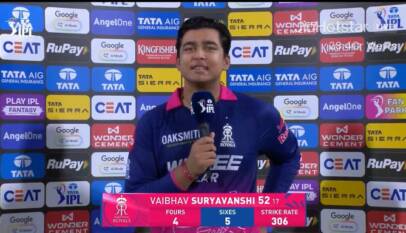
Suryavanshi’s 17-Ball Blitz Powers Rajasthan Royals to Dominant Win Over CSK
Guwahati, March 2026 : A sensational knock by Vaibhav Suryavanshi powered the Rajasthan Royals …