Trump Administration to Expand U.S. Travel Ban to Over 30 Countries After National Guard Shooting

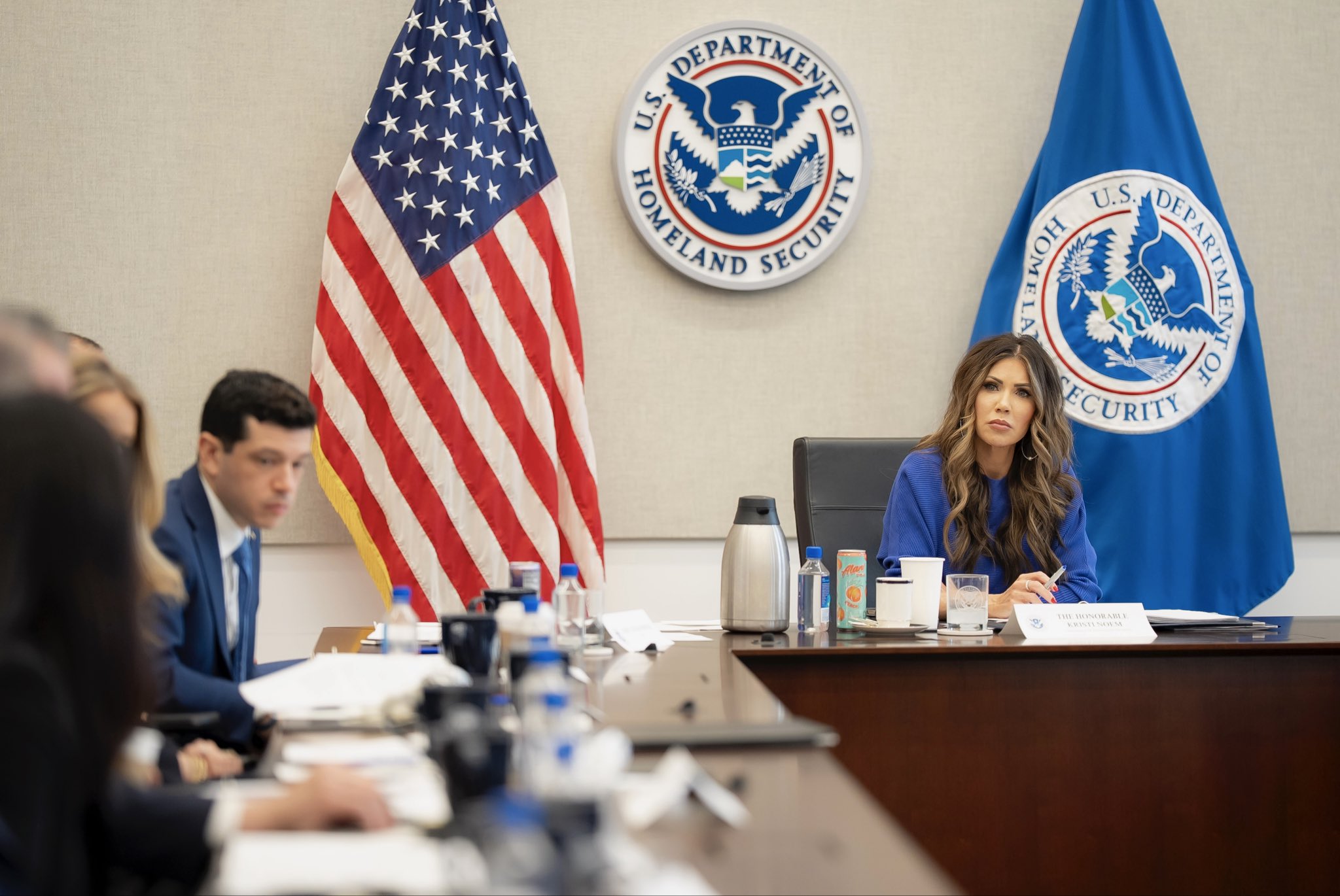
Washington, Dec 2025 : The Trump administration is preparing to significantly expand its travel restrictions, with the number of countries affected expected to rise to more than 30, Homeland Security Secretary Kristi Noem has confirmed. The move comes amid heightened national security concerns following the fatal shooting of two National Guard members by a man originally from Afghanistan.
The proposed expansion builds on the sweeping travel ban introduced by the Republican administration in June, which barred entry into the United States for citizens from 12 countries and imposed partial restrictions on travelers from seven others. Since then, the list has steadily grown as the administration moves toward tightening immigration controls even further.
In a recent interview aired late Thursday on Fox News with host Laura Ingraham, Noem confirmed that the travel ban would be broadened beyond the current list but declined to provide specific country names or an exact number. “I won’t be specific on the number, but it’s over 30,” Noem said. “The president is continuing to evaluate which countries should be included.”
The Department of Homeland Security (DHS) has not yet issued an official notification regarding when the expanded travel ban will take effect or which nations will be added. Requests for comment on operational timelines and implementation details remained unanswered as of Friday.
The renewed push for tighter travel restrictions follows the November 26 shooting of two National Guard members during Thanksgiving week in Washington. Rahmanullah Lakanwal, an Afghan national who migrated to the United States after the U.S. military withdrawal from Afghanistan, has been charged with first-degree murder. One of the victims, West Virginia National Guard Specialist Sarah Beckstrom, succumbed to her injuries, while Staff Sgt. Andrew Wolfe suffered critical wounds. Lakanwal has pleaded not guilty to all charges.
In the immediate aftermath of the attack, the administration intensified scrutiny and restrictions on the 19 countries that were already on the travel ban list, including Afghanistan, Somalia, Iran, and Haiti. Officials argue that the existing vetting processes failed to identify looming risks, and that stricter entry controls are essential to ensure domestic security.
“If they don’t have a stable government, if they don’t have a country that can sustain itself and accurately identify who their citizens are, and if they can’t help us properly vet them, why should we allow people from that country to come here to the United States?” Noem said during the interview.
The administration maintains that these expanded measures are not meant to target any one group but to close what it calls “systemic security gaps” in U.S. immigration screening. Officials argue that many of the affected countries lack centralized identity systems, reliable criminal records, or functioning governance structures necessary for effective background verification.
However, civil rights groups, immigration advocates, and several Democratic lawmakers have condemned the sweeping restrictions, arguing that the crackdown amounts to collective punishment rather than targeted security enforcement. Critics also warn that the measures could retraumatize refugees and migrants who have already undergone years of rigorous vetting to obtain visas or asylum in the United States.
Over the past week alone, the administration has announced a cascade of immigration-related actions. These include a temporary halt on new asylum decisions, a suspension of processing for several immigration benefit applications involving individuals from the original 19 travel-ban nations, and a freeze on special immigrant visas for Afghans who had assisted U.S. military operations during the war.
Adding to the tightening framework, U.S. Citizenship and Immigration Services (USCIS) announced on Thursday that it is significantly reducing the validity period of work permits for certain categories of applicants, including refugees and asylum seekers. Under the revised policy, affected individuals will be required to renew their permits more frequently and undergo repeated background screening.
Administration officials insist that these steps are necessary to prevent future attacks and protect national security. “Vetting once is not enough anymore,” a senior DHS official said anonymously. “Threat environments evolve, and our procedures must evolve with them.”
Yet humanitarian groups argue that the measures risk pushing vulnerable families into legal and financial uncertainty. Many refugees legally employed in the U.S. now face shortened work authorization periods, which could disrupt livelihoods and employment stability.
The fast-paced rollout of immigration restrictions has also generated confusion within immigrant communities and among international partners. While the White House has signaled that additional countries will soon be added to the ban, no official list has been released so far.
As the administration continues to reshape U.S. immigration policy following the National Guard shooting, legal challenges are widely expected. Civil liberties organizations have already signaled they may seek court intervention to block portions of the expanded travel ban, arguing that it violates constitutional protections and international humanitarian obligations.
For now, uncertainty surrounds both the scope and timing of the next phase of restrictions, even as the administration signals that further tightening is imminent.
Team Maverick.






Markel And Willis Launch Nuclear Insurance Facility Amid Atomic Resurgence.
May 2026: Markel International has teamed up with broker Willis to roll out a dedicated in…

Markel And Willis Launch Nuclear Insurance Facility Amid Atomic Resurgence.
May 2026: Markel International has teamed up with broker Willis to roll out a …