RBI Overhauls Zero-Balance Accounts: Major Free Benefits for BSBD Users from April 2026

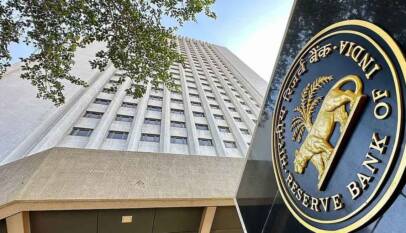
New Delhi, Dec 2025 : In a sweeping reform aimed at strengthening financial inclusion and enhancing consumer protection, the Reserve Bank of India (RBI) has announced a comprehensive overhaul of the rules governing Basic Savings Bank Deposit (BSBD) accounts. The new framework, which comes into force nationwide from April 1, 2026, provides significantly expanded free facilities for zero-balance account holders across all categories of banks.
The decision follows a detailed review of public feedback and stakeholder suggestions received after the RBI released its draft BSBD guidelines on October 1, 2025. The central bank said the updated structure reflects evolving customer needs, especially in an increasingly digital banking environment.
Seven Amendments, One National Framework
Under the revised framework, the RBI has issued seven key amendments applicable to all commercial banks, small finance banks, payment banks, local area banks, regional rural banks, urban cooperative banks, and rural cooperative banks. These amendments fall under the RBI’s Responsible Business Conduct framework and focus on improving affordability, boosting usage, and ensuring uniform customer service standards.
The BSBD account will now be offered as a standard default savings account by every bank, with no minimum balance requirement under any circumstances.
Expanded List of Free Facilities
Under the new rules, BSBD account holders will enjoy an expanded basket of free services, including:
• Unlimited free cash deposits through any channel
• Free ATM or debit card with zero annual maintenance charges
• Free cheque book of at least 25 leaves per year
• Free internet and mobile banking services
• Free passbook or monthly account statements
• At least four free withdrawals per month, including ATM and transfer transactions
• Unlimited free digital payments, including UPI, NEFT, RTGS, IMPS, and point-of-sale transactions — excluded from the monthly withdrawal cap
Importantly, banks are barred from forcing customers to take optional facilities such as ATM cards, digital banking, or cheque books. These can only be issued upon explicit customer request.
Stronger Customer Choice and Transparency
The RBI has also clarified that while banks may offer extra features beyond the mandatory freebies, such services must be transparent, optional, non-discriminatory, and cannot be linked to minimum balance conditions. This ensures BSBD accounts remain truly financial-inclusion focused and are not quietly converted into fee-heavy products.
KYC, Conversion, and Account Restrictions
BSBD accounts will continue to be governed by standard KYC and AML norms as per RBI’s 2025 Know Your Customer Directions. Accounts for minors will operate under separate, age-appropriate safeguards, with banks permitted to impose reasonable caps for risk management.
Customers seeking to convert an existing savings account into a BSBD account must be processed within seven days, with banks required to offer both physical and digital conversion options. However, customers are prohibited from holding more than one BSBD account across the entire banking system, and banks must obtain a formal declaration before opening new BSBD accounts.
No Income-Based Eligibility
The RBI rejected suggestions to restrict BSBD eligibility based on income, profession, or credit profile. According to the central bank, BSBD accounts are meant to be universally accessible, ensuring financial services reach both urban and rural populations without discrimination.
Digital Access Made Mandatory
Mobile and internet banking access is now mandatory for all BSBD accounts. Additionally, banks cannot levy any charges on cash deposits made through branches, ATMs, or business correspondents.
Impact on Existing Customers
Existing BSBD account holders can claim all newly introduced free benefits on request using physical branches or digital channels. Payment banks have been encouraged to adopt the framework early, though full nationwide enforcement begins from April 2026.
A Major Step Toward Inclusive Digital Banking
With these sweeping changes, the RBI has attempted to modernise India’s most important financial inclusion tool while protecting low-income customers from hidden charges, access restrictions, and service denial. The new BSBD regime is expected to strengthen trust in formal banking, expand digital participation, and provide financial stability to millions of citizens.
Team Maverick.






Israel, Lebanon Agree on Ceasefire Framework Amid Continued Cross-Border Hostilities
Washington/Beirut, June 2026 : Israel and Lebanon on Wednesday agreed to move forward with…

Israel, Lebanon Agree on Ceasefire Framework Amid Continued Cross-Border Hostilities
Washington/Beirut, June 2026 : Israel and Lebanon on Wednesday agreed to move forward with …