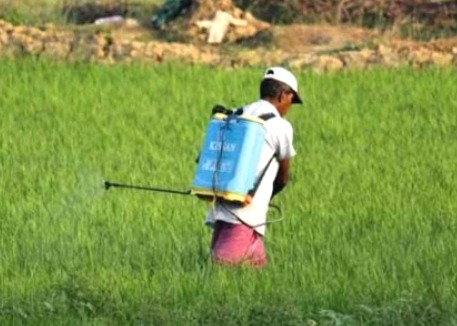
Government Of India Invites Public Comments on Draft Pesticides Management Bill, 2025.

New Delhi; January 2026: The Ministry of Agriculture & Farmers Welfare has invited comments and suggestions from stakeholders and the general public on the Draft Pesticides Management Bill, 2025, as part of the pre-legislative consultation process. The draft Bill seeks to modernise India’s pesticide regulatory framework by replacing the Insecticides Act, 1968 and the Insecticides Rules, 1971.
New legislation to replace Insecticides Act, 1968; focuses on quality pesticides, farmer safety and ease of doing business.
According to the Ministry, the proposed legislation has been framed in alignment with current agricultural, technological and regulatory requirements, with a strong focus on farmer welfare, transparency and accountability. The Bill aims to ensure the supply of quality pesticides to farmers and simultaneously support ease of doing business through reform-oriented regulatory mechanisms.
The Draft Pesticides Management Bill, 2025 introduces provisions for enhanced transparency and traceability, supported by digital and technology-driven systems to streamline regulatory processes. These measures are expected to improve service delivery and strengthen trust across the pesticide value chain.
To address the issue of spurious and substandard pesticides, the Bill proposes stricter controls and higher penalties, alongside provisions for compounding of offences. Enhanced penalties, to be defined by State-level authorities, are expected to act as a deterrent while balancing regulatory enforcement with administrative efficiency. The Bill also mandates accreditation of pesticide testing laboratories, ensuring that only quality-assured products are made available to farmers.
Reacting to the release of the draft Bill, CropLife India, the industry body representing leading crop protection companies, said it is in the process of reviewing the proposed legislation. Mr. Ankur Aggarwal, Chairman, CropLife India has said, “We are currently in the process of examining the draft Pesticides Management Bill 2025 (revised 2020 bill). We shall arrive at a consolidated view of the industry and share a detailed response in due course”.
The Draft Pesticides Management Bill, 2025 has been placed in the public domain for stakeholder feedback, with comments invited until February 4, 2026. The Ministry of Agriculture & Farmers Welfare has said that all inputs received within the consultation period will be carefully examined before the Bill is finalised.
Pesticides Management Bill 2025 –
BILL: to regulate pesticides, including their manufacture, import, packaging, labelling, storage, advertisement, sale, transport, distribution, use and disposal in order to ensure availability of safe and effective pesticides, and to strive to minimise risk to human beings, animals, living organisms other than pests, and the environment with an endeavour to promote pesticides that are biological and based on traditional knowledge and for matters connected therewith or incidental thereto.
Definitions: In this Act, unless the context otherwise requires –
- “animal” means animal useful to human beings and includes honey bees and other beneficial insects, earthworms, fish and fowl and such kinds of wild life as the Central Government may, by notification, specify, being kinds which in its opinion, it is desirable to protect or preserve;
- “banned” in relation to a molecule or formulation of a pesticide, means the prohibition of its manufacture, import, sale, distribution and use in order to protect human health, other living organism or the environment;
- “batch” means an identifiable quantity of a technical grade pesticide or its formulation which has been manufactured and processed under uniform conditions in a single lot;
- “Board” means the Central Pesticides Board constituted under section 4;
- “Central Pesticides Laboratory” means the Central Pesticides Laboratory established under section 36;
- “certificate of registration” means a certificate of registration of a pesticide granted under sections 18, 19 and 20;
- “dispose” means to carry out any process that neutralises, destroys or isolates pesticides and their packages, including physico-chemical treatment, biological treatment or incineration, but does not include a process that leads to the reuse, recycling, recovery or utilisation of pesticides, including through co-processing and the terms “disposal” and “disposed” shall be construed accordingly;
- “distribution” means the process by which pesticides are supplied through trade channels to domestic or international markets;
- “environment” includes water, air, land, soil and the interrelationship which exists among and between water, air and land, soil and human beings, other living creatures, plants, microorganisms and property;
- “export” means taking out to any place outside those territories to which this Act extends from a place inside the territories;
- “formulation” means a preparation containing one or more technical grade pesticides in specified proportions along with other ingredients in specified proportions;
- “import” means bringing into any place within the territories to which this Act extends from a place outside those territories;
- (m)“label” means any written, printed or graphical representation on or attached to the immediate package, or on any covering in which the package is placed or packed;
- “leaflet” means any written, printed or graphical representation accompanying the package;
- “Licensing Officer” means a licensing officer appointed under section 26;
- “manufacture” includes any process or part of a process for making, altering, finishing, packing,
labelling, repacking or relabelling any pesticide or formulation with a view to its ultimate sale, distribution or use;
- “notification” means a notification published in the Official Gazette;
- “ordinary use pesticide” means any pesticide intended for use only in households, offices and similar premises, but excludes pesticides intended for use in agriculture, industry, pest control operations, public health or storage;
- “other ingredients” means inert materials, dispersing agents, emulsifying agents, wetting agents, surfactants, stabilisers, preservatives, perfumes, colouring agents or other substances which are biologically inactive and are added in a specified proportion to a technical grade pesticide to make a formulation;
- “package” means a box, bottle, casket, tin, barrel, case, receptacle, sack, bag, wrapper, or other things in which a pesticide is placed or packed;
- “person” includes any individual, company, association, or body of individuals, whether incorporated or not;
- “pest” means any species, strain or biotype of plant, animal or pathogenic agent that is unwanted or injurious to plants, plant products, human beings, animals, other living creatures and the environment and includes vectors of parasites or pathogens of human and animal diseases and vermin as defined in the Wild Life (Protection) Act, 1972;
- “pesticidal property” means such property of a substance that have the same chemical or biological action as a pesticide;
- “pesticide” means any substance or mixture of substances, including a formulation, of chemical or biological origin as specified in the Schedule and intended for preventing, destroying, attracting, repelling, mitigating or controlling any pest in agriculture, industry, pest control operations, public health, storage or for ordinary use, and includes any substance intended for use as a plant growth regulator, defoliant, desiccant, fruit thinning agent, or sprouting inhibitor and any substance applied to crops either before or after harvest to protect them from deterioration during storage and transport;
- “Pesticide Analyst” means a Pesticide Analyst appointed under section 38;
- “pest control operator” means any person other than a worker conducting pest control operations for commercial consideration, and includes the person, firm, company or organisation under whose control such person is operating;
- “Pesticide Inspector” means a Pesticide Inspector appointed under section 38;
- “poisoning, in relation to human beings, means the occurrence of damage or disturbance of
- bodily structure or function by occupational exposure to a pesticide, leading to illness, injury or death;
- “Pesticide Testing Laboratory” means a laboratory established under section 37;
- “premises” means any land, shop, stall or place, where any pesticide is manufactured, distributed, sold, exhibited for sale, stored, stocked, transported, used or disposed;
- “prescribed” means prescribed by rules made under this Act;
- “Registration Committee” means the Registration Committee constituted under section 9;
- “risk” means the probability and severity of an adverse health or environmental effect occurring as a function of the inherent property of a pesticide and the likelihood and the extent of exposure to a pesticide;
- “sale” means the sale of any pesticide whether for cash or on credit and whether by wholesale or retail, as a stand-alone product or as part of any other product, and includes an agreement for sale, an offer for sale, exposing for sale or having in possession for sale any pesticide, or an attempt to sell or provide services related to the use of any pesticide;
- “State Government”, in relation to a Union territory, means the administrator of that Union territory appointed by the President under article 239 of the Constitution;
- “stock” means the storage of pesticides on premises in the course of commercial activity involving such pesticides;
- “technical grade pesticide” means the purest form of a pesticide produced for commercial use’
- “worker” means any person, including an apprentice, employed to do any manual or unskilled work that involves exposure to pesticides or packages for hire or reward, whether the terms of employment be express or implied.
Team Maverick.





Shivakumar Says Congress United, Assures Women Will Get Cabinet Berth
Bengaluru, Aug 2026 : Karnataka Chief Minister D.K. Shivakumar on Monday sought to dismiss…

Shivakumar Says Congress United, Assures Women Will Get Cabinet Berth
Bengaluru, Aug 2026 : Karnataka Chief Minister D.K. Shivakumar on Monday sought to dismiss …