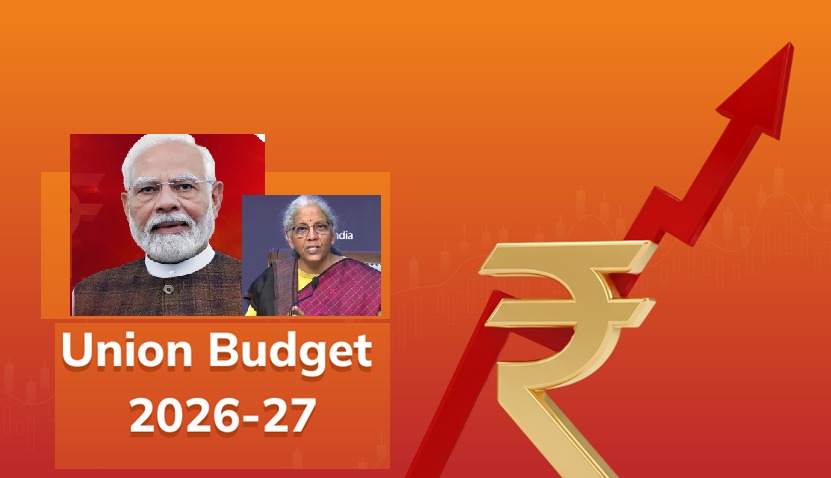
Budget 2026–27: A People-First Blueprint for Growth, Jobs and Aspiration

Feb 2026 : The Union Budget 2026–27 clearly positions itself as a “common man’s budget”, rooted in the government’s Sankalp to uplift the poor, the underprivileged and the disadvantaged, while simultaneously accelerating India’s long-term economic growth. Prepared for the first time in Kartavya Bhawan, the Budget is guided by three Kartavya — sustaining growth, fulfilling people’s aspirations, and ensuring inclusive development under the vision of Sabka Saath, Sabka Vikas. Together, these principles translate into a budget that balances reform, welfare, and future readiness.
At its core, Budget 2026–27 focuses on ease of living, especially for ordinary taxpayers and small businesses. The announcement that the new Income Tax Act, 2025 will come into force from April 2026, with simplified rules and redesigned forms, is a major relief for the middle class. Reducing multiplicity of proceedings and rationalising penalties and prosecutions signals a more humane, trust-based tax system. Lower Tax Collected at Source (TCS) on overseas tour packages, education and medical expenses directly eases cash-flow pressure on families.
For households, the reduction in customs duty on all dutiable goods imported for personal use from 20% to 10%, along with exemptions on 17 essential drugs and medicines, will help bring down daily expenses. Affordable healthcare also gets a boost through Biopharma Shakti, a ₹10,000 crore initiative aimed at strengthening domestic production of biologics and biosimilars, reducing dependence on imports and lowering treatment costs over time.
Employment and entrepreneurship are strong pillars of this budget. The proposed ₹10,000 crore SME Growth Fund aims to create MSMEs as future national champions, translating into job creation at the grassroots level. Safe harbour thresholds for IT services have been significantly raised, benefitting small and mid-sized technology firms and encouraging compliance without fear. The tax holiday for foreign cloud service providers till 2047 will attract investment, create digital jobs, and strengthen India’s data infrastructure.
Infrastructure development remains a key growth engine. Public capital expenditure has been enhanced to ₹12.2 lakh crore, which means more roads, railways, logistics hubs and urban infrastructure — all of which generate employment and stimulate local economies. The announcement of seven high-speed rail corridors as growth connectors will not only improve mobility but also reduce logistics costs and promote environmentally sustainable transport.
Education, youth empowerment and women’s participation receive focused attention. Setting up AVGC content creator labs in 15,000 schools and 500 colleges, establishing one girls’ hostel in every district for STEM students, and launching structured upskilling programmes for tourist guides reflect a youth-centric approach. Initiatives like Khelo India Mission and AI-driven platforms such as Bharat-Vistaar strengthen skills, sports, agriculture and technology adoption at the grassroots.
Farmers and rural communities also stand to benefit. Integration of AgriStack portals with AI tools will improve access to best farming practices, while customs duty exemptions for capital goods used in lithium-ion batteries and critical minerals support India’s clean energy transition, indirectly benefiting rural livelihoods and energy security.
Equally important is the emphasis on ease of doing business. A transformed customs warehousing framework, single digital window for cargo clearance, and streamlined approvals will reduce delays, cut costs, and make Indian businesses more competitive globally — benefits that ultimately trickle down to consumers through lower prices and better services.
Overall, Budget 2026–27 emerges as a balanced, forward-looking and people-centric budget. It may not rely on flashy giveaways, but its strength lies in structural reforms, targeted relief, job creation and capacity building. By focusing on growth with compassion, reform with inclusion, and aspiration with opportunity, this budget reinforces the idea that India’s progress is meaningful only when it improves the everyday life of the common citizen.
Team Maverick





Bellingham Double Powers 10-Man England Past Mexico in World Cup Thriller
Score: England 3-2 Mexico London, July 2026 : Jude Bellingham delivered another match-winn…

Bellingham Double Powers 10-Man England Past Mexico in World Cup Thriller
Score: England 3-2 Mexico London, July 2026 : Jude Bellingham delivered another match-winning performance …