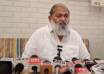
Iran And United States Held Talks On February 06 To Establish A Framework For Future Negotiations.

Muscat, Oman; February 2026: The Omani Foreign Affairs Ministry stated that the talks between the Iranian and US delegations, which were headed by Iranian Foreign Affairs Minister Abbas Araghchi and US Special Envoy to the Middle East Steve Witkoff, respectively, “focused on creating the right conditions for the resumption of diplomatic and technical negotiations” and gaining each party’s “commitment” to the talks.
US Central Command Commander Admiral Brad Cooper also attended the talks. Araghchi claimed that he discussed “Iran’s rights” in a “good atmosphere” with the US delegation and that the talks were a “good start”. A political analyst close to the Iranian regime reported that the talks aimed to establish a framework for negotiations. He added that the talks were focused on “announcing positions, making demands, and presenting proposals” and that Iran and the United States “did not reach an agreement on generalities”. It is expected that the United States and Iran will hold another round of talks in the coming days, citing a source with knowledge of the talks. Israeli media, citing two sources familiar with the matter, reported that the United States told Iran that it expects Iran to make a “tangible and significant concession” regarding its nuclear program in the next round of talks.
Meanwhile, Iran remains unlikely to compromise on its red lines, which include uranium enrichment, its ballistic missile program and support for the Axis of Resistance, which reduces the likelihood that Iran and the United States will be able to reach a diplomatic solution during subsequent rounds of negotiations. Araghchi has stated during yesterday’s negotiation, that he conveyed during the talks that Iran would not agree to stop uranium enrichment or move Iran’s uranium stockpile abroad.
Wafiq Safa, Head of the Hezbollah Liaison and Coordination Unit has resigned from his position on February 06th, which marks the first time that a Hezbollah official of Safa’s rank has stepped down. The Liaison and Coordination Unit is responsible for Hezbollah’s relations with the Lebanese government and foreign entities. Sources close to Hezbollah told Saudi media on February 6 that Hezbollah’s acceptance of Safa’s resignation is part of a plan to restructure the group in “both form and content”.
While, Hezbollah officials reportedly expressed discontent with Safa’s “poor relations” with Lebanese authorities in September 2025, the Saudi media has reported that Hezbollah reduced Safa’s responsibilities in the months prior to his resignation in an attempt to “find a less provocative figure”, which suggests that Hezbollah may have pressured Safa to resign. Safa led the Liaison and Coordination Unit for over a decade and long served as a prominent figure in Hezbollah’s security apparatus, overseeing the group’s smuggling and operations. He was one of the few senior Hezbollah officials from former Hezbollah Secretary General Hassan Nasrallah’s Shura Council who survived the late 2024 war, including a targeted Israeli airstrike in Beirut in October 2024. He is also known to have issued provocative statements and threats toward Lebanese officials in recent years that have created a void in Hezbollah’s relations with the state. Safa, had reportedly threatened the Lebanese judge directly, who was investigating the Beirut Port explosion in September 2021.
Sources close to Hezbollah told Saudi media that Hezbollah has tasked Ahmed Muhanna with communicating with state and foreign entities, although it is unclear if Muhanna will officially replace Safa as the head of the Liaison and Coordination Unit.
Muhanna has held several roles within Hezbollah, including adviser to the group’s Arab relations head, foreign relations official, and aide to Hezbollah Loyalty to the Resistance Bloc head Mohammad Raad. Muhanna gained a significant amount of experience meeting and working with regional, international, and Lebanese officials in these roles. Muhanna recently met with Lebanese President Joseph Aoun’s top adviser, Brigadier General Andre Rahal, on January 24th, which followed a period of diminished communication between Hezbollah and Aoun.
Safa’s resignation suggests that Hezbollah may be attempting to reduce tensions and improve its relationship with the Lebanese state in order to try to counter US and Israeli pressure on the Lebanese government to disarm and weaken the group. Hezbollah likely seeks to increase dialogue and improve relations with the Lebanese state to counter US and international pressure on the state, rather than to cooperate on the group’s disarmament. The Lebanese government has taken several steps to constrain Hezbollah’s ability to operate in response to US and international pressure, including by reducing the group’s number of cabinet seats, intensifying counter-smuggling efforts, and restricting its financial institutions.
Gulf states reportedly pressured the Lebanese government to form and implement a plan to disarm Hezbollah in August 2025 in order to receive economic support, for example.[25] Hezbollah likely calculates that dialogue with the government can counter these pressures and, in turn, stall or even halt the state’s efforts to disarm and weaken the group.
It is also possible that Hezbollah accepted Safa’s resignation due to internal politics and discontent over Hezbollah’s, and specifically Safa’s, performance during the Israel-Hezbollah conflict in the fall of 2024. Hezbollah’s Shura Council sought to replace Safa in September 2025 due to his “failures”. These “failures” may refer to Israel’s September 2024 pager attack, which Hezbollah officials have long called a “major security and military” failure.
Team Maverick.

Deepti’s Five-Wicket Magic Powers India to Dominant Win Over Pakistan
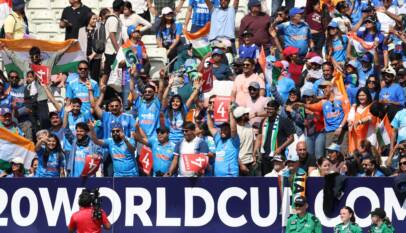
Birmingham, June 2026 : India launched their ICC Women’s T20 World Cup 2026 campaign in co…
Deepti’s Five-Wicket Magic Powers India to Dominant Win Over Pakistan
Birmingham, June 2026 : India launched their ICC Women’s T20 World Cup 2026 campaign …