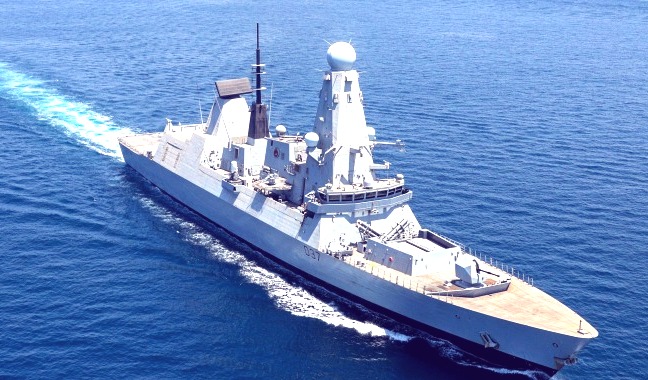
Norway Bolsters Its Defence Architecture With 05 UK Type 26 Frigates.

Oslo; March 2026: Norway has moved to reinforce its long-term defence expansion with an additional NOK 115 billion uplift announced on 27 March 2026, a step that appears to steady earlier uncertainty around its planned acquisition of British-built Type 26 frigates. The increase augments a wider NOK 1.6 trillion programme running to 2036 and confirms that the surface fleet renewal effort remains embedded within Oslo’s core procurement pipeline.
Norway selected the Type 26 design in 2025 as the basis for replacing and expanding its surface combatant fleet, with at least five vessels expected to enter service in the early 2030s. However, in the intervening period, there had been discussion around affordability pressures and the sequencing of major programmes, particularly as Norway sought to accelerate spending on air defence, munitions and near-term readiness, with speculation growing that the order could be cut.
Against that, the March 2026 funding increase provides a clear signal of intent and rather than revisiting headline procurement decisions, the government has chosen to expand the overall financial envelope, allowing existing commitments to proceed. Norway, like many European allies, is attempting to balance long-term capital programmes with urgent operational requirements shaped by the war in Ukraine and a more contested security environment in the High North.
The ship
The Type 26 frigate, also known as the City-class, is a next-generation surface combatant developed for the Royal Navy under the Global Combat Ship programme. It is intended to replace the Type 23 frigates and is optimised for anti-submarine warfare, while also supporting air defence and general purpose operations. The design has been selected by multiple allied navies, including those of Australia, Canada and Norway, marking a rare instance of a shared warship platform among close partners.
The programme was formally launched with a contract award in July 2017, with Royal Navy entry into service expected from 2028. Current plans include 08 ships for the UK, alongside larger fleets for Canada and Australia and at least 05 vessels for Norway. Costs vary significantly by programme, with the UK’s first batch estimated at around £1.3 billion per ship, while international orders involve larger total investments that often include industrial participation and technology transfer.
The Type 26 is a large frigate, displacing around 8,000 tons at full load and measuring nearly 150 metres in length. It uses a combined diesel-electric or gas propulsion system built around a Rolls-Royce MT30 gas turbine and diesel generators driving electric motors. This configuration enables both high-speed performance and low acoustic signature, the latter being a key requirement for anti-submarine warfare operations.
In terms of capability, the class is equipped with advanced sensors and weapons tailored to its role. These include the Sonar 2087 towed array and Type 2150 bow sonar, supported by the Artisan 3D radar and a suite of electronic warfare and decoy systems. Armament includes vertical launch systems for Sea Ceptor air defence missiles and future strike weapons, a 127 mm naval gun, close-in weapon systems, and facilities for helicopters such as Merlin or Wildcat, alongside a flexible mission bay for additional payloads.
Norway’s selection of the Type 26 in August 2025 was a major expansion of the programme’s strategic footprint. The £10 billion deal covers at least five frigates to replace the Fridtjof Nansen class and forms part of a planned combined British-Norwegian force of anti-submarine warfare vessels operating in Northern Europe.
Team Maverick.








Iran Set to Acquire Chinese MANPADS Amid Rising Regional Tensions, Report Says
New Delhi, July 2026 : Iran is expected to receive its first shipment of Chinese-made shou…

Iran Set to Acquire Chinese MANPADS Amid Rising Regional Tensions, Report Says
New Delhi, July 2026 : Iran is expected to receive its first shipment of …