
Medical Negligence – Retrospection & Consumers Protection Act, 1986

Need for Autopsy in every death –
[The article is drawn from a true incidence, and is designed to provide information and motivation to our readers. The publisher is not engaged to render any form of psychological, legal or any kind of professional advice. The content of the article is the sole expression and opinion of the author, and not necessarily that of the publisher. No warranties or guarantees are implied by the publisher’s choice to include any of the content in this article. Neither the publisher nor the author shall be liable for any physical, psychological, emotional, financial, commercial damages. Our views and rights are the same: You are responsible for your own choices, actions & results.]
[Readers are adviced to sought medical guidance]
Medical Negligence – Retrospection & Consumers Protection Act, 1986
For ages, Medical Profession have been considered to be a holistic community since the services being rendered was unadulterated – truly congenial for an altruistic approach towards humanity. But time and tide wait for none; this sacred service has also turned into a profitable business for many, which has changed the perceptions of patient and doctor’s relation both in terms of quality health care & services. The Machiavellian attitude of the medical fraternity – a cause of grave concern apprehending the disintegration of the society, had not gone unnoticed by the Government of India. Our former Prime Minister Mrs Indira Gandhi had persuaded to amend the clinical notoriety, but due to certain political preposition the same amendments could not be place in judicial order.
But, “what a wicked person proposes, a visionary disposes”. The Consumer Protection Act (CPA) was first passed in India in 1986 by the Congress Government under the visionary Mr. Rajiv Gandhi, but certain appeaser’s have misled the society expressing doubts whether the medical profession was under the ambit of the Act. But, a landmark judgment by the learned Supreme Court of India in the case of Indian Medical Association (IMA) versus V.P. Shantha in 1995, brought the medical profession under the ambit of the Consumer Protection Act, 1986 (COPRA). The Consumer Protection Act, 1986, was later repealed and replaced by the Consumer Protection Act, 2019.
Section 2(1)(c)(iii) of the Consumer Protection Act, 1986 (COPRA) – defines Medical Negligence as – Deficiency in Service – Rabies diagnosed & Death due to its Kochs – wrong diagnosis, alleged wrong treatment – No evidence to prove wrong treatment; OR; any fault, imperfection, shortcoming, or inadequacy in the quality, nature and manner of performance which is required to be maintained by or under any law for the time being in force or has been undertaken to be performed by a person in pursuance of a contract or otherwise in relation to a service.
The inclusion of medical services under the purview of Section 2(1)(c)(iii) of the Consumer Protection Act, 1986 (COPRA) has indeed made it more difficult for medical professionals and institutions to deal with the legal complexities of the omission and commission of act, performed by them. Profiling of various dimensions of medical negligence complaints has become an integral aspect to avoid the preventable damages while rendering the medical services to the beneficiary. The number of medical negligence lawsuits is increasing day by day in India, and the threat of litigation has increased significantly. Simultaneously, awareness among the deprived & victims, regarding the fundamental rights guaranteed by the constitution of India, has gained momentum.
The introduction of Section 2(1)(c)(iii) has proven to be a whistle blower for the aggrieved patients, who have started filing medical negligence cases at consumer forum throughout the country. A very few of the medical professional have adequate knowledge about this subject for a safe and good practice, while the majority are unaware of the medical negligence’s and their consequences.
Ascertaining the quantum of compensation to the victim is also extremely difficult. However, the most learned Supreme Court has observed and have held that there is no restriction that courts can award compensation only up to what is demanded by the complainant.
Now a day most medical professionals in the private sector, has solicited insurance protection to prevent financial loss, but very few really bother about the exact reason behind a lawsuit; rather manoeuvring clever underhanded actions to achieve an end for financial benefits by the form of insurance benefits
A retrospective study, based on secondary database of medical negligence complaints filed across different consumer forums, was conducted. where relevant information, related to the type of medical
negligence complaints reported, type of hospital/clinic where patient had suffered from negligence during the treatment, specialty of the department imparting the treatment, type of negligence faced by the patient, compensation sought by plaintiff, nature of negligence & whether such negligence had been proved or not, were retrieved from the amassed cases. Special attention was also paid to identify perfidious complaints filed to malign any individual, and or institution.
The outcome of the study was inveterate:
- The maximum number of medical negligence cases amounting to 40% were filed against Obstetrics and Gynaecology, followed by medicines – 20%, Orthopaedics – 11%, surgery – 14% & Ophthalmology – 15%.
- The major negligence observed was related to surgical procedure which was 51%. About 15 % of negligence was reported due to administration of wrong injection by Para medical staffs. Some plaintiffs opined that unnecessary treatment has caused harm to approximately 15%, where the treatment procedures were actually not required. While in 19% of the cases, there were Tubectomy failures, and this failure came in light when the beneficiaries became pregnant afterwards.
- The study had further reiterated that in 45% of the cases, gross negligence while rendering treatment were proved. While on contrary in 30% of the cases negligence was not proved due to lack of proper evidences and documentation of procedures, and in 25% of the cases the treating doctors were not actually negligent during the treatment.
- Regarding the type of hospitals and clinics alleged for medical negligence, the data revealed that maximum number of medical negligence cases/complaints were against the privately owned hospitals i.e., 83% that is followed by 17% cases from public hospitals. The cases of private hospitals are large in number because private medical services come under the ambit of Consumer Protection Act. Again, in 31% of the cases, negligence was possible to have been established, while in 69% cases, complainant was not able to prove the allegations of medical negligence against the treating doctors or the hospitals where the treatment were carried out.
- It is noteworthy that 15% of the cases were dismissed by the Consumer Court, and these cases did not turn up for further court procedure. The reason behind was plaintiffs had filed complaints by getting provoked by their neighbours & relatives for extorting money from the concerned doctors and hospitals/clinics in the form of compensation sought at consumer forum.
In a landmark judgment, while delivering verdict of the case of Martin F. Desouza V/s Mohammed Ishfaq, the Honourable Supreme Court directed that before issuing notice to the alleged doctor or hospital accused of negligence, the matter must be referred to a competent doctor or committee of doctors to establish the prima facie of the medical negligence, only then the notice should be issued.
Again, the Honourable Supreme Court of India in the case of Jacob Mathew vs. State of Punjab & Other parties, 2005 observed that with the awareness in the society and the people in general gathering consciousness about their rights, actions for damages in tort are on the increase.








PM Modi, Australian Opposition Leader Angus Taylor Reaffirm Bipartisan Commitment to Stronger India-Australia Ties
Melbourne, July 2026 : Prime Minister Narendra Modi on Friday met Australian Opposition Le…
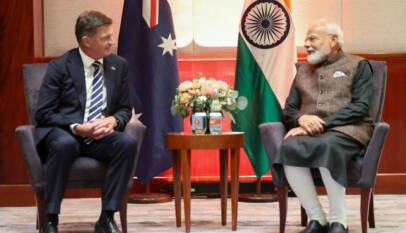
PM Modi, Australian Opposition Leader Angus Taylor Reaffirm Bipartisan Commitment to Stronger India-Australia Ties
Melbourne, July 2026 : Prime Minister Narendra Modi on Friday met Australian Opposition Leader …