Iran and Israel Trade Blows Amid U.S. Airstrikes on Nuclear Sites

Tensions Escalate as U.S. Launches Bunker-Buster Attacks, Prompting Retaliation from Tehran and Regional Fears of a Wider War
Aerial bombardments erupted between Iran and Israel early Monday, marking a sharp escalation in the long-simmering hostility between the two archrivals. This surge in conflict followed a weekend of high-stakes military strikes by American forces, which used bunker-buster bombs to hit three Iranian nuclear facilities.
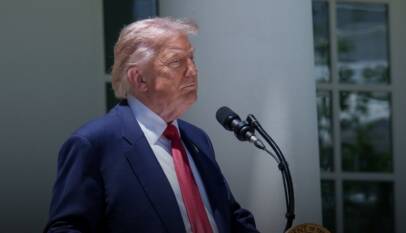
U.S. President Donald Trump declared that the strikes had “obliterated” Iran’s nuclear capabilities. However, military officials cautioned that it was too early to assess the full impact on Iran’s nuclear infrastructure. Trump later doubled down on social media, asserting, “Monumental Damage was done to all Nuclear sites in Iran, as shown by satellite images… Bullseye!!!”
Iran’s Supreme Leader Ayatollah Ali Khamenei condemned Israel’s air campaign launched on June 13 as a “big mistake,” stating, “The Zionist enemy is being punished right now.” As missiles and drones filled the skies, sirens blared across both nations, with Israel reporting the interception of Iranian missiles and Iranian media claiming successful defense against Israeli drone strikes.
The escalating hostilities triggered economic jitters, with global oil prices spiking by over four percent amid concerns that Iran might block the Strait of Hormuz—a strategic chokepoint through which one-fifth of the world’s oil supply passes. U.S. Secretary of State Marco Rubio appealed to China to use its influence to dissuade Tehran from taking that step.
The U.S. State Department issued a global alert, warning Americans abroad of potential demonstrations and disruptions. The alert highlighted travel disturbances and temporary airspace closures across the Middle East but made no direct reference to the American strikes on Fordo, Isfahan, and Natanz—key Iranian nuclear sites.
In central Tehran, anti-U.S. and anti-Israel protests erupted, with residents like 46-year-old Samireh in Semnan expressing alarm: “I’m truly shocked. I worry for those living closer to the nuclear facilities.”
Iranian President Masoud Pezeshkian accused Washington of revealing its direct support for Israel through the strikes and promised retaliation. Though the Pentagon insisted its goal was not regime change, Trump posted otherwise: “If the current Iranian regime is unable to MAKE IRAN GREAT AGAIN, why wouldn’t there be a Regime Change??? MIGA!!!”
Top U.S. General Dan Caine reported that early assessments showed severe damage at all three nuclear sites. Rafael Grossi, head of the International Atomic Energy Agency (IAEA), told the UN Security Council that visible craters had formed at the Fordo site but warned that the full extent of underground damage was unknown. He emphasized that attacks on nuclear facilities risk catastrophic radioactive fallout.
Meanwhile, Israel claimed its strikes were close to achieving their goal of dismantling Iran’s nuclear and missile programs. Prime Minister Benjamin Netanyahu stated, “We are very, very close to completing them.”
Tehran retaliated with missile attacks on Israeli targets, including Ben Gurion Airport near Tel Aviv, wounding at least 23 people. Iranian state media also reported that nine Revolutionary Guard members were killed in Israeli strikes, alongside three civilian deaths when an ambulance was hit. Israel’s health ministry reported 24 fatalities from Iranian strikes, while Iranian officials claimed over 400 casualties from Israeli bombardments.
Diplomatic fallout followed quickly. France, Germany, and Britain urged Iran to avoid further escalation. The UAE, Qatar, and Oman—which had been mediating nuclear talks—criticized the U.S. airstrikes and called for restraint. North Korea, embroiled in its own nuclear standoff with the U.S., condemned the strikes as a breach of the UN Charter.
Iran’s Foreign Minister Abbas Araghchi accused the U.S. of “blowing up” nuclear diplomacy and traveled to Moscow for emergency consultations with Russian President Vladimir Putin. Russia, China, and Pakistan circulated a draft UN Security Council resolution demanding an “immediate ceasefire” in Iran to prevent further deterioration.
As the world braces for Iran’s next move, fears are growing that the U.S.-backed Israeli offensive and Iranian retaliation could ignite a broader regional war with unpredictable consequences.


Argentina vs England World Cup Semifinal Declared Highest-Risk Match as Security Tightens in Atlanta
July 16: The FIFA World Cup 2026 has entered its most dramatic stage, but ahead of the blo…

Argentina vs England World Cup Semifinal Declared Highest-Risk Match as Security Tightens in Atlanta
July 16: The FIFA World Cup 2026 has entered its most dramatic stage, but …