ISRO Astronaut Shubhanshu Shukla Conducts Key Muscle, Digestion, and Mental Health Experiments Aboard ISS

Part of Axiom Mission 4, Shukla’s groundbreaking work explores muscle regeneration, digestion in space, and astronaut mental health, alongside global crew efforts in human space research
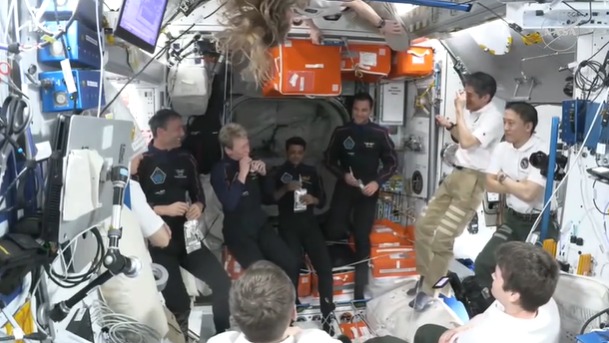
Florida : Indian Space Research Organisation (ISRO) astronaut and Group Captain Shubhanshu Shukla, currently aboard the International Space Station (ISS) as part of the Axiom Mission 4 (Ax-4), conducted multiple scientific experiments on Monday aimed at understanding human health in space. His focus was on three critical areas: muscle regeneration, adaptation of the human digestive system in microgravity, and the psychological well-being of astronauts during space missions.
Shukla, working in the Life Sciences Glovebox of the Japanese Kibo laboratory module, examined how muscle stem cells behave in microgravity. This experiment, named Myogenesis-ISRO, is aimed at understanding how muscles regenerate in space where astronauts typically lose significant muscle mass. NASA noted that muscle loss during extended space missions could be linked to impaired mitochondrial function — the energy-producing component of human cells. The study is also testing metabolic supplements that may help preserve or restore muscle health in space.
According to NASA, “The Effect of Metabolic Supplements on Muscle Regeneration Under Microgravity (Myogenesis – ISRO) investigation uses muscle stem cell cultures to explore muscle repair and test compounds that support mitochondrial function. The results may lead to interventions that sustain muscle health during long-term space missions and also assist people on Earth suffering from muscle-related conditions, including age-induced muscle loss and wasting diseases.”
In addition to hands-on scientific research, Shukla also recorded an educational video aimed at Indian schoolchildren. The video explains how the human digestive system adapts to space environments. “This outreach is meant to inspire and educate the next generation of Indian scientists and astronauts,” NASA said. The Life Sciences Glovebox where he worked is a sealed, sterile environment large enough for two astronauts and is used for handling sensitive biological experiments in space.
The Ax-4 mission is a private astronaut initiative that runs in parallel with NASA’s Expedition 73 operations. On Monday, other crew members also carried out significant scientific activities. Mission commander and veteran astronaut Peggy Whitson conducted an ultrasound scan on Hungarian astronaut Tibor Kapu to study how spaceflight impacts blood circulation, blood pressure, and vision — common health challenges in microgravity.
Polish astronaut Slawoj Uznański-Wisniewski tested a brain-computer interface as part of the European Space Agency’s (ESA) PhotonGrav experiment. Using functional near-infrared spectroscopy (fNIRS), the experiment records brain activity to study how cognitive functions are affected by space environments. This marks one of the first attempts to test brain-computer interface (BCI) technology in low-Earth orbit.
Later in the day, Whitson, Shukla, and Uznański-Wisniewski collaborated to film segments for the Astronaut Mental Health Study, aimed at monitoring psychological resilience and mental performance in space. NASA emphasized the importance of this research in maintaining crew well-being on extended missions, such as those planned for deep space and Mars.
Meanwhile, NASA’s own Expedition 73 astronauts continued complementary biomedical research. Flight Engineers Anne McClain and Nicole Ayers tested muscle stimulation equipment to observe muscle responses to electrical signals. McClain also underwent cognitive function tests to assess how space travel affects mental performance over time. Ayers and fellow astronaut Jonny Kim processed blood samples — including those from Whitson and Uznański-Wisniewski — for ESA’s Bone on ISS study, which investigates space-induced bone density loss.
The Axiom Mission 4 and Expedition 73 teams are working in tandem to push the boundaries of human health and physiology in space. As private and national space agencies expand their scientific collaboration in orbit, astronauts like Shubhanshu Shukla represent a new era of international cooperation and innovation.
His participation also marks a milestone for ISRO and India’s human spaceflight ambitions, as it prepares for its own Gaganyaan mission in the near future.
(The content of this article is sourced from a news agency and has not been edited by the Mavericknews30 team.)





Telangana’s Abhi Chandra Clinches Two Medals at Special Olympics Nationals
Dehradun, July 2026 : Determination, discipline and an unyielding passion for sport define…

Telangana’s Abhi Chandra Clinches Two Medals at Special Olympics Nationals
Dehradun, July 2026 : Determination, discipline and an unyielding passion for sport defined the …