“Mor Gaon Mor Pani” Turns Mungeli into a Model for Water Conservation

Community Participation and Sustainable Efforts Revive Groundwater and Irrigation in Chhattisgarh’s Mungeli District
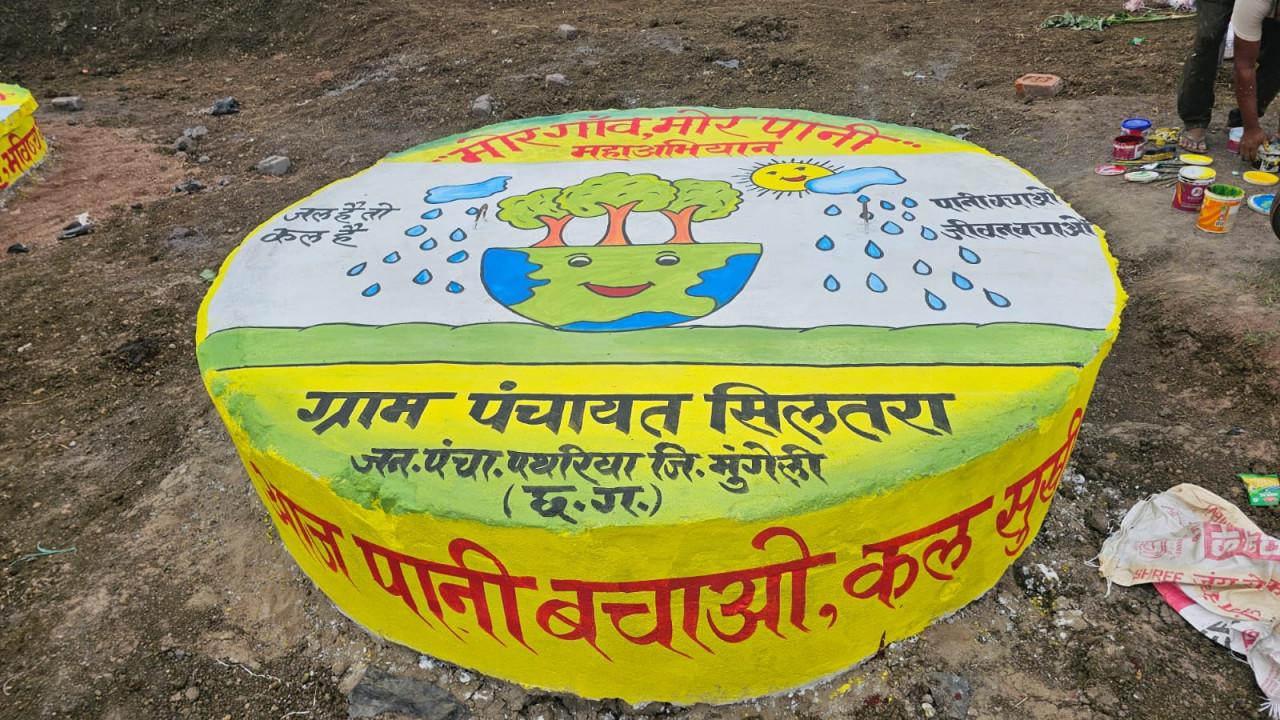
Raipur : Once plagued by water scarcity, the villages of Mungeli district in Chhattisgarh have now become a beacon of hope and a model for water conservation. Under the visionary leadership of Chief Minister Shri Vishnu Deo Sai, the “Mor Gaon Mor Pani” (My Village, My Water) campaign has transformed from a government initiative into a people’s movement.
With strong community involvement, technical guidance, and dedicated implementation, this campaign is now seen as a sustainable model for rural development.
Defunct Borewells Brought Back to Life
As part of water management efforts, 265 defunct borewells were identified across the district. Of these, 203 projects were sanctioned and 45 have already been completed, including 11 works completed on June 26 alone, reflecting the momentum and seriousness of the mission. Mungeli block leads the way with 110 borewells identified, and 32 already revitalized.
Recharge Pits Boost Groundwater Levels
To address declining groundwater levels, 276 recharge pits have been marked so far, with 129 already completed. The Lorami block is ahead with 132 recharge pits identified. These efforts are expected to serve as a milestone in groundwater conservation in the coming years.
Bori Dams Built through Collective Effort
The construction of bori dams (small check dams) has exemplified people’s participation. Out of a targeted 160 dams, 146 have been completed and the remaining 14 are in progress. All these structures are being built through community labour (shramdaan), showcasing the power of collective action.
A People’s Movement Driven by Public Participation
Panchayat representatives, self-help groups, and local villagers have actively contributed not just through labour but also in planning, construction, and monitoring. What began as a government scheme has now become a mission owned by the people themselves.
The water conservation structures are already enhancing irrigation capacity, improving agricultural productivity, and encouraging fisheries, vegetable cultivation, and vermicomposting. This, in turn, is providing economic empowerment and sustainable livelihoods to rural communities across Mungeli.
Rahul Gandhi, INDIA Bloc Hold Candlelight Vigil at Gandhi Smriti Over NEET Paper Leak Row
New Delhi, July 2026 : The Opposition intensified its campaign over the alleged NEET exami…
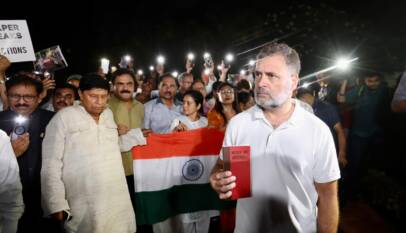
Rahul Gandhi, INDIA Bloc Hold Candlelight Vigil at Gandhi Smriti Over NEET Paper Leak Row
New Delhi, July 2026 : The Opposition intensified its campaign over the alleged NEET …