Assembly Committees Are Miniature Forms of the House and Must Be Strengthened: Rajasthan Speaker Vasudev Devnani

Calls for merit-based selection of members and increased participation in committee work during Bhopal review meeting
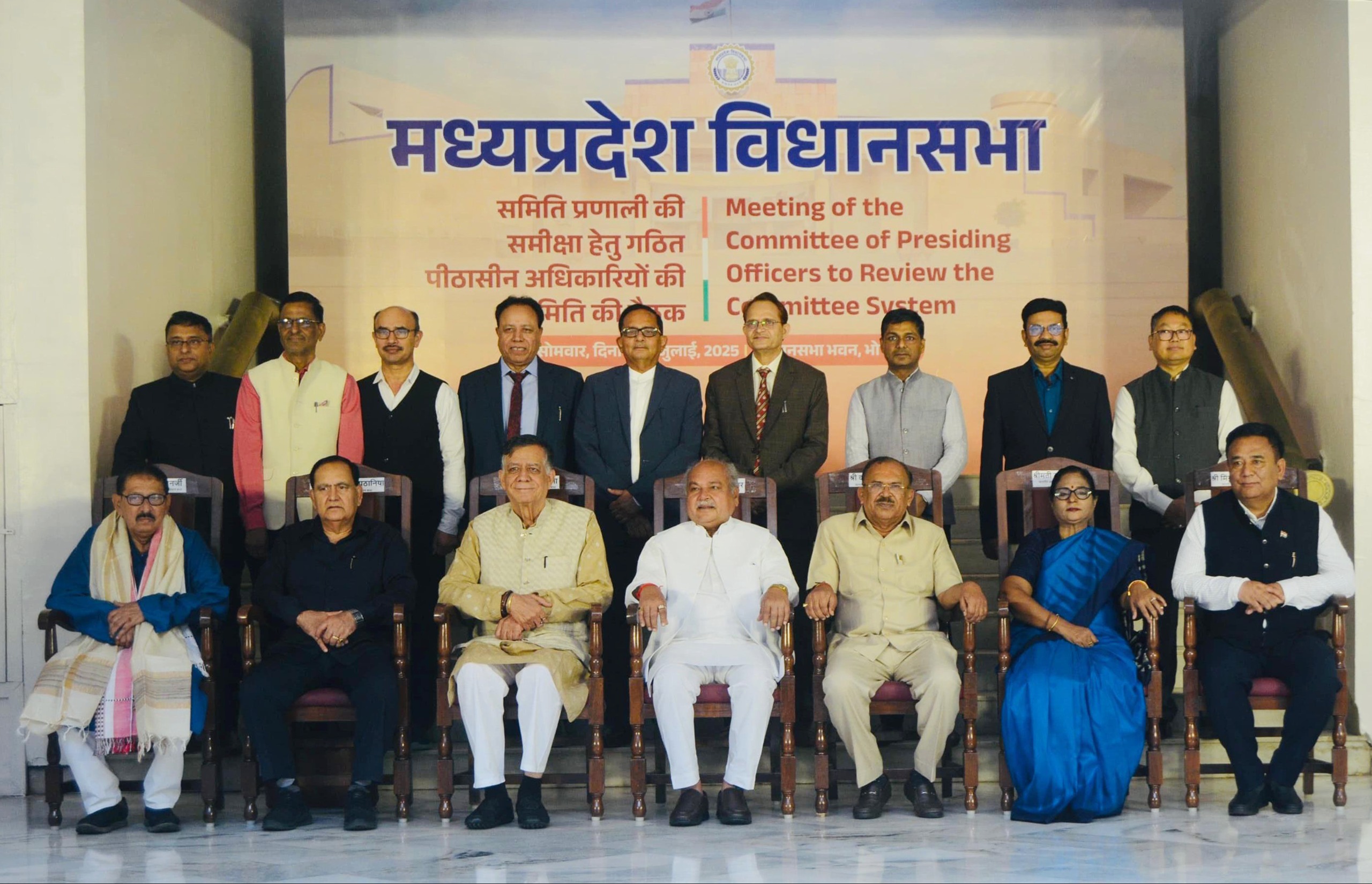
Bhopal — Rajasthan Legislative Assembly Speaker Shri Vasudev Devnani emphasized that assembly committees are miniature versions of the legislature and essential for promoting transparency, accountability, and good governance in democracy. Speaking at a meeting of the Committee of Presiding Officers on reviewing the committee system, held at the Madhya Pradesh Legislative Assembly, he said that member selection should be based not only on party lines but also on merit and expertise.
Devnani, a member of a seven-member panel formed by Lok Sabha Speaker Shri Om Birla to strengthen legislative committees across India, offered significant suggestions to enhance committee effectiveness. These included enabling virtual participation of members to boost attendance, focusing on cases from recent years to ensure inclusion of recommendations in the same year’s budget, and ensuring discussions on committee reports in the House to increase interest and accountability.
He proposed hosting the panel’s next meeting in Rajasthan, a suggestion accepted by the committee.
Shri Devnani stressed that delayed responses from government departments weaken committees. He cited Rajasthan’s success in resolving this issue through direct engagement with the Chief Secretary and other officials, resulting in timely responses to legislative questions.
He highlighted Rajasthan’s innovations in committee structure, noting that currently 17 committees are active. Less active committees like the Library and Ethics Committees have been merged into the Government Assurances and Petitions Committees, respectively, to improve operational efficiency.
“Committees save valuable House time, which can be better spent on key issues,” Devnani stated. He outlined three types of committee rules: general rules applicable to all, specific rules for individual committees, and internal procedure rules approved by the Speaker.
Rajasthan has both standing and ad hoc committees, categorized by function—financial oversight, administrative scrutiny, daily legislative business, and member welfare. Ministers are excluded from these committees, except when chairing select committees on specific bills.
To monitor performance, Rajasthan has formed a “General Purpose Committee” chaired by the Speaker and comprising all committee chairpersons. It reviews attendance, progress of examinations, and activities quarterly. Devnani noted that reappointments now depend on annual attendance, and those with minimal participation may not be reappointed.
“Committees are powerful tools for ensuring that the voice of elected representatives is heard in governance,” he said, adding that both responsibility and results must reach the public.
Madhya Pradesh Assembly Speaker Shri Narendra Singh Tomar welcomed Devnani to the Bhopal Assembly. The two leaders discussed parliamentary processes and committee functioning. Later, Speaker Devnani and other presiding officers attended a luncheon with Madhya Pradesh Governor Shri Mangubhai Patel, who also engaged in discussions about Rajasthan’s governance.






PM Modi Begins Three-Nation Tour to Indonesia, Australia and New Zealand, Focus on Indo-Pacific Cooperation
New Delhi, July 2026: Prime Minister Narendra Modi on Monday embarked on a significant thr…
PM Modi Begins Three-Nation Tour to Indonesia, Australia and New Zealand, Focus on Indo-Pacific Cooperation
New Delhi, July 2026: Prime Minister Narendra Modi on Monday embarked on a significant …