Russia is raising taxes to fund the war against Ukraine.

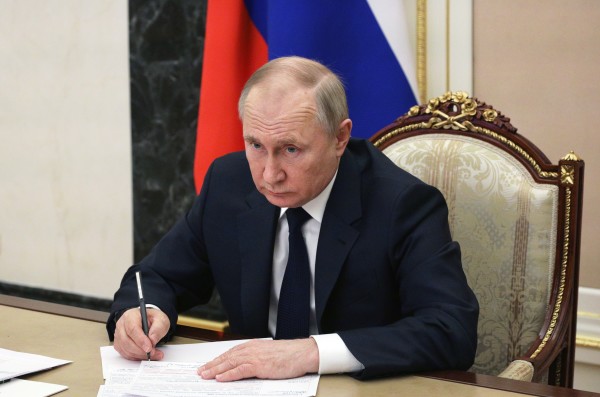
Sept 2025 : The Russian Finance Ministry has drafted a 2026 federal budget and plan for 2027–2028 that would raise the general value-added tax, or VAT, from 20% to 22%. The budget package, which would take effect on January 1, 2026, would also lower the income threshold for small businesses eligible for simplified VAT payments from 60 million rubles to 10 million rubles (about $700,000 to $100,000).
The Finance Ministry’s announcement openly acknowledged that these and other measures are designed to cover Russia’s “defence and security” expenditures, or in other words, to fund the war continuation against Ukraine.
The proposed plan to raise the VAT rate have come as a surprise. In 2024, Vladimir Putin assured that the tax system’s basic parameters would remain unchanged until at least 2030. And at the St. Petersburg International Economic Forum in June, Finance Minister Anton Siluanov promised that officials “had agreed not to touch basic taxes”. Moreover, as recently as early September, Putin said that budget revenues should be increased without “raising the tax burden”.
Nevertheless, the VAT rate increase was entirely foreseeable. Back in August, a Russian government source told Reporters that raising taxes was “unavoidable”. And just two weeks ago, the Russian government was discussing tax hikes. Four sources close to the Russian government later confirmed. The fact that the VAT rate would increase in 2026 was also reported by the investigative outlet Agentstvo.
VAT is an indirect tax levied on all goods and services. The consumer pays this “invisible” fee when they make a purchase, and the seller merely acts as an intermediary that transfers the tax payment to the government. VAT is the most convenient fiscal instrument for replenishing a country’s treasury: it’s the most difficult tax to evade, and revenues from it flow into the government’s account regularly and predictably.
The proposed increment could generate up to one trillion rubles per year, the equivalent of almost $12 billion or 0.5% of GDP, in additional revenues for the federal budget. However, this forecast does not account for possible exclusions of certain goods, which were ultimately included in the budget package. The Finance Ministry promised that the reduced VAT rate of 10 percent will remain in place for a range of “socially important” goods, including food, medicine and medical products, children’s items, and other essentials.
Writing on Telegram, economist Dmitry Polevoy estimated that the Finance Ministry’s new plan will bring in 2.4 to 2.9 trillion rubles (about $29 to $35 billion) in additional budget revenues, including 1.8 to 2 trillion rubles ($21 to $24 billion) from the VAT rate hike, 100 to 300 billion rubles ($1.2 to $3.6 billion) from changing the tax regime for bookmakers (who, as of 2026, would be required to fork over 05% of their turnover and 25% of their profits), and 500 to 600 billion rubles ($6 to $7 billion) from canceling breaks on insurance premiums. In any case, it’s clear that raising the VAT rate will help the Russian government the most. VAT accounted for 37% of federal budget revenues last year.
Crisis Indicator: The authorities deny it, but 2025 has proven to be a difficult test for the Russian economy. Its growth rate is slowing, oil prices remain below predicted levels, and the federal budget deficit hit 4.2 trillion rubles ($50 billion) between January and August, exceeding the target of 3.8 trillion set for the whole year. Increasing the deficit would be one way to cover costs, but this would be a less profitable approach for the authorities than collecting additional taxes from the population.
The proposed hike in VAT will inevitably drive up consumer prices. What’s certain is that the costs will largely be passed on to end consumers. As the Russian Central Bank noted, the 2018 VAT rate increase (from 18% to 20%) added an additional 0.55 to 0.7 percentage points to annual inflation during the period from July 2018 to April 2019. Economist Dmitry Polevoy estimates that the upcoming VAT rate increase could add 0.6–0.7 percentage points to inflation in the fourth quarter of 2025 and 0.1–0.2 percentage points in the first quarter of 2026.
But because inflation growth this year remains below the Central Bank’s 6%–7% forecast, the VAT rate increase may simply bring this figure closer to the regulator’s “baseline trajectory”. And, as some economists told RBC, this could have a disinflationary effect in the long term, as the federal budget deficit is expected to shrink.
The Russian authorities are dealing a blow to consumers’ wallets to plug holes in the federal budget — but this isn’t the direst consequence of the coming VAT hike. What’s more noteworthy is the decisiveness with which the government is taking this step.
Contrary to their own promises, this isn’t the first time since February 2022 that Russian officials have shifted the burden of financing the war onto the population. Russia’s invasion already accounts for a third of all budget expenditures, and increasing taxes is an indirect signal that Moscow has no plans to curtail its military aggression in the foreseeable future.
Kremlin spokesman Dmitry Peskov himself admitted as much in an interview on Wednesday. “What’s going on around us is a war. Right now, is the most acute phase. We need to win it for the sake of our children, our grandchildren, and our future”.
Team Maverick



Portugal Part Ways with Roberto Martinez After World Cup Exit, Begin Search for New Head Coach
Lisbon, July 2026 : The Portuguese Football Federation (FPF) has officially confirmed the …

Portugal Part Ways with Roberto Martinez After World Cup Exit, Begin Search for New Head Coach
Lisbon, July 2026 : The Portuguese Football Federation (FPF) has officially confirmed the departure …