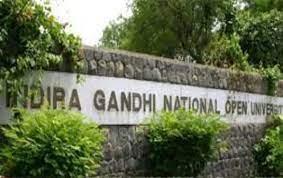
CODE collaborates with world’s largest university IGNOU.

Indira Gandhi National Open University (IGNOU) is the world’s largest university, with 3.5 million students, and it is playing a leading role in meeting the Indian Government’s target of 50% gross enrolment ratio by 2035.
On 23rd September, International Affairs and the Centre for Online and Distance Education (CODE) were delighted to welcome to the University of London Professor Uma Kanjilal, Vice-Chancellor of the Indira Gandhi National Open University (IGNOU) and her senior team.
Through the Centre for Online and Distance Education the two institutions, namely CODE and IGNOU are planning to work together on shared priorities such as learning design, AI, micro credentials, assessment and joint research.
The current phase of engagement goes back to January 2025, at a pivotal India-UK round table and seminar at the British Council in Delhi. Since then, they have worked together on a joint online forum (with associated blog) and collaborated in workshops at IGNOU and the Open University in the UK. These collaborations have afforded rich insights into respective operating contexts and provide a strong platform on which to build further mutually beneficial cooperation, while helping to further build University of London’s (UoL’s) profile in India.
Opportunities for collaboration in capacity building, research, and innovation were identified, including:
- Capacity building in Learning design, alongside upskilling staff to approach learning provision in new ways that enhance focus on student engagement in online learning, with the assistance of AI tools.
- Developing effective Learning outcomes, supporting IGNOU moves to an outcomes-based approach to curriculum design and assessment.
- Artificial Intelligence – the opportunities for shared research. Assessment design – addressing the challenges of large-scale online assessment and assessment within the context of online, open and distance learning.
As reiterated in the beginning that IGNOU is the world’s largest university, supported by 67 Regional Centres and some 2,000 learner support centres, with its reach goes beyond India, with its provision extended through 20 overseas institutions. Modelled on the UK’s Open University and founded in 1985, IGNOU plays a vital role in helping the nation lift its Gross Enrolment Ratio (GER) – the percentage of eligible people enrolled in higher education.
With India’s massive and rapidly increasing population, growing GER is a huge task. A national target of 50% GER by 2035, from less than 30% currently, means expanding capacity to accommodate a further 50 million students on top of the current university population of over 40 million.
Currently nearly 90% of students in India attend university in person. To help meet projected demand that cannot be met purely by building more campuses, the Indian University Grants Commission (UGC) has allowed Indian universities with the required quality scores to provide fully online degrees, and providers across the country are rising to the challenge by initiating or expanding online and distance provision. Placed alongside SWAYAM, India’s MOOC platform, and its television counterpart SWAYAM Prabha, plus a plethora of private-sector providers offering short online professional development programmes, an ever-widening range of online study opportunities are now available to Indian students and professionals alike.
Placed against this national effort, however, are continuing and deeply rooted perceptions of distance degrees among employers and families as being of lower quality than campus-based ones. India is not alone in this, of course; such perceptions are more common in the UK than we might like to admit. And elsewhere recognition bodies exacerbate the reputational challenges of this form of learning by making it harder for distance and online degrees to be accepted for higher study or employment in the public sector.
To explore some of the factors that influence such perceptions, in June the University of London’s Centre for Online and Distance Education (CODE) convened an India-UK Forum on Policy and Practice in Online and Distance Higher Education. The Forum looked at effective learning experiences at scale; strategic approaches to successful student engagement and wellbeing; and assessment for student success. Chaired by Dr Linda Amrane-Cooper, CODE Director, the Forum threw up a number of core considerations.
Professor Uma Kanjilal, Vice-Chancellor of IGNOU, addressed head-on some of the challenges of provision on such a massive scale, including the diversity of needs, the digital divide, and multilingual requirements. She spoke about “personalised learning paths supported by AI, targeted content, adaptive technologies, and allowing students to control the pace and content of their learning”. Professor Kanjilal added that “at IGNOU, and across India, we have found students extremely receptive to encompassing new ways of learning, but we must also combat the reluctance of some employers to do the same”.
Placing the student at the heart of online learning design, as evidenced at IGNOU, is widely accepted as a fundamental principle for effective student engagement. Dr Margaret Korosec, Dean of Online and Digital Education at the University of Leeds, spoke about the importance of “building for equity and flexibility, and leveraging data and feedback”.
India is not short of exemplars of excellence in this respect. Dr. Parimala Veluvali, Director and Associate Professor, Symbiosis School for Online and Digital Learning at Symbiosis International, presented an impressive array of strategic interventions to foster learner engagement, resulting in an average 75% progression across all their programmes.
One of the knottiest challenges facing providers of online higher education is how to ensure assessment practices that preserve academic integrity, and which address the concerns of regulators and professional bodies. In 2020, with the onset of the pandemic, the University of London, in common with providers all over the world, had to pivot in short order from examination by pen and paper to online assessment.
What distinguished the University’s experience was scale: some 110,000 candidatures in 190 countries, and the sheer administrative complexity that such an enterprise presented. The arrival of generative AI in 2023 compounded these challenges. Professor Alan Tait, Emeritus Professor of Distance Education and Development at the Open University and CODE Fellow, described the progress being made on these fronts, and emphasised the need for assessments to adapt, and for AI literacy and new authorship norms to be developed.
The India-UK dialogue continued with a round table at the Open University UK, hosted by the British Council. The event brought together the National Assessment and Accreditation Council of India, and the QAA, who discussed national regulatory contexts and requirements. The conversation is set to continue with a workshop at IGNOU in Delhi in late August.
The ongoing engagement between India and the UK in this area reveals further compelling evidence of the positive impact of effective learning design to underpin successful student outcomes, including exploiting the affordances of AI while ensuring its proper usage. Few will disagree that online and digitally delivered learning (ODDL) must and does play a pivotal role in meeting the exploding global demand for quality higher and further education. What these and many other initiatives have shown is that student engagement, quality learning and outcomes in ODDL can match and sometimes exceed those seen on campus. The work to change perceptions to the contrary continues.
Team Maverick





PM Modi Shares Video of Japan PM Sanae Takaichi Playing Santoor, Highlights Growing India-Japan Partnership
New Delhi, July 2026 : Prime Minister Narendra Modi on Thursday shared a heartwarming vide…

PM Modi Shares Video of Japan PM Sanae Takaichi Playing Santoor, Highlights Growing India-Japan Partnership
New Delhi, July 2026 : Prime Minister Narendra Modi on Thursday shared a heartwarming …