Myanmar Junta ravages Festival Protect killing some dozens.

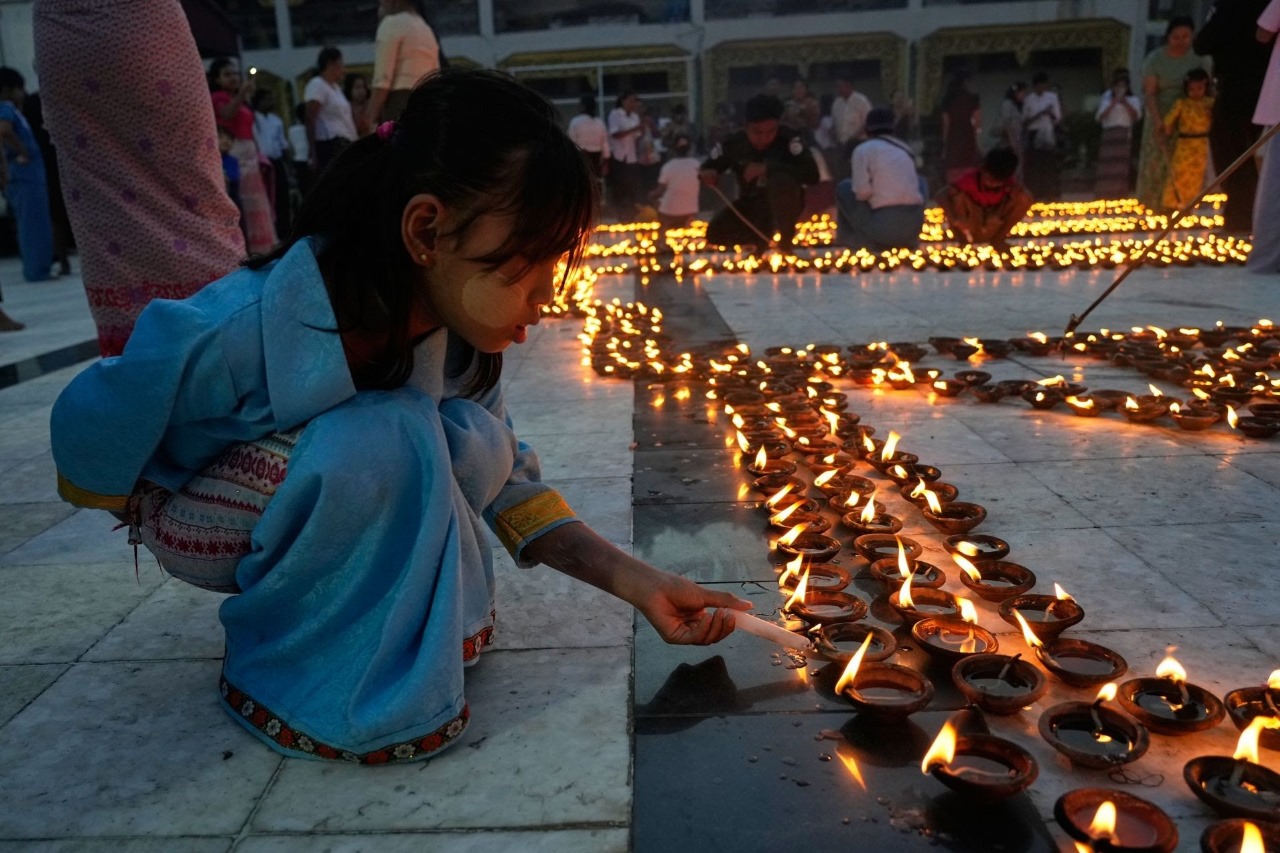
At least 40 people were killed and dozens more injured this week when Myanmar’s military bombed a candlelight protest during the country’s biggest Buddhist holiday. The protesters had gathered in the township of Chaung-U during the Thadingyut full moon festival when a motorised paraglider dropped a series of explosives on the scene. Witnesses told local media outlets that they saw body parts scattered everywhere, and that children were among the dead.
Amid an ongoing civil war that erupted in full force following a military coup in 2021, Myanmar’s military, known as the Tatmadaw is intensifying a campaign of aerial bombardments, often using motorised paragliders of this sort as a lower-cost complement to traditional airstrikes. Both the Tatmadaw and the resistance forces have also invested heavily in drone technology.
Myanmar is surviving a four years of fighting since the 2021 coup has killed at least 80,000 people, wherein aerial warfare has been crucial to the conflict. Despite suffering territorial setbacks, Myanmar’s military junta has retained air superiority and with it, its grip on power. But over the past 12 months, the Myanmar military has made a notable shift in its aerial warfare strategy: a heavier investment in the drone technology that the resistance has long used in the conflict. With both sides increasingly relying on drones to gain the strategic edge in the air, the conflict in Myanmar now ranks third globally for the number of drone events, only behind Ukraine and Russia.
Four years after the resistance camp coup that had overthrown an elected government in 2021, they are a ubiquitous presence that contributes to deciding battles, destroying million-dollar helicopters, and attracting financial support from the diaspora. The resistance camp consists of hundreds of established ethnic armed organisations (EAOs) and armed groups that commenced mobilising in reaction to the coup, operating in various parts of the country. Post-coup armed groups began producing an array of improvised and more sophisticated arms, including rocket launchers, mines, and bombs, to sustain their fight against the military. The greater availability of drone technology allowed non-state groups to adapt commercial drones for reconnaissance and combat purposes, enabling new offensive operations.
In late 2024, the increasing sophistication of drone technology enabled attacks on high-value military assets. On 11 November in Meiktila, resistance groups attacked the Shan Te airbase and 99th Light Infantry Division base with 24 drones, damaging two Y-12 aircraft and two weapon factories. This operation was a result of nearly one year of planning, and resistance groups lost a dozen drones during trials and the operation itself. Yet, resistance groups have also used drones for psychological warfare, even when lacking ammunition, by flying unarmed drones over bunkers and checkpoints to apply constant pressure on the military and lower troop morale.
Given its capacity to manoeuvre high in the air from where it can attack unopposed, the Myanmar military maintains clear air superiority, vide which the military has increased its reliance on airstrikes since late 2023. Between January and May 2025, the military carried out 1,134 distinct airstrikes, compared to 197 and 640 during the same periods of 2023 and 2024, respectively. The military enforced its conscription law in February 2024, which legalised the conscription of young men aged 18-35 and women aged 18-27. However, the law is still failing to provide adequate recruitment to replenish the military’s ever-weakening soldiery, leading it to forcibly recruit soldiers among those repatriated from foreign countries and vulnerable communities.
Since 2024, the military has complemented its airforce with drones and paramotors. The military’s first use of a paramotor, in the form of a power-motored paraglider seating up to three soldiers that has the ability to fire upon targets on the ground or drop bombs, was recorded in December 2024, when a paramotor injured two civilians in Taungtha township, Sagaing region. Paramotors are typically used in areas of mixed control or where resistance groups have minimal equipment, such as lacking access to the 7.62 cartridges and weapons required to shoot them down. The military has conducted more than 570 drone strikes against resistance groups and civilians in at least 340 locations. Military drone strikes have resulted in the deaths of at least 191 people, at least 158 of whom were civilians.
Team Maverick



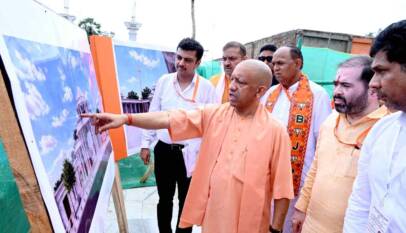

Chandrababu Naidu Reviews Preparations for PM Modi’s August 1 Inauguration of Bhogapuram International Airport
Amaravati, July 2026 : Andhra Pradesh Chief Minister N. Chandrababu Naidu on Monday conduc…
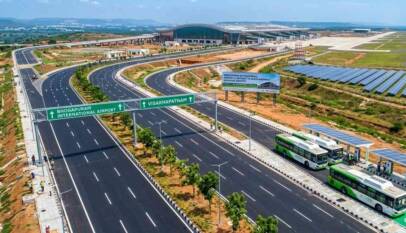
Chandrababu Naidu Reviews Preparations for PM Modi’s August 1 Inauguration of Bhogapuram International Airport
Amaravati, July 2026 : Andhra Pradesh Chief Minister N. Chandrababu Naidu on Monday conducted …