“Clashes in Bangladesh Leave 73 Dead Amid Anti-Government Protests”

At least 73 people, including 14 police officers, were killed and dozens injured as fierce clashes erupted in various areas of Dhaka and other parts of Bangladesh. The violence, triggered by anti-government protests led by the Anti-Discrimination Students Movement, was reported by the Daily Star, Bangladesh’s leading newspaper.
In Sirajganj, the violence was particularly severe, with 13 police personnel from Enayetpur Police Station killed during an attack on the station. Additionally, one member of the Eliotganj Highway Police in Cumilla was killed, as confirmed by a police press release. These clashes arose between police forces and anti-government protesters demanding Prime Minister Sheikh Hasina’s resignation, leading to an indefinite curfew starting at 6:00 PM on Sunday across Dhaka and other major cities.
The situation intensified as student leaders launched a civil disobedience campaign against the government. Police responded with tear gas and rubber bullets to disperse demonstrators in several parts of the country, resulting in numerous injuries. In Dhaka, mobile internet access was suspended, with an official from the Bangladesh Telecommunication Regulatory Commission confirming the halt of 4G service, though broadband services remained operational.
Thousands of people gathered in Dhaka’s main square, and violent incidents were reported throughout the city. Supporters of the governing Awami League clashed with anti-government protesters, with reports of vehicles being set on fire outside a hospital. The Students Against Discrimination group, leading the demonstrations, had announced a nationwide disobedience movement, escalating from initial demands to abolish quotas in civil service jobs to broader anti-government protests.
Despite the government scaling back most controversial quotas following a ruling, students continued to protest, seeking justice for those killed and injured and calling for Hasina’s resignation. While supporters of the prime minister ruled out her resignation, Hasina offered unconditional dialogue with student leaders to end the violence, which was rejected by the protesters. The government had called in the military to restore order after police stations and state buildings were set on fire during previous protests. General Waker-Uz-Zaman, the Bangladeshi army chief, reaffirmed the military’s commitment to supporting the people and the state.



Amarnath Yatra Resumes After Six-Day Rain Halt, Pilgrims Hail Safety Arrangements and Renew Their Journey of Faith
Jammu, July 2026 : The annual Shri Amarnath Yatra resumed on Saturday after remaining susp…
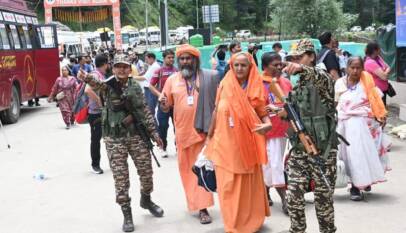
Amarnath Yatra Resumes After Six-Day Rain Halt, Pilgrims Hail Safety Arrangements and Renew Their Journey of Faith
Jammu, July 2026 : The annual Shri Amarnath Yatra resumed on Saturday after remaining …