“The Tiger Is Still Alive”: Nitish Kumar Reasserts Dominance as NDA Surges Ahead in Bihar

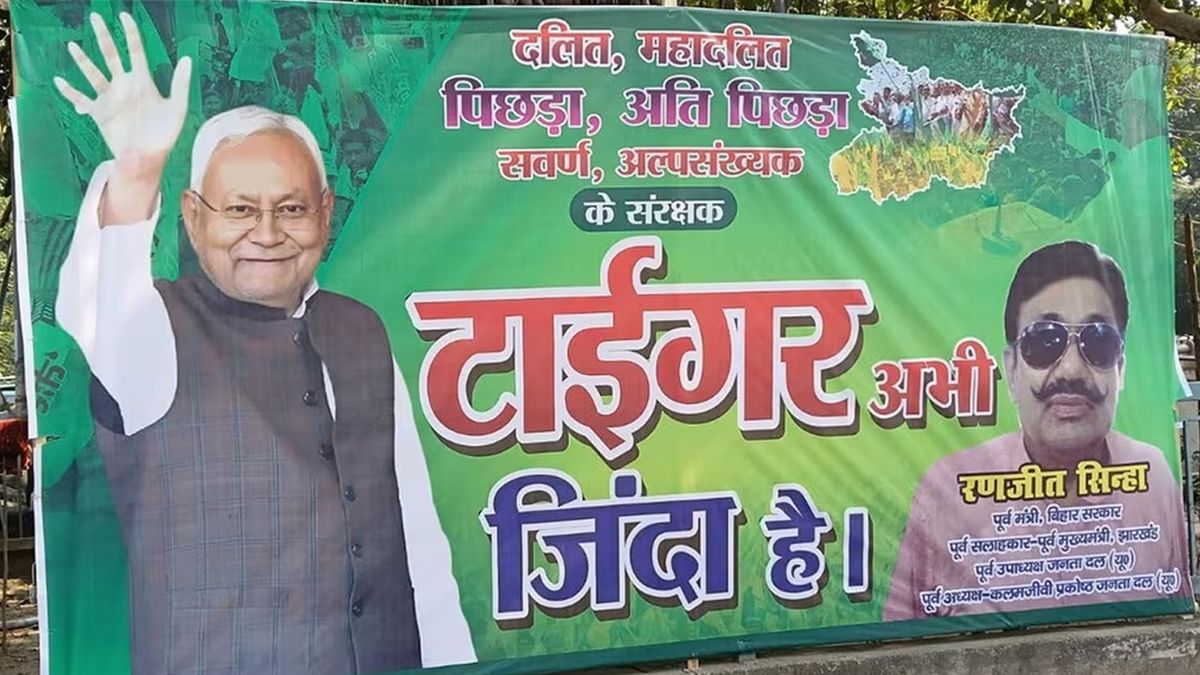
Patna, Nov 2025 : On the eve of the Bihar Assembly election results, large posters appeared outside the Janata Dal (United) headquarters reading, “The Tiger is still alive.” By Friday morning, as counting began and early trends from the Election Commission of India (ECI) poured in, it became evident that the slogan was not mere bravado—it reflected Chief Minister Nitish Kumar’s enduring and strategic hold over Bihar’s political landscape.
As of 2:30 p.m., trends showed the ruling National Democratic Alliance (NDA) crossing the 200-seat mark in the 243-member Assembly—a decisive mandate that once again positions Nitish Kumar as a key pillar of Bihar’s governance and political continuity. The numbers also underline his centrality to the alliance’s identity and stability, despite criticism, challenges, and shifting political realignments in recent years.
A Political Journey That Began With Humble Beginnings
Born in 1951 in Bakhtiyarpur in Patna district, Nitish Kumar’s life story is a familiar but remarkable one. His father, Kaviraj Ram Lakhan Singh, was a traditional Ayurvedic practitioner and a freedom fighter. His mother, Parmeshwari Devi, came from an ordinary farming background. Educated at the Bihar College of Engineering (now NIT Patna), Nitish holds a B.Sc. (Engineering) degree.
His political journey began during the JP Movement, where he absorbed the values of socialist politics and organizational discipline. Before becoming Bihar’s Chief Minister, he held multiple ministerial portfolios at the Centre, gaining administrative experience that shaped his governance style.
Critics Call Him ‘Retired’, But Voters Appear to Disagree
Nitish Kumar has faced criticism from multiple political opponents in recent years. Jan Suraj Party leader Prashant Kishor has often described him as “physically exhausted and mentally retired,” even calling him a mere “mask” for the BJP. Congress President Mallikarjun Kharge similarly accused the BJP of pushing Nitish into “mental retirement.”
However, the strong mandate indicated by the 2025 election trends tells a different story. Despite accusations of fatigue or political irrelevance, Nitish Kumar continues to remain central to Bihar’s electoral arithmetic and governance model. Analysts argue that while his public persona may appear subdued, his political instincts and grassroots connect remain intact.
Transforming Bihar: From ‘Jungle Raj’ Allegations to Governance Reforms
According to his official profile, Nitish Kumar assumed office in 2005 with three promises: restoring law and order, ending the widely cited “jungle raj,” and ensuring inclusive development. His administration pursued a reform-driven agenda marked by transparency, institution-building, and delivery-focused governance.
The official Chief Minister’s website describes his tenure as one that “strengthened institutions, restored faith in governance, and expanded economic and human development.” Law and order saw significant improvement, major infrastructure projects were fast-tracked, and sectors long neglected—such as education, women’s empowerment, and rural connectivity—received targeted attention.
Major Initiatives That Reshaped Bihar
Some of Nitish Kumar’s most impactful initiatives include:
- Prohibition policy (2016), aimed at reducing alcohol abuse and improving social stability.
- 50% reservation for women in panchayats, which reshaped grassroots governance.
- Extensive road construction and rural connectivity projects, improving mobility and economic integration.
- Focused development for Mahadalits and Extremely Backward Classes (EBCs).
- Continual investment in education, including school reforms and student welfare schemes.
These initiatives helped transform Bihar’s image from a state synonymous with poor governance to one making measurable progress in human development and public service delivery.
Political Adaptability: Nitish Kumar’s Enduring Strength
One of Nitish Kumar’s defining political traits is his adaptability. His long-standing alliance with the BJP—beginning in the late 1990s—played a decisive role in ending the RJD’s 15-year dominance in 2005. The alliance bolstered his reformist image and strengthened his electoral footing.
His 2013 split with the NDA, followed by the JD(U)’s poor performance in the 2014 Lok Sabha elections, tested his political capital. His decision to step aside and elevate Jitan Ram Manjhi, a leader from the Musahar community, reflected his attempt to broaden the party’s social outreach. His eventual return to the NDA and continuity as Chief Minister underscored his political pragmatism and ability to navigate shifting alliances.
On January 28, 2024, he was sworn in for a record ninth term, symbolizing extraordinary political longevity.
The 2025 Mandate: Social Coalitions and Voter Mobilization
The slogan “The Tiger is still alive” captured the mood among JD(U) supporters as trends showed a strong NDA performance. Women’s turnout reached unprecedented highs—69% in Phase 1 and 74% in Phase 2—reflecting continued trust in policies aimed at women’s empowerment. Additionally, strong mobilization among EBCs and Mahadalits reaffirmed Nitish Kumar’s broad social coalition.
His governance record—particularly in areas of law and order, rural infrastructure, education, and welfare—continues to give him a decisive edge over rivals.
A Leader Who Avoided Caste Fragmentation
In the book Broken Promises: Caste, Crime and Politics in Bihar, author Mrityunjay Sharma writes that while many regional parties aligned themselves with single caste groups, Nitish Kumar deliberately chose not to create a Kurmi-centric party. Sharma describes the 1990s as “one of the most controversial political decades in any Indian state,” emphasizing how Nitish’s governance model sought to break caste monopolies and broaden the developmental base.

Amarnath Yatra Resumes After Six-Day Rain Halt, Pilgrims Hail Safety Arrangements and Renew Their Journey of Faith
Jammu, July 2026 : The annual Shri Amarnath Yatra resumed on Saturday after remaining susp…
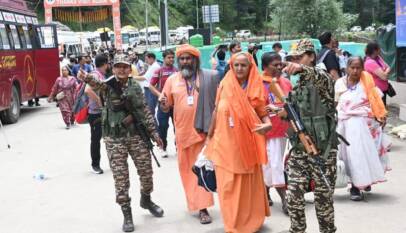
Amarnath Yatra Resumes After Six-Day Rain Halt, Pilgrims Hail Safety Arrangements and Renew Their Journey of Faith
Jammu, July 2026 : The annual Shri Amarnath Yatra resumed on Saturday after remaining …