Vampire Bats may have Contracted H5N1 Bird Flu in Peru, Raising Worries about Further Spread.

In October 2022, migratory birds brought the avian influenza virus H5N1 to South America, where it soon caused devastating outbreaks along the Pacific Coast, ravaging not only wild birds, but also marine mammal populations. Carcasses of thousands of South American sea lions littered the shores of Peru and Chile; elephant seals and dolphins were affected as well.
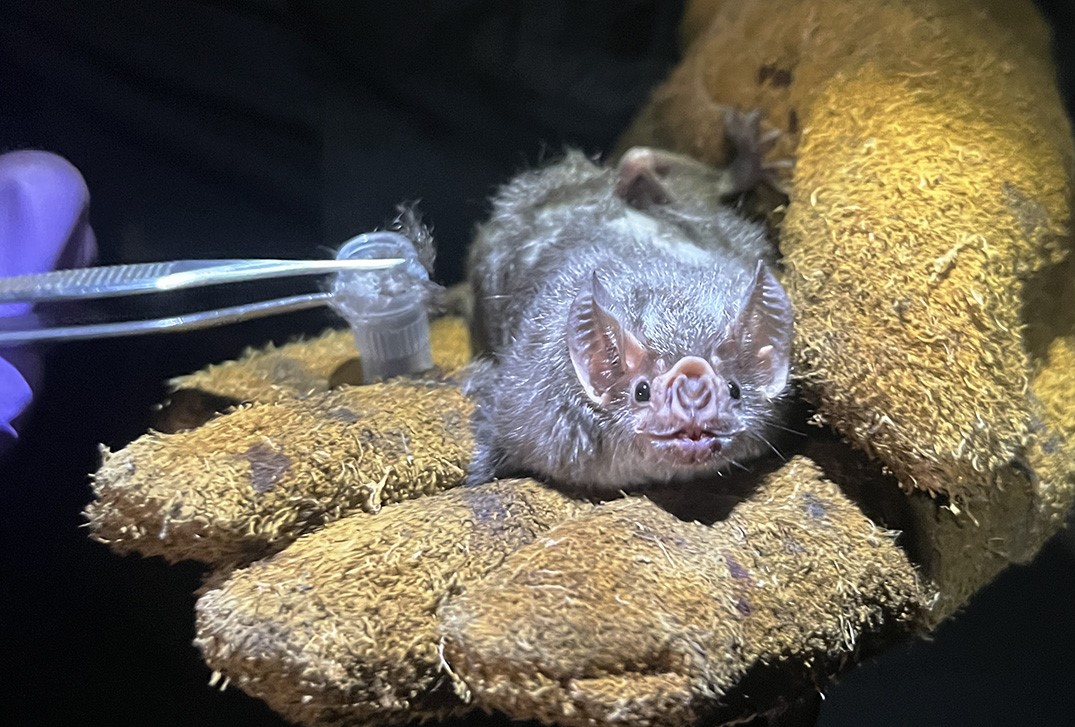
Now, a study shows the unprecedented outbreak may have affected another mammal: Common Vampire Bats (Desmodus rotundus) that feed on the blood of marine animals along the Peruvian coast. The study, posted as a preprint on bioRxiv earlier this month, suggests H5N1, which is high on the list of potential pandemic agents, has an intriguing and potentially worrisome new route of transmission that could increase the risk of a pandemic.
[[As per the bioRxiv report: The highly pathogenic H5N1 avian influenza A virus (IAV) clade 2.3.4.4b has spread globally and spilled over into multiple mammalian species, raising concerns about its pandemic potential. In late 2022, clade 2.3.4.4b viruses devastated seabird and marine mammal populations along the Pacific coast of South America. Here, we report the first evidence of H5 IAV infections in wild bats globally, focusing on common vampire bats (Desmodus rotundus) in coastal areas of Peru. Longitudinal serological screening, stable isotope analysis and metabarcoding revealed repeated exposures to H5 IAVs in vampire bats which feed on coastal wildlife species heavily impacted by the 2.3.4.4b epizootic, but no evidence of infection in populations without access to marine prey. We further report bat gene flow between IAV-exposed and IAV-naïve populations, and IAV infections in a vampire bat colony that fed on both marine and terrestrial livestock prey, providing insights into how future IAV epizootics might spread spatially within bats and between marine and terrestrial ecosystems if a bat reservoir were established. Immunohistochemistry demonstrated that the H5 haemagglutinin protein binds to the upper respiratory tract of vampire bats, suggesting bat tissue susceptibility to H5 IAVs. Finally, vampire bat-derived kidney, liver, and lung cells supported entry, replication, and egress of avian and mammalian 2.3.4.4b viruses, confirming cellular infectivity. These results illustrate how combining ecological inference and experimental virology can pinpoint the species origins and biological significance of viral spillover at species interfaces. Recurrent exposures from marine wildlife, tissue and cellular susceptibility to H5N1 IAVs, and connections to other IAV-susceptible terrestrial mammals establish the prerequisite conditions for vampire bats to spread IAVs between marine and terrestrial environments or to form a novel reservoir of highly pathogenic IAVs]].
Bats live in dense groups where viruses can readily pass from one animal to the other, which means they could become a permanent new reservoir for H5N1 more easily than other mammalian species. And because some of Peru’s vampire bats dine on livestock, they could form a bridge that carries the virus from marine to terrestrial mammals, allowing it to evolve further and adapt to mammals, including humans, the researchers say. “It’s concerning”, says Thijs Kuiken, a veterinary pathologist at Erasmus Medical Center who investigates the spread of H5N1 and other influenza viruses but was not involved in the study.
Still, the finding isn’t reason to sound the pandemic alarm, Kuiken adds, because the study suggests H5N1 did not spread between bats, a prerequisite for them becoming a viral reservoir. Flu virologist Richard Webby of St. Jude Children’s Research Hospital agrees. “Anytime we find H5N1 in a different species, or a different route of infection, that increases the [pandemic] risk. But in itself, this is not something that we should get too worried about,” Webby says. Still, “It’s a very cool paper,” he adds.
Bats, which account for about one-fifth of all mammalian species, are notorious for harbouring a plethora of viruses that can also infect people, including the rabies virus and many coronaviruses. The first evidence they can also be infected with H5N1 came from Dhaka, the capital of Bangladesh, where a few years ago researchers found that Indian flying foxes, a species that feeds on fruit and nectar, had died from the virus. Those bats had become infected by sharing a tree with a group of house crows battered by H5N1, says Ariful Islam, who studies the epidemiology and evolutionary ecology of emerging infectious diseases at Charles Sturt University.
I-Ting Tu, a wildlife veterinarian at the University of Glasgow, wondered whether H5N1 might also infect vampire bats in Peru, which her supervisor, Daniel Streicker, has studied for many years. Tu wasn’t around when the H5N1 outbreak in Peru reached its peak in early 2023; she arrived at the bat colonies studied by the group about 8 months later. By that time, she couldn’t find a trace of the virus in throat or rectal swabs from bats.
But the team did find antibodies to H5 in blood samples from some of the animals, suggesting they had been infected in the past or were at least exposed to the virus. The antibodies weren’t present in samples taken before the big H5N1 wave arrived, indicating the cause wasn’t a different H5 strain, and researchers also didn’t find them in colonies living farther inland. That strongly suggests the bats were exposed to H5N1 by marine wildlife, Tu says.
To figure out which animals the bats had been feeding on, the researchers analysed DNA found in the bats’ rectum and in blood meals. Those data showed the coastal bats had an unexpectedly diverse diet that included blood not only from sea lions, but also from many bird species, such as Peruvian pelicans, neotropics cormorants, banded penguins, boobies, and vultures. Bats on inland sites fed on livestock, including horses, pigs, sheep, goats, and cattle. Some bats at “mixed-diet” sites not far from the coast fed on both marine animals and livestock, underscoring the potential for the animals to spread viruses from sea to land or vice versa, the team says.
The virus did not spread well between bats. No more than 08% of individuals in any colony had antibodies, the team reports. If there had been efficient bat-to-bat transmission of H5N1, that number would have been higher.
The researchers aren’t sure why the virus spread so poorly. Lab studies back in Glasgow showed the vampire bats have receptors in their lungs that H5N1 can cling to, and cells from their kidney, liver, and lung could be infected with the virus. “The viruses that have jumped in so far don’t seem to be taking off, but we can’t identify any real, hard physiological barrier”, Streicker says. That means, for now at least, that the bats are unlikely to become a reservoir, Kuiken says.
The dead flying foxes in Bangladesh aren’t cause for immediate concern either, Webby says. Those bats could theoretically transmit H5N1 to humans, but that risk is dwarfed by the danger posed by poultry outbreaks of H5N1. Bangladesh has reported four human cases of H5N1 so far this year, presumably all from contact with poultry. “We know the live poultry markets in Bangladesh are heavily contaminated” with H5N1, Webby says. “So, there’s lots of opportunity for human exposure”.
Team Maverick







Iran Says Strait of Hormuz Open, Warns of Escalation if Attacked
March, 2026 : Iran’s Foreign Ministry has asserted that the Strait of Hormuz remains open …

Iran Says Strait of Hormuz Open, Warns of Escalation if Attacked
March, 2026 : Iran’s Foreign Ministry has asserted that the Strait of Hormuz remains …