Chhattisgarh’s New Flight in Vulture Conservation: Indravati Tiger Reserve Emerges as a National Model

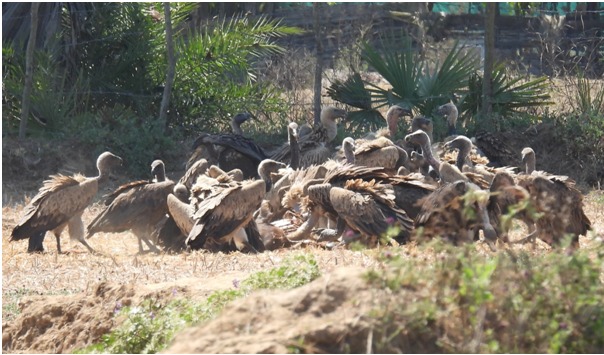
Raipur, January 2026 : Chhattisgarh’s Indravati Tiger Reserve has set a new benchmark for the entire country in the field of vulture conservation. Counted among the cleanest river–forest ecosystems of Central India, the reserve has now become not only a stronghold for tigers and wild buffaloes but also an important centre for the protection of endangered vultures.
Vultures are considered the “sanitation workers” of the environment, and in their absence the risk of diseases can increase.
Under the leadership of Chief Minister Shri Vishnu Deo Sai and as per the directions of Forest and Climate Change Minister Shri Kedar Kashyap, Vulture Safe Zones are being developed in the Indravati Tiger Reserve area to protect and revive the declining vulture population. Vultures play a critical role as environmental cleaners, and their disappearance poses serious public health risks. Their survival is threatened by poisonous medicines (NSAIDs), unsafe carcass disposal and human interference. To address these challenges, a satellite telemetry–based monitoring programme is being implemented in the Indravati Tiger Reserve.
Vultures active across nearly 10,000 square kilometres
This is the first initiative of its kind in Chhattisgarh, where high-resolution vulture movement data is being used to guide conservation efforts. Data collected so far reveal that vultures remain active across nearly 10,000 square kilometres, frequently moving between dense forests and human settlements.
A new scientific direction for wildlife management
Notably, several significant achievements have been recorded in vulture conservation between 2022 and 2025. For the first time in the state, more than 18,000 high-quality GPS data points were obtained through satellite tracking of two vultures, providing a new scientific direction to wildlife management. A key role in this success has been played by the “Vulture Mitra Dal” (Vulture Conservation Volunteer Team), led by field biologist Shri Suraj Kumar. The team is engaged in nest monitoring, safe carcass management and connecting local communities with conservation efforts. As a result of this community participation, uninterrupted breeding has been ensured for the first time in remote areas such as “Gudda Sari Gutta”.
Establishment of “Vulture Restaurants”
As part of conservation initiatives, “Vulture Restaurants” have also been established under the supervision of Deputy Director Shri Sandeep Balaga. These are controlled feeding sites where only NSAID-free carcasses, cleared after veterinary testing, are placed. This ensures safe food for vultures. These centres are also functioning as hubs for community education, informing school students and local youth about the ecological importance of vultures.
Creation of “Vulture Safe Zones”
Under the future strategy, the third phase of the programme will also be led by Deputy Director Shri Sandeep Balaga. This phase aims to satellite-tag three additional vultures, organise more than 50 awareness programmes, establish a 100-kilometre “Vulture Safe Zone” with the participation of panchayats, and publish Chhattisgarh’s first Vulture Rehabilitation Action Plan. By weaving together technology, traditional knowledge and community participation, the Indravati Tiger Reserve is conveying the message that with visionary leadership, forests and people can progress together.







Dalai Lama Reaffirms Mission of Compassion, Plans Extended Stay in Ladakh
Dharamsala, July 2026 : Tibetan spiritual leader His Holiness the Dalai Lama on Thursday e…

Dalai Lama Reaffirms Mission of Compassion, Plans Extended Stay in Ladakh
Dharamsala, July 2026 : Tibetan spiritual leader His Holiness the Dalai Lama on Thursday …