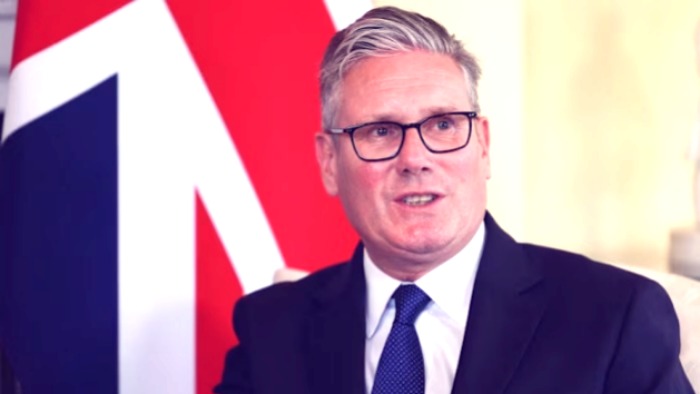
British Prime Minister Keir Starmer Has Voiced For UK’s Closer Alignment With EU Single Market

London; January 2026: Sir Keir Starmer has said he wants the UK to seek “closer alignment” with the EU’s single market, as the prime minister vowed that he would still be in Downing Street in a year’s time. Starmer’s comments on Sunday came ahead of an appearance on Monday where he will highlight government efforts to bring down the cost of living in 2026, even as his ruling Labour party sinks further in opinion polls.
Earlier the British Prime Minister has repeatedly ruled out rejoining either the EU single market or customs union, which Britain quit after it voted to leave the bloc in the 2016 referendum. Re-entering the single market is particularly politically difficult because it would mean allowing freedom of movement with EU member states. But the Prime Minister on Sunday have said it was in the UK’s “national interest” to have a closer relationship with the EU, including proposals for a youth mobility scheme enabling 18 to 30 years to travel and work between Britain and the bloc.
Starmer said the UK had already aligned rules with the EU over food and agriculture to access the single market, and was now considering doing so in other areas. “I think we should get closer and if it’s in our national interest, in our interest, to have even closer alignment with the single market, then we should consider that, we should go that far”.
Sir Keir Starmer’s very notable tilt on the UK’s ties to the European Union post-Brexit on Saturday was designed to send a message to business, to Brussels and to other European capitals, as well as his backbenchers. Closer post-Brexit economic relations are now expected to be looked at as part of an annual process of bilateral talks rather than just at this year’s formal review of the UK-EU deal. It was Downing Street’s answer to political questions about a more ambitious Brexit reset involving rejoining the customs union with the EU.
Some Labour backbenchers, union leaders and cabinet ministers have joined calls crystallised by Lib Dem moves in Parliament last year that led to a non-binding vote. Sir Keir Starmer gave a clear answer to his colleague Laura Kuenssberg that this was not the priority at the moment, as it goes against what he considers one of the successes of the past year: the signing of best-in-class deals on trade with the US and India, with more to come in the Middle East. Instead of the customs union, his focus is on a “closer relationship” with the single market, which would not mean ripping up those new trade deals elsewhere.
When the UK formally left the EU single market and customs union at 23:00 Hours on 31st December, 2020, Boris Johnson’s deal stressed freedom from EU regulations rather than frictionless trade for British exporters across Europe. Already, Sir Keir’s “Brexit reset” envisages realigning with EU rules in three areas to help the free flow of trade: food and farm exports, electricity, and emissions trading.
A number of other areas could, feasibly, see a similar approach, such as alignment with single market rules, in exchange for reducing post Brexit barriers across manufacturing, in automotive, chemicals, or for example in arrangements for VAT.
European capitals were underwhelmed by the lack of ambition in last year’s reset, with the British rejection of some experts who floated the idea of the virtual readmission of British goods to the single market.
The detail of arrangements on electricity, and food and farm standards is yet to be finalised. A plan for UK manufacturers to be part of the €150bn (£131bn) Security Action For Europe defence loan fund has stalled over the size of the membership fee, after some objections from France. Canada has joined the scheme. The UK has agreed a deal to rejoin the Erasmus university exchange and further negotiate a youth jobs scheme. This has helped clear the way for further UK-EU talks.
Joining the single market would allow for the free movement of goods and services between the UK, the EU and other non-EU countries who are member of the single market – Norway and Lichtenstein. However, this would also likely mean agreeing to the free movement of people between the UK and the EU a frightening prospect for Keir Starmer’s Labour given the role of immigration in driving the Leave vote. But is this fear justified?
The answer to the question is Perhaps not! A recent poll survey indicates that more Britons are in fact supportive of joining the single market, even under this condition, than in opposition. Just short of six in ten Britons (57%) would support the UK joining the single market, even if this meant a return to free movement, with only around one in five (22%) opposed.
Team Maverick.


End of an Era: Cristiano Ronaldo Bids Farewell to the FIFA World Cup After a Record-Breaking International Career
Dallas, July 2026 : One of football’s greatest chapters came to a close on Tuesday a…

End of an Era: Cristiano Ronaldo Bids Farewell to the FIFA World Cup After a Record-Breaking International Career
Dallas, July 2026 : One of football’s greatest chapters came to a close on …