WHO Flags That Cheaper Drinks Will See A Rise In Noncommunicable Diseases And Injuries.

Geneva; January 2026: Sugary drinks and alcoholic beverages are getting cheaper, due to consistently low tax rates in most countries, fueling obesity, diabetes, heart disease, cancers and injuries, especially in children and young adults.
In two new global reports released today, the World Health Organization (WHO) is calling on governments to significantly strengthen taxes on sugary drinks and alcoholic beverages. The reports warn that weak tax systems are allowing harmful products to remain cheap while health systems face mounting financial pressure from preventable noncommunicable diseases and injuries.
“Health taxes are one of the strongest tools we have for promoting health and preventing disease”, said Dr Tedros Adhanom Ghebreyesus, WHO Director-General. “By increasing taxes on products like tobacco, sugary drinks, and alcohol, governments can reduce harmful consumption and unlock funds for vital health services”.
The combined global market for sugary drinks and alcoholic beverages generates billions of dollars in profit, fueling widespread consumption and corporate profit. Yet governments capture only a relatively small share of this value through health-motivated taxes, leaving societies to bear the long-term health and economic costs.
The reports show that at least 116 countries have implemented tax on sugary drinks, many of which are sodas. But many other high-sugar products, such as 100% fruit juices, sweetened milk drinks, and ready-to-drink coffees and teas, escape taxation. While 97% of countries tax energy drinks, this figure has not changed since the last global report in 2023.
A separate WHO report shows that at least 167 countries levy taxes on alcoholic beverages, while 12 ban alcohol entirely. Despite this, alcohol has become more affordable or remained unchanged in price in most countries since 2022, as taxes fail to keep pace with inflation and income growth, while wine remains untaxed in at least 25 countries, mostly in Europe, despite clear health risks.
“More affordable alcohol drives violence, injuries and disease”, highlighted Dr Etienne Krug, Director of WHO’s Department of Health Determinants, Promotion and Prevention. While industry profits, the public often carries the health consequences and society the economic costs.
WHO found that across regions:
- tax shares on alcohol remain low with global excise share medians of 14% for beer and 22.5% for spirits;
- sugary drink taxes are weak and poorly targeted with the median tax accounting for only about 2% of the price of a common sugary soda and often applying only to a subset of beverages, missing large parts of the market;
- few countries adjust taxes for inflation, allowing health-harming products to become steadily more affordable.
These trends in tax persist despite a 2022 Gallup Poll finding that the majority of people surveyed supported higher taxes on alcohol and sugary beverages. WHO is calling on countries to raise and redesign taxes as part of its new 3 by 35 initiative, which aims to increase the real prices of three products, tobacco, alcohol and sugary drinks, by 2035 making them less affordable over time to help protect people’s health.
The 3 by 35 Initiative –
The world is facing a pivotal moment in financing for sustainable development. As official development assistance (ODA) continues to decline, countries must urgently turn to sustainable, domestically sourced financing to meet the Sustainable Development Goals (SDGs). In response, the World Health Organization (WHO) is leading the “3 by 35 Initiative”, a bold global effort to increase the real prices of any or all of three unhealthy products: tobacco, alcohol, and sugary drinks by at least 50% by 2035 through tax increases, while taking into account each country’s unique context.
This effort is expected to reduce consumption of harmful products while mobilizing an additional US$ 1 trillion in public revenue globally over the next decade.
These three products are major contributors to noncommunicable diseases (NCDs), the leading cause of death and disability worldwide. Tobacco alone causes over 7 million deaths annually. The consumption of alcohol and sugary drinks further fuels the global burden of NCDs, undermining health, economic productivity, and sustainable development.
The 3 by 35 Initiative aims to revitalise health taxes as a powerful tool to reduce harmful consumption, save lives, and generate vital public revenue. By implementing well-designed and effectively enforced taxes on these products, countries can mobilise significant domestic resources while advancing public health.
A recent analysis suggests that a one-time tax increase sufficient to raise prices by 50% could garner up to US$ 3.7 trillion in new revenue globally within five years, or an average of US$ 740 billion per year, which is equivalent to 0.75% of global GDP.
This Initiative functions as a collaborative alliance. WHO will coordinate efforts with a coalition of development partners, civil society, academic institutions, and national governments. Together, they will support countries in designing, implementing, and sustaining effective health tax policies tailored to local contexts. This includes technical assistance on legal frameworks, tax administration, policy advocacy, and public engagement.
The 3 by 35 Initiative has three key actions:
Mobilising countries – WHO and partners will engage heads of state, finance and health ministries, and civil society to build political momentum. Countries participating in the Initiative will benefit from peer learning, strategic support, and global recognition.
Supporting country-led policies – Countries requesting assistance will receive direct support to develop tailored, evidence-based health tax policies. Others will benefit from a shared knowledge platform offering guidance, tools, and best practices.
Building commitment and partnerships – Through inclusive dialogue and collaboration, the Initiative seeks to shift public and political perceptions, foster cross-sector alliances, and strengthen the role of civil society in advocating for sustainable health financing.
At a time of growing fiscal constraints and rising demand for health services, the 3 by 35 Initiative offers a path forward: reducing dependence on external aid while promoting healthier societies and stronger economies. Health taxes are not only smart economics, they are essential tools for achieving the SDGs.
Led by the WHO, and supported by a range of global partners, the 3 by 35 Initiative invites all nations to join this movement for a healthier, more financially resilient future.
List of partners/champions:
- Alliance for Health Policy and Systems Research
- Bloomberg Philanthropies
- Campaign for Tobacco Free Kids
- Centre for Global Development (CGDev)
- Economics for Health at Johns Hopkins Bloomberg School of Public Health
- Movendi International
- NCD Alliance
- OECD
- SEATCA – Southeast Asia Tobacco Control Alliance.
- United Nations Development Programme (UNDP)
- Vital Strategies
- World Bank
Team Maverick.




J.P. Nadda Reviews Dengue and Malaria Preparedness Ahead of the Monsoon Season
Emphasising the need for early preparedness and a proactive public health response to effe…
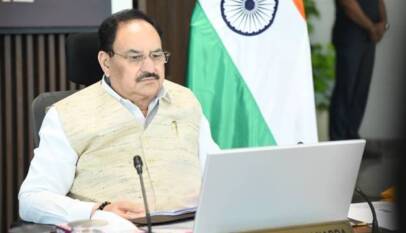
J.P. Nadda Reviews Dengue and Malaria Preparedness Ahead of the Monsoon Season
Emphasising the need for early preparedness and a proactive public health response to effectively …