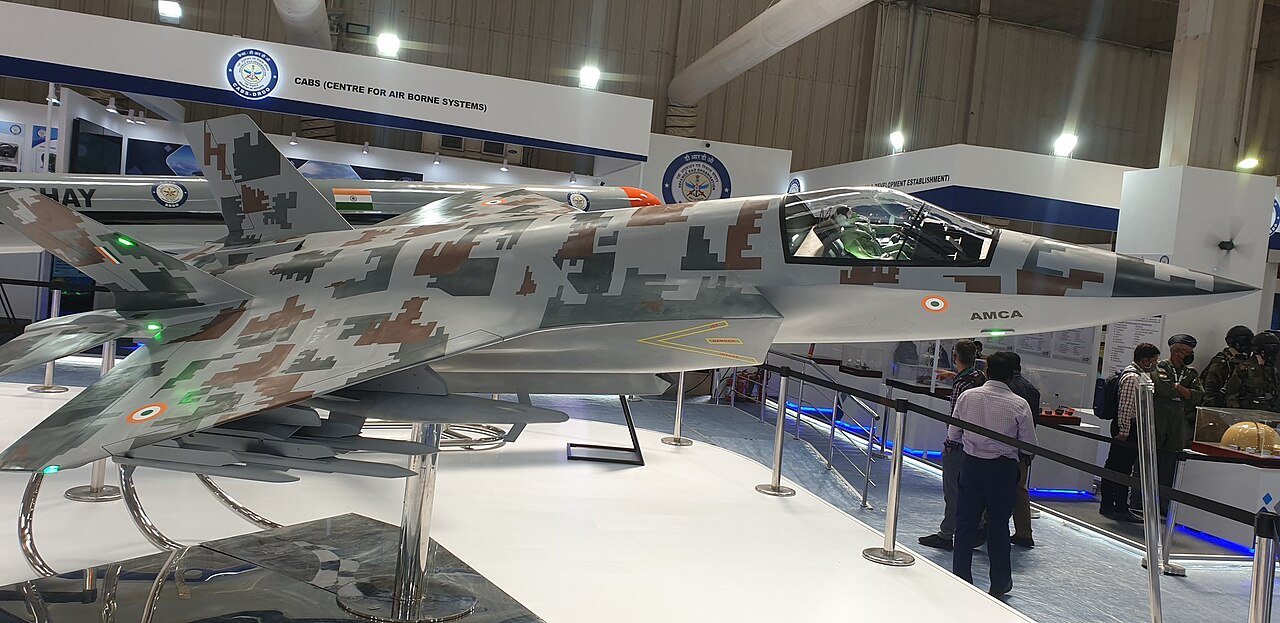
New Delhi, Aug 2026 : India is moving closer to a major milestone in its ambition to establish itself as a leading player in advanced military aerospace, with the government expected to select a private industry partner for the production of prototypes of the Advanced Medium Combat Aircraft (AMCA) between January and March 2027.
The Ministry of Defence has issued a Request for Proposal (RFP) to three shortlisted industry groups competing for the landmark programme. The contenders include Tata Advanced Systems Limited (TASL), a consortium led by Larsen & Toubro with Bharat Electronics Limited (BEL) and Dynamatic Technologies, and a third consortium comprising Bharat Forge, BEML and Data Patterns.
The three groups are currently studying the detailed technical requirements and preparing their commercial and financial proposals. The RFP process is expected to involve extensive assessments of each consortium's manufacturing capabilities, project management plans, supply-chain arrangements, infrastructure readiness, projected costs and timelines for producing the first test aircraft.
After receiving the bids, the Ministry of Defence will undertake a detailed evaluation to identify the lowest-cost technically compliant bidder, commonly referred to as L1. The winning private partner is expected to be announced during the first quarter of 2027, marking a significant step forward for India's indigenous fighter aircraft programme.
The selected company or consortium will work closely with the Aeronautical Development Agency (ADA), which serves as the design authority for the AMCA. The private partner will be responsible for translating the aircraft's design into operational prototypes, while coordinating with government agencies, technology providers and other suppliers involved in the programme.
The AMCA development programme has received a substantial financial push, with the Cabinet Committee on Security approving a project allocation of around Rs 15,000 crore in March 2024. The current phase includes the development and manufacture of five prototypes that will be used for ground testing, flight trials and progressive validation of the aircraft's systems.
Manufacturing facilities for the programme are expected to be established at a new greenfield location in Andhra Pradesh. The selected partner will have to develop the necessary infrastructure, manufacture the airframes, integrate sophisticated avionics and other systems, and support the aircraft's testing and certification activities.
The programme also represents an important change in India's defence manufacturing strategy. Traditionally, major military aircraft programmes have been dominated by state-owned organisations. By opening the AMCA prototype manufacturing competition to private industry, the government aims to tap into the capabilities of India's expanding private aerospace and defence sector, while encouraging greater efficiency, innovation and competition.
Each of the three competing groups brings different strengths to the programme. TASL has developed significant capabilities in aerospace manufacturing and has experience working with international aviation and defence companies. The L&T-led consortium brings expertise in precision engineering, systems integration and defence electronics through its partners.
The Bharat Forge-led consortium, meanwhile, offers extensive experience in heavy engineering, advanced manufacturing and defence systems, with BEML and Data Patterns adding capabilities in mobility, electronics, radar and sensor technologies.
The AMCA is being developed as India's first indigenous fifth-generation stealth fighter. The aircraft is expected to incorporate advanced aerodynamic shaping and radar-absorbing materials designed to reduce its radar signature. It will also feature internal weapon bays, sophisticated sensors, artificial intelligence-enabled systems and other technologies associated with next-generation combat aircraft.
Another key capability planned for the AMCA is supercruise, allowing the aircraft to maintain supersonic speeds without continuous use of afterburners. The initial versions are expected to use the American GE F414 engine, while future variants are planned to incorporate a more powerful indigenous engine currently under development.
The selection of the private manufacturing partner will therefore be critical to the programme's progress. Once the contract is awarded, the winning consortium will need to establish production facilities, qualify suppliers, procure materials and work closely with ADA and other agencies to transform the AMCA design into a flying prototype.
If the selection and subsequent negotiations proceed according to schedule, the programme could remain on course for the AMCA's first flight in late 2028 or 2029, potentially ushering in a new era for India's indigenous combat aircraft manufacturing capabilities.
(Disclaimer :The content of this article is sourced from a news agency and has not been edited by the Mavericknews30 team.)